
Programmes
27 Apr 2026
Engines of War: Why the Automotive Sector Is the Fastest to Pivot to Military Production
Modern patterns of armed conflict are shifting from time-limited operations reliant on advanced, low-volume technologies to protracted confrontations driven by industrial attrition and the large-scale deployment of autonomous systems. This transition exposes critical deficiencies in the traditional defence industrial base's production capacity. As munitions stockpiles decline amid ongoing conflicts in Eastern Europe and the Middle East, military assessments increasingly identify manufacturing capability, supply chain resilience, and the speed of industrial mobilisation as decisive factors in strategic competition, alongside technological innovation.
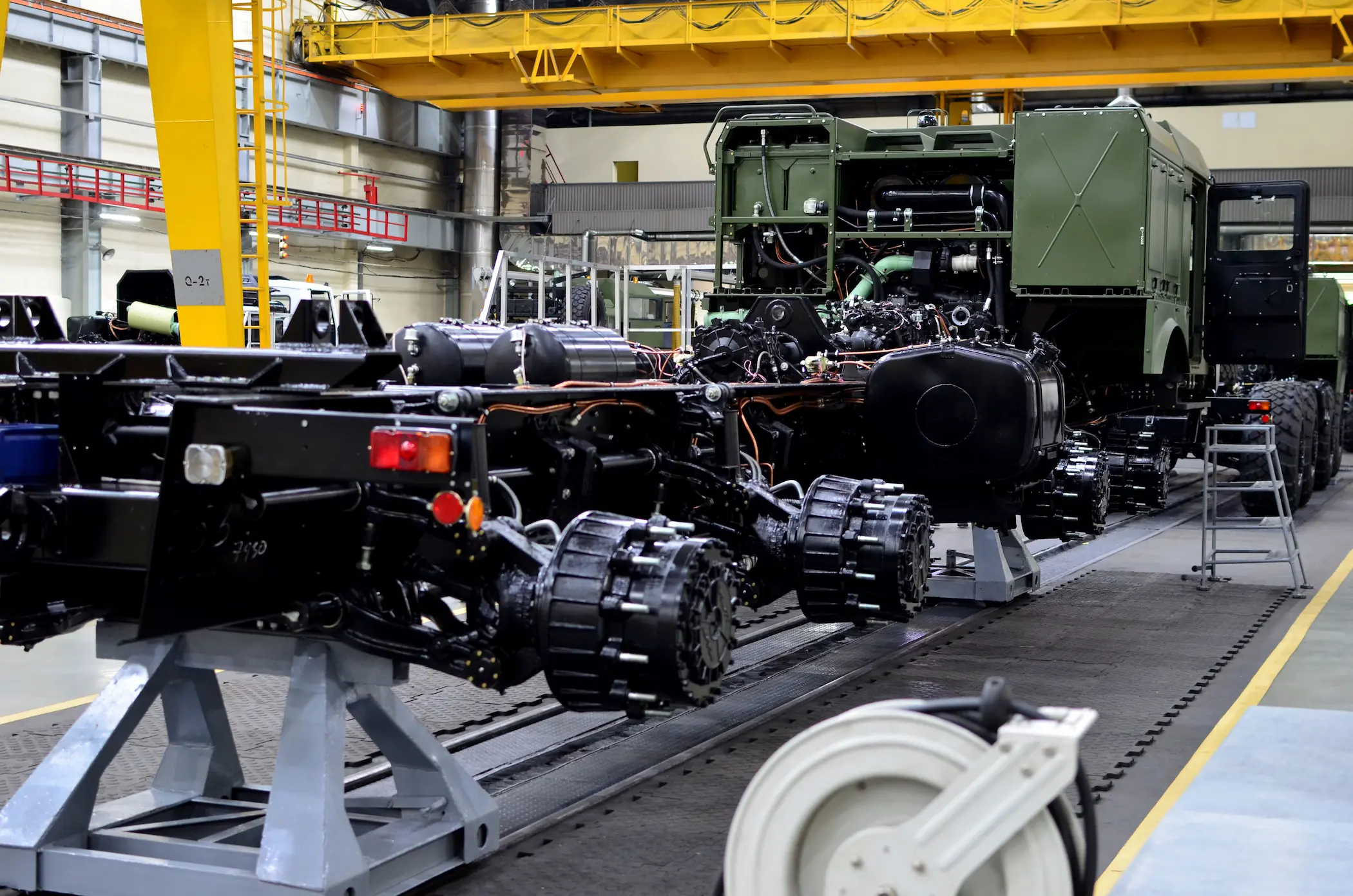
In response to these dynamics, national security institutions are moving to reactivate historically grounded models that integrate the commercial manufacturing sector into military production. This approach was notably deployed during the Second World War, when Ford Motor Company redirected its civilian production lines to manufacture bombers, Chrysler Corporation established dedicated facilities for tank production, and General Motors allocated its industrial capacity to the production of aircraft engines and munitions.
The current operational environment demands a sustained supply of conventional mechanical platforms and expendable systems, including unmanned aerial vehicles and sensor-equipped tactical vehicles. As battlefield requirements increasingly outpace the production capacity of defence manufacturers, the automotive sector emerges as a uniquely positioned industrial base, combining large-scale output with advanced mechanical engineering capabilities. This reality necessitates a focused assessment of the structural and technical attributes that make it the most viable sector for rapid conversion to support military production.
Programmes
29 Aug 2024
The Core Issue: Ammunition Manufacturing and its Effects on the Russia-Ukraine War
The Russia-Ukraine war has now entered its 18th month, with neither side achieving decisive strategic or operational control, bringing the conflict closer to a protracted stalemate rather than a resolution at the negotiation table. This prolonged uncertainty suggests that the war may continue for several more months before either party considers a truce. A similar situation is unfolding in Gaza, where the war is now in its ninth month, making it one of the longest wars in the history of the Arab-Israeli conflict, rivalled only by the wars surrounding the establishment of Israel and the War of Attrition with Egypt. Here, too, there is little indication that a resolution or even a willingness to negotiate a truce is forthcoming from either side. The possibility of a decade marked by extended wars looms on the horizon, especially if a conflict were to break out between China and one of its neighbours, whether in the Taiwan Strait or the South China Sea. This scenario is increasingly plausible given the United States' (U.S.) involvement in regional and international political and economic skirmishes directly targeting Chinese interests.
The current and anticipated wars share two key characteristics, in addition to the fact that they have taken or may take longer to resolve than expected. Firstly, they are occurring or expected to occur in regions of immense strategic importance to the world, such as the Great European Plain—one of the world's most fertile areas and a major grain-producing region—or in the heart of the Middle East, a critical juncture for global trade and energy routes. Secondly, these wars are not merely between individual countries or parties but involve broader alliances. For instance, in the Russia-Ukraine War, North Korea and Iran are indirectly aligned with Russia, while NATO supports Ukraine. Similarly, in the Israel-Hamas War, the U.S., Britain, and France are aligned with Israel, whereas Iran, Hezbollah, the Houthis, and numerous Shiite militias in Iraq and Syria support Hamas.
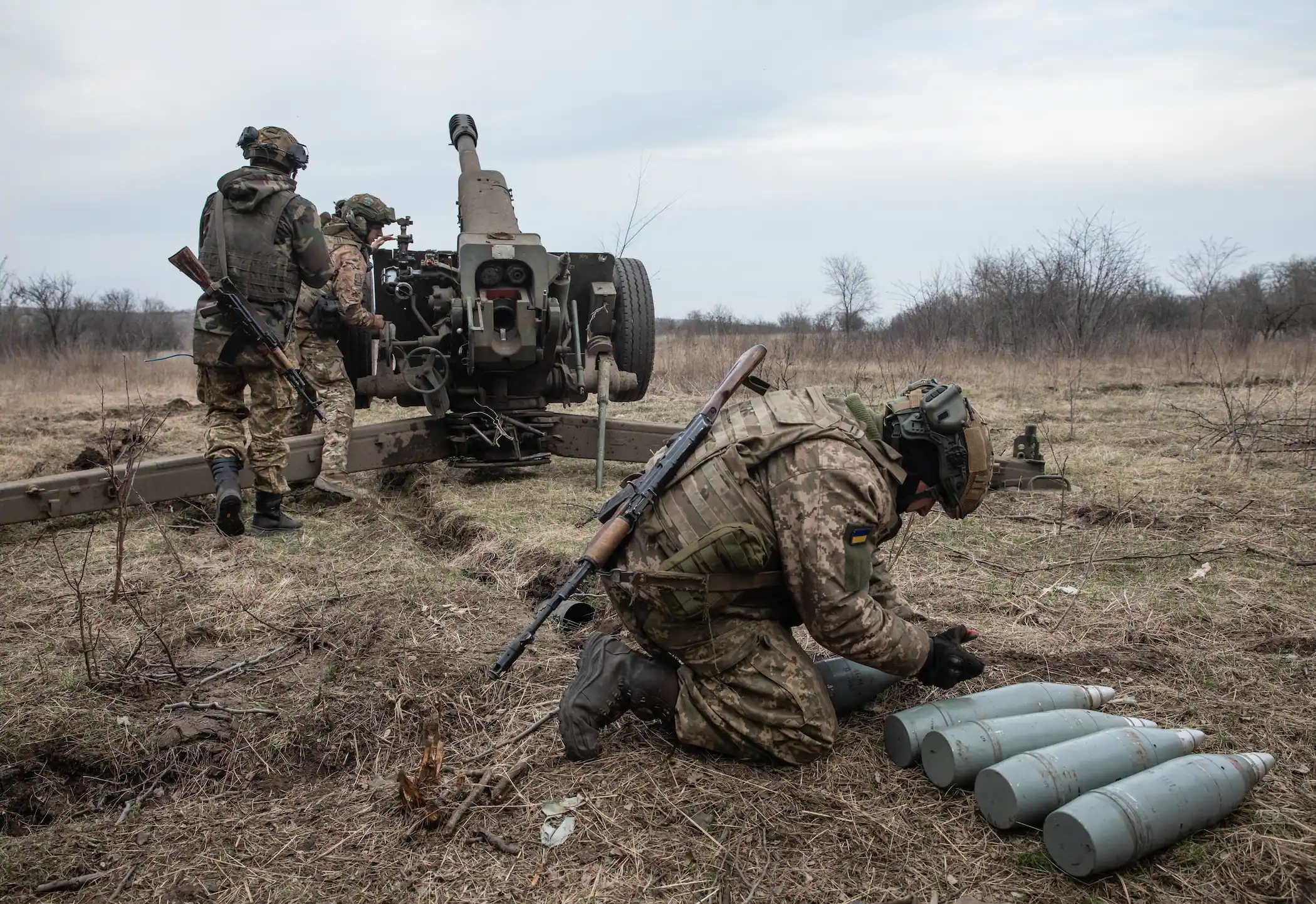
These two characteristics have imparted the ongoing wars with traits that, to some extent, echo those of the First and Second World Wars, particularly in terms of the intense consumption of ammunition and the resulting high death rates among the warring parties, as well as the extended length of the engagement lines. As a result, both wars have begun to consume vast quantities of ammunition and conventional weapons, especially artillery shells, to the point where the stockpiles of the forces involved have been significantly depleted or are nearing exhaustion. This depletion has made the replenishment of supplies inevitable, transferring the pressure of the battlefield to the production lines in factories. However, these factories have frequently struggled to meet the front lines' demands or replenish stockpiles, leading to a severe shortage of ammunition on all fronts for all parties involved.
This scarcity has transformed the war into a series of industrial battles, where the side with greater industrial capacity gains the upper hand by supplying its forces with more ammunition, thereby securing a tactical advantage. As a result, industry has become a direct and critical component of national security in its most narrow sense. Consequently, this analysis examines the impact of industrial capacity on the Russia-Ukraine war, focusing specifically on the artillery capabilities of both sides.