
Programmes
4 Sep 2026
Geography Under Siege: How the Sea Became Israel’s Greatest Vulnerability
The geopolitical and security complexities of land borders in the Middle East have created a strategic reality in which Israel effectively functions as an "island economy", despite its physical connection to the continental landmass. This overland isolation has left the Israeli economy with little choice but to rely almost entirely on maritime routes to sustain its trade arteries, secure vital imports and maintain the flow of exports. The sea, therefore, is no longer merely an additional geopolitical and military domain, but has become the lung through which the Israeli economy breathes.
In this context, geography has shifted from a potential defensive shield to a structural vulnerability, with any disruption to freedom of navigation or coastal security posing an existential threat to capital flows and market stability.
This strategic vulnerability is further compounded by the country's demographic and economic geography. The coastal strip constitutes Israel's true centre of gravity, concentrating much of its population, financial centres, logistics infrastructure and principal ports.
This concentration leaves the coastline particularly exposed. Any security disruption in the maritime domain would affect not only shipping, but also the very fabric of everyday life and the core of commercial activity. Non-state armed actors have recognised this dynamic and identified the maritime domain as an opportunity to inflict economic paralysis at extremely low cost, circumventing the need to penetrate Israel's sophisticated air and land defence systems.
The concept of maritime infrastructure is no longer confined to ships and ports, but has expanded to encompass sovereign assets that constitute pillars of contemporary national security. Natural gas fields beneath the Eastern Mediterranean have become a cornerstone of energy independence, with any threat to production platforms or pipelines having immediate repercussions for industrial production costs and electricity grid stability.
In parallel, subsea telecommunications cables have emerged as a lifeline for the digital knowledge economy. The high-tech and financial services sectors depend entirely on these cables' integrity to ensure the global flow of data. Protecting these subsea assets has therefore moved beyond the technical realm to become a core element of the security doctrine aimed at protecting the economy from collapse in times of crisis.
This maritime exposure confronts the military establishment with a dual strategic dilemma: a widening protection gap between the immediate coastline and distant international sea lanes.
At the near-shore tactical level, the challenges associated with protecting coastal installations from unconventional threats, such as explosive-laden boats and drones, are intensifying. Countering these threats entails enormous financial costs, requiring the operation of expensive interception systems and warships against low-cost offensive capabilities available to adversaries.
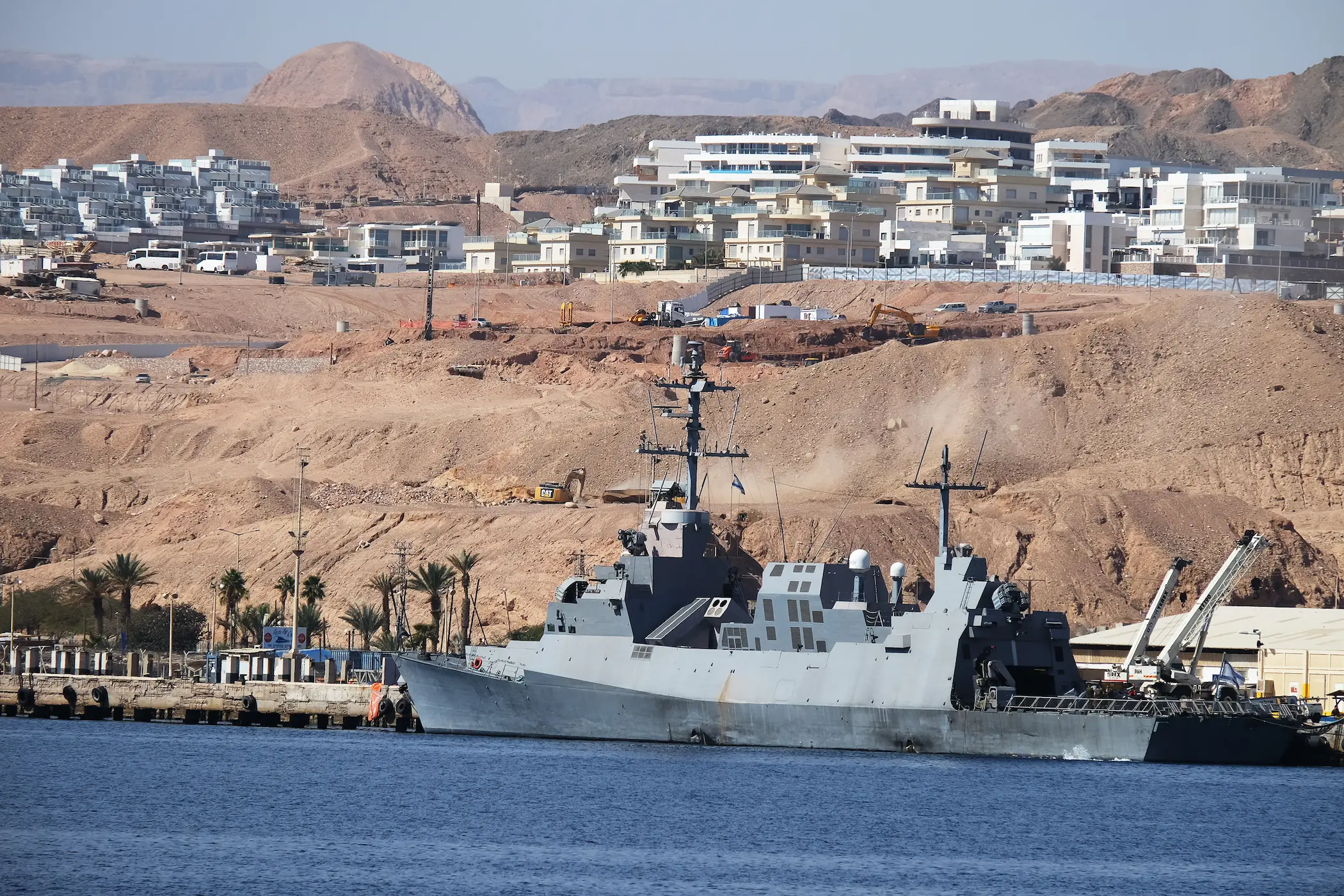
At the more distant strategic level, the challenge lies in protecting the vital trade routes running through the Red Sea and the Bab el-Mandeb Strait. Any disruption there could choke off the Port of Eilat, disrupt supply chains from Asia, and drive up insurance and shipping costs, dealing a severe blow to investor confidence and the broader business environment.

Programmes
6 Aug 2024
Strategic Ramifications of Unrest in Bab El Mandab: The Arab Cost
The term “unification of arenas” emerged in the discourse of the Arab-Israeli conflict following the 2021 Sword of Jerusalem Battle. This military and ideological strategy is primarily linked to Iran’s regional proxies within the “axis of resistance.” This coalition includes Hezbollah, Hamas, the Houthis, and various Iranian-backed militias in Syria and Iraq. Its objective is to enhance operational coordination among these groups to counter Israel and diminish American influence in the region, aligning with Iranian strategic interests. The approach involves launching simultaneous actions across different fronts, including Lebanon, Gaza, and Yemen, to orchestrate a unified battle against common adversaries, particularly Israel and the United States (U.S.).
While this strategy had been employed on a limited scale prior to October 7, it achieved unprecedented levels of coordination following these operations. The execution involved dividing targets within Israel, with coordinated attacks from Gaza, Lebanon, Iraq, Syria, and Yemen. This meticulous synchronisation and sequence of missile and drone strikes overwhelmed Israeli air defences, with some attacks originating from Yemen and reaching targets in Tel Aviv.
These agents, particularly the Houthis, did not limit their actions to threatening Israeli facilities. Their strikes extended to disrupting navigation in the Bab El Mandab Strait off the Yemeni coast. The Houthis conducted numerous attacks on ships they claimed had ties to Israel, whether through state ownership, ownership by individuals with Israeli citizenship, or simply passing through Israeli ports. This broad targeting strategy encompassed a significant portion of the traffic in this crucial strait for global trade, particularly affecting Arab oil-exporting countries and Egypt, which relies heavily on the Suez Canal for its maritime traffic. As a result, shipping routes have shifted from the Suez Canal to the Cape of Good Hope, prompting long-term strategic transformations and immediate economic repercussions for the Arab countries involved. This analysis aims to assess the Bab El Mandab Strait's importance for Arab countries and explore the strategic implications of its disruption on their economies.

Programmes
4 Aug 2024
Iranian Influence in Sudan: Balancing Drone Diplomacy and Conflict Pressures
Relations between Sudan and Iran have experienced a volatile history of rapprochement and estrangement over the past eight years, mainly due to the strong tensions between the two countries. The relationship was notably strained after Iranian protesters stormed the Saudi embassy in Tehran in 2016, prompting the Sudanese government to close all Iranian schools and cultural centres. However, amid escalating regional tensions between Tehran and its supporters on one side and Washington and its allies on the other, Sudan and Iran are moving quickly to open a new chapter in their relations. This development comes against the backdrop of the ongoing war between the Sudanese army and the paramilitary Rapid Support Forces since April 2023.
The current regional changes have created an opportunity for Sudan and Iran to address past differences in a calculated manner. Relations have shown noticeable growth over the past year, marked by a series of high-level official meetings between Sudanese and Iranian officials. One significant meeting took place on the sidelines of the Non-Aligned Movement Ministerial Committee meeting in the Azerbaijani capital, Baku, in July 2023, where former Sudanese Foreign Minister Ali Al-Sadiq, met with his Iranian counterpart, Hossein Amir-Abdollahian. This meeting signalled a rapprochement, culminating in Sudan’s announcement of the official resumption of its diplomatic relations with Iran Oct. 9, 2023.
A year after the resumption of relations, the Chairman of the Transitional Sovereignty Council, Abdel Fattah al-Burhan, received the credentials of the Iranian ambassador, Hassan Shah Hosseini, July 21, 2024, appointing him as his country’s ambassador and plenipotentiary to Sudan. This move raised many questions, particularly due to its timing, which coincided with escalating regional tensions and months of ongoing battles between the Sudanese army and the Rapid Support Forces. Additionally, it occurred in the context of the normalisation of relations between Khartoum and Tel Aviv, which began approximately four years ago.
This rapprochement raises many questions about the agreement’s sustainability, particularly given the two countries’ divergent regional priorities. While Iran focuses on the Gulf and the Arab Levant, the future of this relationship hinges on regional developments and Iran’s strategic calculations in the Red Sea region. Will the ties radically shift toward a sustainable strategic partnership or remain captive to regional tensions and political tactics?