
Programmes
22 Mar 2026
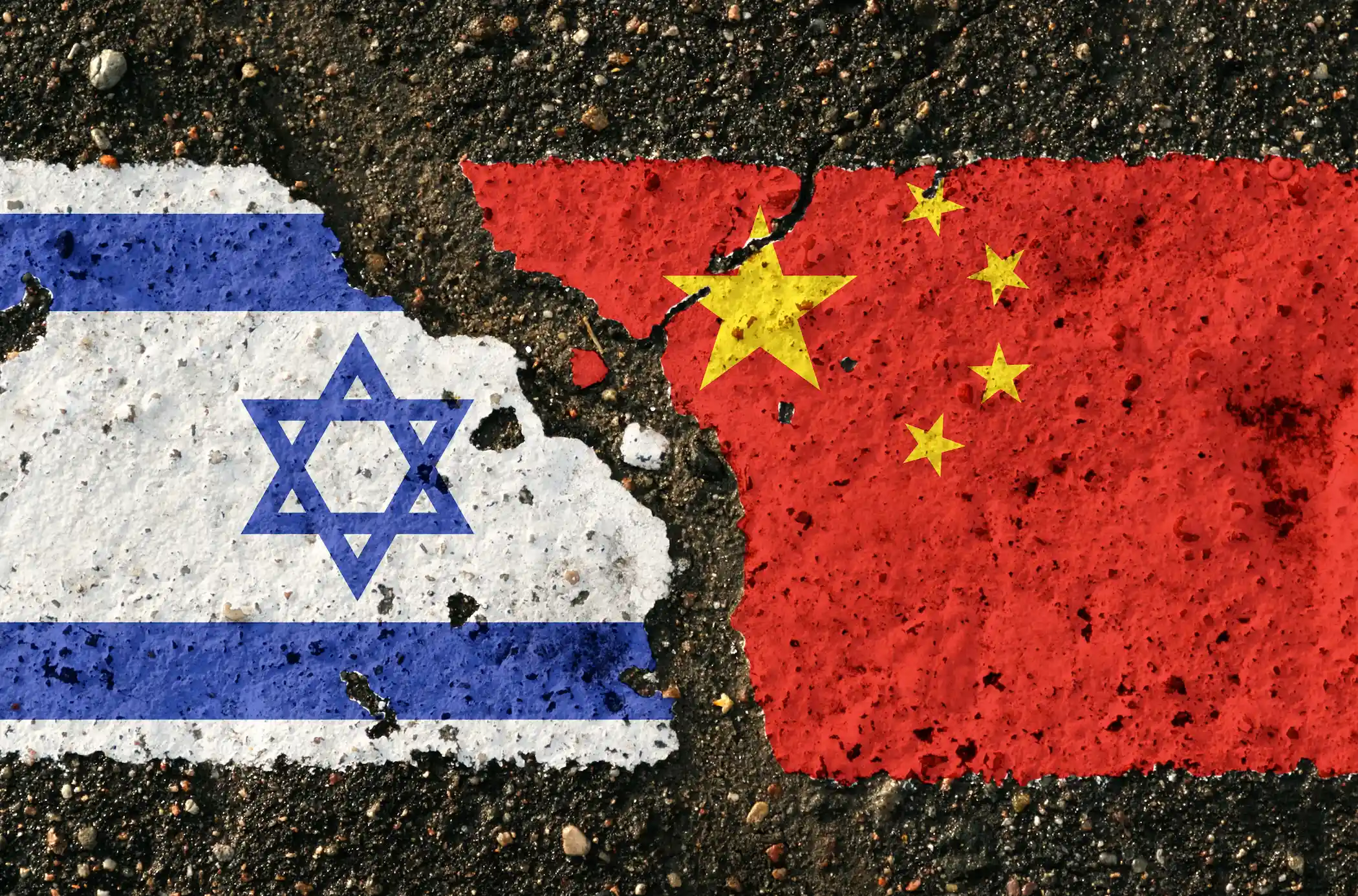
From Partnership to Prudence: China’s Changing Investment Posture in Israel
Economic and geopolitical relations between China and Israel have undergone significant changes following the War on Gaza. Chinese regulatory authorities moved to classify certain areas within Israel under what is known as the Red Category, an official administrative designation that identifies these locations as high-risk investment zones. This classification imposes legal restrictions that prevent the injection of new financial investments into these areas.
As a result, a legal environment has emerged in which Chinese companies rely on security warning protocols and personnel safety considerations as a formal justification for controlling capital flows and suspending the implementation of certain financial obligations under previously signed contracts. This development necessitates a careful examination to understand how these risk assessment mechanisms operate and their tangible impact on the economic relationship between the two countries.

Programmes
14 Nov 2024
Why Has China Been Politically Neutral in Libya?
China is known for using its economic power to infiltrate developing countries, especially those experiencing economic shocks, through providing unconditional loans and increasing its investments in infrastructure. Moreover, China avoids the risk of investing in fragile countries or countries torn out by civil wars, as it might not be a safe environment for long-term investments. In Libya, China has maintained the same policy and avoided playing a crucial role in affecting the outcomes of the Libyan conflict. It, however, preferred to maintain a strong connection with the different local parties engaged in this conflict to preserve its interests and ensure having an economic role in the future of the country. This analysis is going to deeply explore the Chinese role in Libya along with future prospects.
Programmes
4 Apr 2023
China: The Upcoming Hegemon
China has been considered as the main threat to the current world order maintained by Western powers. It became clear when the U.S. for the first time identified Beijing as its “number one challenge” and NATO members included the same country in its “strategic concept”. China has long advertised for itself as a trading partner for many countries with no political interests. For years, world leaders have accepted this propaganda created by the Chinese and perceived the Asian giant as only an economic competitor. However, it seems that Beijing has decided to break up with its old strategy of “hiding our capabilities”, known as taoguang yanghui (韬光养晦).
Lately, China has been engaging in diplomatic initiatives such as the peace plan aimed at ending the war in Ukraine as well as brokering the process of normalizing relations between Iran and Saudi Arabia, leading to Western apprehension from rising Chinese diplomatic power as they understand that altruism has no space in politics. Analysts have been trying to identify the new role to be played by Beijing relying on the concepts coined by William T.R. Fox which concludes that China is not a superpower but it is only a regional power for not being able to deploy military forces overseas. Nevertheless, we argue, contesting prevalent IR theories, that in the new world order, economic might could be enough weapons to extract global political influence. In other words, the contemporary definition of a superpower is different from the one coined by Fox.