

Programmes
26 Aug 2026
Beyond PEPFAR: How America’s Aid Retreat Is Reshaping Global Health Governance
For over two decades, The President's Emergency Plan for AIDS Relief (PEPFAR) stood as the clearest example of what concentrated donor power could do: one country's political will, translated into billions of dollars a year, credited with saving more lives than any single global health program in history. That era is now ending, not through a managed transition but through an abrupt, largely unplanned withdrawal that began within days of the second Trump administration taking office in January 2025. The story that follows is not simply about cuts to HIV/AIDS funding, but it is about what happens when the architecture of global health financing loses its dominant pillar, who scrambles to fill the resulting vacuum, whether the countries left exposed can build the fiscal and institutional capacity to stand on their own, and whether the system that emerges is more fragile or more resilient than the one it replaces. The transition is already producing real costs: closed clinics, disrupted treatment, and rising infections in countries that had spent years bringing their epidemics under control. Besides, it is also accelerating financing reforms, regional cooperation, and domestic manufacturing that donor dependence had, for twenty years, made largely unnecessary. Both of these things are true at once, and this analysis traces both.
Publications
30 Jun 2026
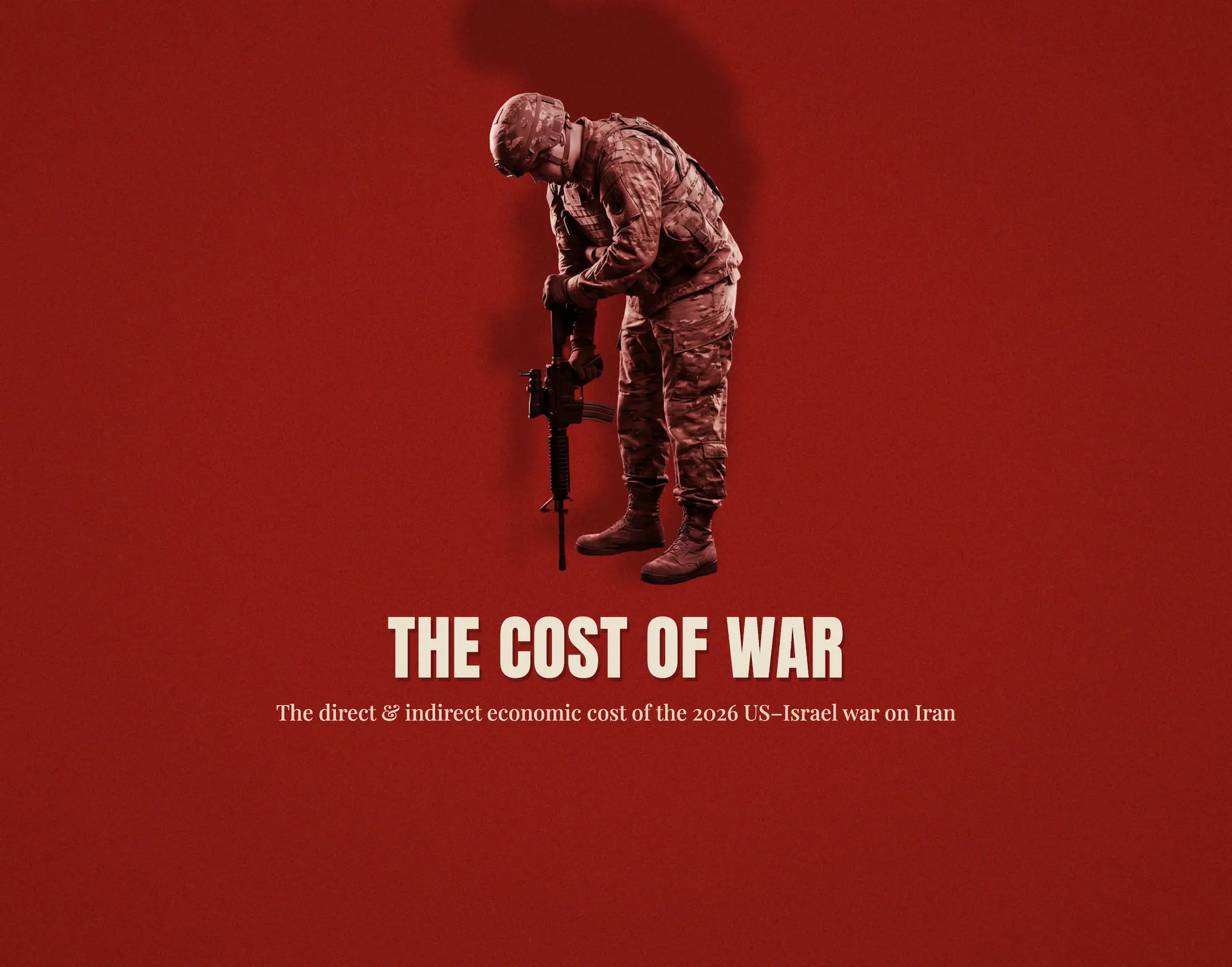
The Direct and Indirect Cost of the 2026 US-Israel War on Iran
The Al Habtoor Research Centre (AHRC) presents a groundbreaking, equation-based assessment analysing the direct and indirect social and economic resource costs of the 110-day conflict that began on February 28, 2026. Utilising an advanced conflict economics framework—including the Stiglitz-Bilmes convention and counterfactual synthetic controls—this research delivers an unprecedented, exclusive analysis of the financial burdens borne by the belligerents and the wider global economy. The headline finding is one of profound asymmetry, proving that recovery capacity, rather than the size of the initial kinetic blow, dictates the medium-term cost of modern warfare. The largest financial burden fell on the global economy, specifically non-belligerent, bystander oil-importing nations, totalling an estimated $1.41 trillion by 2030. Triggered by the 110-day closure of the Strait of Hormuz, this true burden lies in unproduced global output rather than the temporary oil-price spike, which ultimately nets to zero globally. Among the combatants, Iran absorbed an existential, structural blow equivalent to roughly 81% of its pre-war output, costing $305 billion by 2030, or $720 billion on a purchasing-power parity (PPP) basis. Locked out of international capital markets, its output gap fails to close by the end of the decade, triggering a step down to a permanently lower economic path. In contrast, the United States faces a heavily back-loaded bill ranging from $200 billion to $1.1 trillion by 2030. While structurally insulated from the immediate oil shock due to its net energy exporter status, this massive range in projections depends on whether standard cash-budgeting or full multi-decade liabilities—such as veteran care, war-debt interest, and budget ratchets—are present-valued. Meanwhile, Israel sustained a sharp but recoverable macroeconomic shock of $135 billion by 2030, equal to roughly a quarter of a single year's GDP. Advanced air defense mitigated physical destruction, concentrating the cost instead on reserve mobilisation, interception economics, and a transient output gap. Ultimately, this exclusive analysis details how the poorest bystander nations subsidised the conflict's macro cost, marking the 2026 war as one of the most economically disruptive events of the century.

Programmes
15 Jan 2026
The Question of Greenland and European Uselesness
“We need it for defence.” With these words, U.S. President Donald Trump sought to frame Greenland as a question of national security. The island’s vast reserves of critical minerals and its strategic position in the Arctic have long made it geopolitically significant, yet Trump’s rhetoric elevated it into a symbol of broader American ambitions. This move prompted a rare joint statement by the leaders of seven NATO member states, who rejected any attempt to annex Greenland, a semi-autonomous territory of Denmark. Coming alongside U.S. actions elsewhere, including the removal of Venezuela’s President Nicolás Maduro and threats of intervention in other regions, these developments have fuelled growing concern within NATO that Washington is advancing a new international order driven primarily by its own interests. The prospect of Greenland’s annexation therefore raises serious questions not only about the future of the alliance, but also reveals Europe’s weakened position in the international system and its limited capacity to resist American pressure.
Programmes
12 Dec 2025
The 2025 NSS: Disengagement or Entrenchment?
The National Security Strategy (NSS) defines the guiding vision of American power and provides a window into how the United States understands the international environment, identifies its priorities, and determines the political, military, and economic tools it will rely on to protect national interests. Accordingly, the NSS shapes defence planning, informs foreign policy doctrine, guides inter-agency action, and signals to allies and adversaries the direction of U.S. engagement in an evolving global landscape.
The 2025 NSS, issued by the Trump administration in November 2025, is a clear articulation of how this administration intends to position itself in a world marked by rising geopolitical fragmentation, sharpening competition, and growing domestic constraints. Its core purpose is to translate the administration’s worldview into a coherent framework that defines what the United States will prioritise, what it will deprioritise, and under what conditions it will expend political capital, economic leverage, or military force.
For the Middle East, understanding the 2025 NSS is essential because it captures the principles shaping America’s evolving posture toward the region. The strategy’s emphasis on burden-sharing, reduced military exposure, and transactional partnerships signals a shift in expectations for regional actors, while its focus on energy security, counterterrorism, and strategic competition with external powers continues to define the contours of U.S. interests. As a formal expression of how the administration interprets threats and opportunities, the NSS provides the clearest available roadmap of Washington’s intentions—and the framework within which its decisions toward the Middle East will be made in the years ahead.
Programmes
13 Jul 2025
From Isolationism to Intervention: Trump’s MENA U-Turn
The inauguration of Donald Trump as the 47th president of the United States for his second term took place on Jan. 20, 2025. Trump outlined a wide-ranging agenda that blends traditional conservative values. Notably, he signed 26 executive orders on Inauguration Day, which is the highest number by any U.S. president to sign on that day. Trump’s second-term agenda focuses mainly under the banner of “Making America First,” “retribution,” and “law and order.” He aimed at aggressively reshaping the Federal Government, restoring hardline policies from his first term, and shifting America’s global role through protectionism and reduced international engagement.
Trump had emphasised avoiding foreign wars and promoting a non-interventionist foreign policy, focusing instead on border security and economic growth. He opposed “endless wars” and advocated reducing the U.S. military presence abroad. He repeatedly stated that the U.S. should avoid costly wars in the Middle East that lack clear American interests, using slogans like “We are not the world’s policeman” and “End the endless wars.” He sharply criticised previous administrations for prolonged military engagements in Iraq, Afghanistan, Libya, and Syria. However, despite these promises made during his 2024 campaign, Trump’s actions in office have diverged significantly from his non-interventionist stance.

Programmes
11 Feb 2025
What Is Beyond the USAID Controversy?
Recent decisions by U.S. President Donald Trump cutting aid to foreign countries and dismantling the U.S. Agency for International Development (USAID) have sparked global backlash. While the impact of cutting aid is substantial, the broader significance of this move cannot be overlooked. It reflects a deeper shift in the Trump administration’s foreign policy strategy. But what are the implications for the U.S. and its adversaries?

Programmes
3 Dec 2024
Making Sense of Trump’s Foreign Policy
The U.S. National Security Strategy (NSS) is a comprehensive document produced by the National Security Council in conjunction with the executive branch of the United States Government for Congress and then signed by the President. The NSS mainly outlines the U.S.’s major national security concerns and how the administration intends to address them using all instruments of national power. In this context, the 2024 NSS will be one of the most crucial concerns for the President-elect Donald Trump.