
Programmes
18 Mar 2026
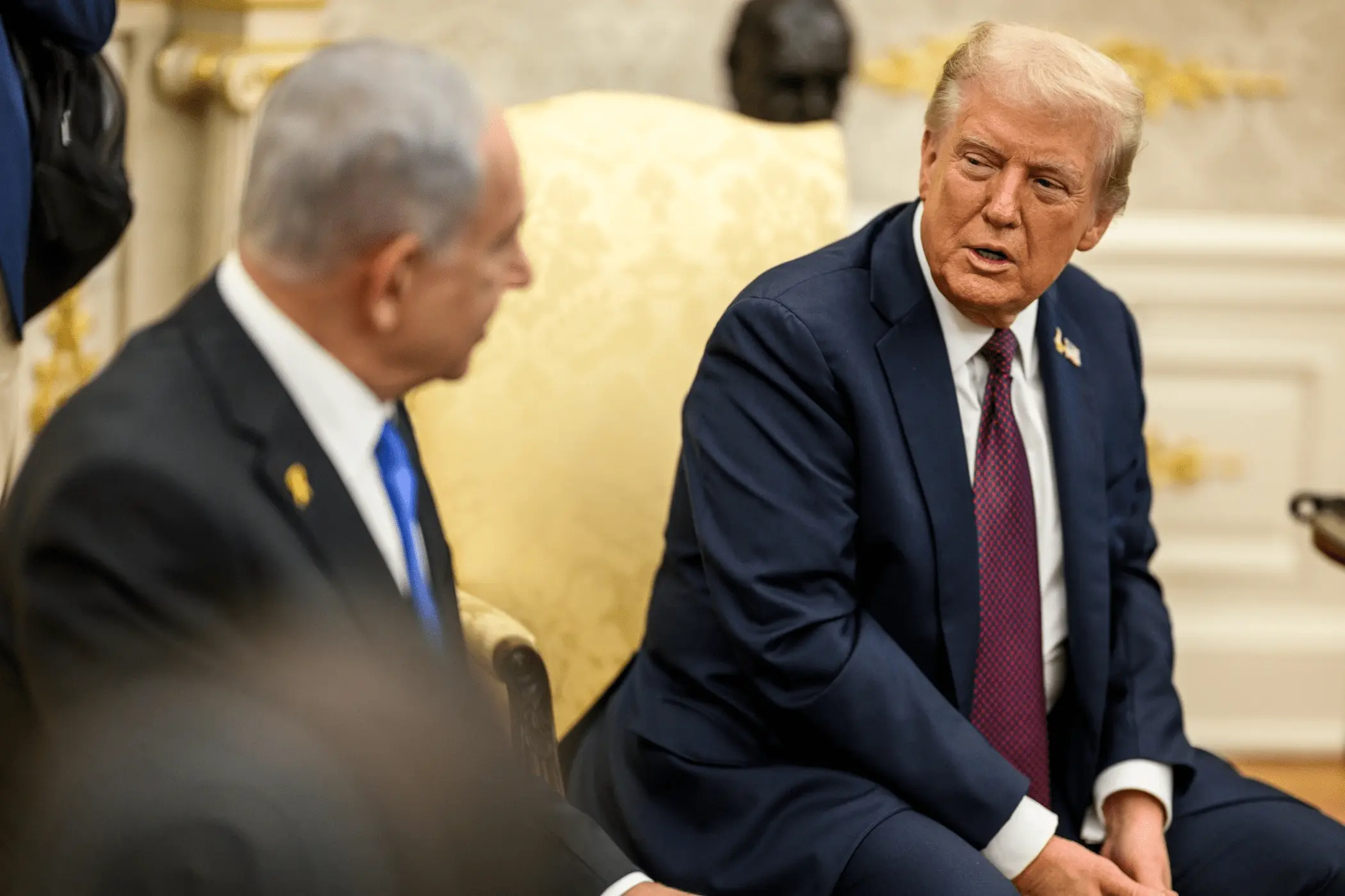
From Wartime Partners to Political Rivals… Could Iran Ignite a Rift Between Trump and Netanyahu?
The strategic partnership between the United States (U.S.) and Israel has long demonstrated an exceptional ability to absorb and manage tactical divergences. Yet the developments accompanying the launch of the U.S. operation "Epic Fury," conducted in parallel with Israel’s "Visiting Lion" operation in late February 2026, have placed this alliance under an unprecedented test in the modern Middle East. Although this coordinated campaign initially achieved decisive operational successes, most notably the elimination of Iran’s Supreme Leader and the dismantling of the command structure of the Islamic Revolutionary Guard Corps (IRGC), the image of complete alignment projected by President Donald Trump and Prime Minister Benjamin Netanyahu conceals fundamental divergences in visions and objectives.
A careful reading of the historical trajectory of this relationship, alongside its current political constraints, suggests that a prolonged conflict will expose the sharp divergence in the strategic interests of the two capitals. As the confrontation shifts from rapid strikes to a complex regional war of attrition whose consequences extend beyond Washington and Tel Aviv, these differences are likely to evolve into deep structural fractures. This paper offers a strategic analysis of this emerging dynamic, arguing that the fundamental differences in the capacity to absorb economic repercussions, manage human losses, and navigate rigid electoral timelines will transform muted tactical disagreements into an overt strategic rift that will be increasingly difficult to contain or deny.

Programmes
15 Jan 2026
The Question of Greenland and European Uselesness
“We need it for defence.” With these words, U.S. President Donald Trump sought to frame Greenland as a question of national security. The island’s vast reserves of critical minerals and its strategic position in the Arctic have long made it geopolitically significant, yet Trump’s rhetoric elevated it into a symbol of broader American ambitions. This move prompted a rare joint statement by the leaders of seven NATO member states, who rejected any attempt to annex Greenland, a semi-autonomous territory of Denmark. Coming alongside U.S. actions elsewhere, including the removal of Venezuela’s President Nicolás Maduro and threats of intervention in other regions, these developments have fuelled growing concern within NATO that Washington is advancing a new international order driven primarily by its own interests. The prospect of Greenland’s annexation therefore raises serious questions not only about the future of the alliance, but also reveals Europe’s weakened position in the international system and its limited capacity to resist American pressure.

Programmes
10 Apr 2025
Navigating the Thaw: Scenarios for the US-Iran Negotiations
The geopolitical landscape in the Middle East is set for a potentially major shift with US President Donald Trump’s announcement of the resumption of negotiations between the United States and the Islamic Republic of Iran, scheduled to begin on April 12, 2025. Following a period marked by escalating bilateral tensions and the effective dissolution of the Joint Comprehensive Plan of Action (JCPOA), this resumption of dialogue has generated considerable anticipation both within Iran and across the wider region. The initial, albeit potentially transient, positive reactions observed in Tehran’s financial markets, as evidenced by movements in the stock market and gold prices, underscore the profound economic implications these discussions could hold for the Iranian populace. Furthermore, the potential for these negotiations to influence broader regional stability is a matter of significant concern and interest even for the nations within the Arabian Gulf. While the precise modalities of these diplomatic engagements – specifically whether they will entail direct bilateral talks, as suggested by the U.S. administration, or proceed indirectly through intermediary channels – remain subject to clarification, the very initiation of dialogue signifies a notable departure from the recent trajectory of U.S.-Iran relations. This analysis will therefore explore a range of plausible scenarios that may unfold as delegations from the United States and Iran convene on April 12, and consider the salient internal political dynamics within both nations, the prevailing external pressures exerted by regional and international actors, and the specific contextual factors that have contributed to this renewed, albeit cautious, engagement.