

The strategic partnership between the United States (U.S.) and Israel has long demonstrated an exceptional ability to absorb and manage tactical divergences. Yet the developments accompanying the launch of the U.S. operation "Epic Fury," conducted in parallel with Israel’s "Visiting Lion" operation in late February 2026, have placed this alliance under an unprecedented test in the modern Middle East. Although this coordinated campaign initially achieved decisive operational successes, most notably the elimination of Iran’s Supreme Leader and the dismantling of the command structure of the Islamic Revolutionary Guard Corps (IRGC), the image of complete alignment projected by President Donald Trump and Prime Minister Benjamin Netanyahu conceals fundamental divergences in visions and objectives.
A careful reading of the historical trajectory of this relationship, alongside its current political constraints, suggests that a prolonged conflict will expose the sharp divergence in the strategic interests of the two capitals. As the confrontation shifts from rapid strikes to a complex regional war of attrition whose consequences extend beyond Washington and Tel Aviv, these differences are likely to evolve into deep structural fractures. This paper offers a strategic analysis of this emerging dynamic, arguing that the fundamental differences in the capacity to absorb economic repercussions, manage human losses, and navigate rigid electoral timelines will transform muted tactical disagreements into an overt strategic rift that will be increasingly difficult to contain or deny.
Seeds of Discord
The foundational rationale for both initiating and sustaining the war on Iran is rooted in fundamentally divergent strategic frameworks between Washington and Tel Aviv. For Prime Minister Benjamin Netanyahu, the conflict represents an existential and quasi-religious imperative, guided by the doctrine of pre-emptive strike. It is further driven by an acute political necessity to overcome the catastrophic intelligence and security failures of October 7. In this context, Netanyahu frames the joint campaign as a once-in-a-generation opportunity to neutralise the Axis of Resistance decisively. Accordingly, his war logic is anchored in a systematic effort to eliminate the Iranian regime as a prerequisite for ensuring Israel’s long-term survival, presenting the conflict as an existential undertaking with broader implications for global security.
By contrast, President Donald Trump’s entry into the war is driven by a pragmatic calculus shaped by the principles of “America First” and “peace through strength”. Accordingly, his objective is to deliver a rapid and decisive strike that would impose overwhelming American dominance, restore global deterrence, and secure swift regional stabilisation. Such stabilisation is viewed as a prerequisite for economically advantageous initiatives led by the United States, most notably the expansion of the Abraham Accords and the Global Peace Council he has proposed. However, the relative fragility of the American rationale becomes more evident in light of a U.S. intelligence assessment conducted in March 2025, which concluded that Iran was not actively pursuing the development of a nuclear weapon and that Ali Khamenei had not renewed authorisation for the nuclear programme suspended since 2003. This reality was inadvertently underscored when Secretary of State Marco Rubio acknowledged that U.S. military engagement was based on Washington’s expectation that an Israeli strike would be followed by an Iranian response against American forces. In effect, the U.S. opted to participate in a coordinated “pre-emptive” strike alongside Israel rather than risk reacting to a subsequent Iranian attack, thereby clarifying its alignment in a conflict to which it was not originally a direct party.
Conflicting End Goals
The sharpest point of divergence between the two administrations lies in the incompatible strategic outcomes each side requires to declare victory. Israel seeks the complete and irreversible destruction of all Iranian uranium enrichment facilities, alongside the systematic collapse of the Islamic Republic, thereby ensuring a post-war environment entirely devoid of any enrichment capability. Israeli defence officials have explicitly cautioned that partial outcomes would risk leaving the Islamic Revolutionary Guard Corps intact. Netanyahu has gone further, dispensing with diplomatic ambiguity by directly appealing to the Iranian public to create the conditions necessary to reclaim control over their future through internal regime change.
By contrast, the Trump administration is pursuing a far narrower objective centred on the rapid and effective degradation of Iran’s military capabilities to compel the interim leadership into unconditional surrender. This position is clearly reflected in the red line articulated by Secretary of Defence Pete Hegseth, who stated unequivocally that the war is not intended to achieve regime change. Intelligence documents further indicate that Trump strongly favours a “Venezuela model,” involving the installation of a compliant successor from within the existing power structure, while deliberately preserving the functional integrity of the Iranian state apparatus to avoid a destabilising regional power vacuum. To reinforce this strategy, Trump has firmly rejected the potential selection by Iran’s Assembly of Experts of the hardline Mojtaba Khamenei, deeming him unacceptable. This divergence is set to produce a serious structural rift in the near term, particularly in light of an exclusive Reuters report citing a clear U.S. intelligence assessment that the Iranian government remains cohesive and that the regime “is not at risk of imminent collapse” despite the U.S.–Israeli bombardment. This assessment directly undermines the core operational premise underpinning Israel’s strategy.
Domestic Repercussions of the War
The continuation of the war generates sharply divergent pressures on the domestic political survival of both leaders: it significantly consolidates Netanyahu’s position while simultaneously imposing a potentially devastating electoral burden on Trump. In Israel, the existential framing of the conflict has generated broad public support. Polling conducted by the Israel Democracy Institute indicates that 74% of Jewish Israelis express strong confidence in Netanyahu’s ability to manage the war effectively, while an overwhelming 93–94% support the continuation of military operations, with 57% explicitly backing the war until the regime collapses.
This environment has enabled Netanyahu’s Likud party to lead opinion polls and galvanise support across Israel’s political spectrum under what is commonly described as a “rally around the flag” effect. It has also provided his coalition with the political momentum necessary to overcome the crisis surrounding the exemption of ultra-Orthodox Haredi communities from military conscription, which had threatened to bring down the government. This was achieved through the approval of an emergency defence budget amounting to 32 billion shekels ($10.4 billion), financed by a 3% reduction in the budgets of all other ministries. Moreover, Netanyahu’s ongoing corruption trials have been successfully postponed under the pretext of security consultations.
By contrast, Trump has faced a deeply adverse domestic backlash. Public approval of his handling of the crisis remains low, hovering between 36% and 37%. According to multiple polls, including Quinnipiac, CNN/SSRS, Reuters/Ipsos, and PBS/NPR, between 53% and 60% of Americans oppose military action. This marks the lowest level of support for any U.S. military operation since the Second World War. At the same time, macroeconomic repercussions have been significant. In the early days of the war, Brent crude prices surged sharply to a range of 109 to $115 per barrel, with volatile trading sessions nearing $120. This translated into a rapid 17% increase in domestic gasoline prices within days, reaching an average of approximately $3.60 per gallon. Such inflationary pressure directly undermines the Republican Party’s core narrative on the affordability of the cost of living. House Minority Leader Hakeem Jeffries has sought to capitalise on the situation, arguing that the administration has billions of dollars available to finance military strikes against Iran, yet lacks the resources to make healthcare affordable.
These economic strains have begun to erode Trump’s populist base. Representative Thomas Massie publicly stated that the war is not consistent with an “America First” agenda, while Vice President J.D. Vance remained silent for 72 hours following the strikes. Meanwhile, conservative commentator Tucker Carlson has promoted a conspiratorial narrative alleging that Netanyahu, along with a group of allied billionaires, manipulated Trump into entering the war, going so far as to claim that Netanyahu effectively controls the U.S. president and is drawing him into a conflict that serves his own agenda.
The Timing Dilemma
This stark asymmetry in domestic political capital is further exacerbated by the misalignment between military endurance and tolerance for losses, rendering any shared timeline inherently unstable. Relying heavily on conventional escalation dominance, Trump initially assured his Republican allies that the war would last no more than four to five weeks, presenting it as a short-term operation. His administration’s tolerance for American casualties has proven to be virtually non-existent. The loss of between six and nine U.S. military personnel, including six killed in a single drone strike targeting a tactical operations centre at Shuaiba Port in Kuwait, along with approximately 18 wounded, triggered acute domestic alarm. In parallel, the United States rapidly incurred losses exceeding $1.7 billion in high-value equipment, including around 11 MQ-9 Reaper drones, with an estimated cost of over $330 million for those platforms alone. By March 9, these developments had already compelled Trump to begin laying the rhetorical groundwork for disengagement, asserting that the mission had been fully accomplished and was ahead of schedule.
By contrast, the Israeli military establishment has explicitly stated that it is prepared to fight without any fixed time horizon. However, it confronts an Iranian adversary deliberately structured for a protracted war of attrition. Iran’s decentralised “mosaic defence” doctrine, developed by former commander Mohammad Ali Jafari, is built on the dispersion of command structures, enabling missile forces and Basij units to operate autonomously despite targeted U.S. strikes. At a broader level, Tehran’s strategy rests on the premise that endurance itself constitutes a strategic weapon. This was underscored by Iranian Parliament Speaker Mohammad Bagher Ghalibaf, who stated: “We certainly do not seek a ceasefire.” As Le Monde observed in a pointed critique, Netanyahu appears to be operating without a clear exit strategy, consistently resorting to the costliest options while implicitly expecting Washington to bear the conflict’s ultimate duration and burden.
Midterm Pressures and Knesset Calculations
The rigid, non-negotiable timelines of upcoming electoral cycles impose a temporal constraint that is likely to fracture the alliance over the precise timing of ending the war. The U.S. congressional midterm elections, scheduled for Nov. 3 2026, represent a critical strategic ceiling for the Trump administration. Republican strategists are increasingly concerned about a potential Democratic surge driven by wartime stagflation and fatigue with military interventions, which could cost the party at least 20 seats in the House of Representatives. Accordingly, Trump faces mounting pressure to declare victory unilaterally and pivot toward diplomacy before the onset of the summer campaign season. At the same time, he must allow sufficient time for the release of 172 million barrels from the Strategic Petroleum Reserve to stabilise global energy markets and reduce domestic gasoline prices ahead of the vote.
By contrast, Israeli law mandates general elections by late October 2026. It requires the passage of the state budget by the end of March to avoid the automatic dissolution of the Knesset. Capitalising on his rising wartime popularity, elements within Netanyahu’s right-wing coalition are actively seeking to bring forward early elections to June or July 2026, specifically leveraging the Iranian war. Because Netanyahu’s political resurgence is entirely contingent on his image as a wartime leader dismantling an existential threat, he cannot accommodate Trump’s call for an early spring ceasefire. Any forced cessation of operations before the regime’s collapse would carry severe political consequences, immediately redirecting domestic scrutiny toward his catastrophic security failures just as Israeli voters head to the polls.
Disputes Over the Military Target Bank
The emerging tactical disagreement over the scope of bombardment and target selection has begun to expose a fundamental divide between U.S. economic sensitivities and Israeli strategic imperatives. During the second week of operations, Israel conducted extensive unilateral strikes on approximately 30 energy storage facilities across Iran, including sites on Karaj Island and the Shahran depot. This unauthorised escalation triggered massive fires, toxic smoke, and severe acid rain over Tehran.
Given that attacks on oil infrastructure are viewed in Washington as a highly destabilising option, carrying the risk of global price surges and potential disruption to the U.S. economy, the American response was one of pronounced anger. A senior Israeli official described the reaction as conveying “deep frustration.” Even the hawkish U.S. Senator Lindsey Graham felt compelled to urge Israel to exercise restraint publicly. American tolerance for the escalation further eroded following a catastrophic targeting error, when a U.S. strike hit a girls’ school in Minab due to outdated targeting data, intensifying concerns in Washington over the risks of uncontrolled operational expansion.
However, the ultimate point of contention centres on the “Pickaxe Mountain” dilemma. The International Atomic Energy Agency estimates that Iran stores portions of its 440 kilograms of highly enriched uranium deep within underground tunnel networks, such as Fordow and the Kuh-e Kolang Gaz La complex near Natanz. Israel lacks the heavy strategic bombers, such as the B-2 Spirit or the B-21 Raider, as well as the bunker-busting munitions required to reach such depths. As a result, neutralising these facilities would require the deployment of U.S. special operations forces equipped with mobile uranium-detection systems. Given that 74% of American voters strongly oppose the deployment of ground troops to Iran, it is highly likely that Trump would refuse to authorise such high-risk missions to avoid a potentially catastrophic entanglement. Such a refusal would almost certainly be interpreted in Tel Aviv as a fundamental betrayal of the war’s core objective.
Arms Constraints and Economic Pressures
Beyond the immediate battlefield, deeper structural dynamics are likely to intensify the rift as the war continues. Chief among these are constraints on U.S. munitions and the leverage they confer. Despite Israel’s rhetoric of managing a self-sufficient wartime economy, the joint campaign has been highly resource-intensive, with the United States spending $5.6 billion on munitions in the first two days alone. As Trump seeks an exit while facing contentious funding battles in Congress over a proposed
With a 50-billion-dollar aid package, led by isolationist lawmakers such as Rand Paul, he retains considerable coercive leverage. By constricting supply lines and freezing the pipeline of interceptor missiles and precision-guided munitions, Trump could compel Israel to acquiesce. Such a move would echo historical instances of U.S. coercion, notably during the 1956 Suez Crisis and the 1982 Lebanon War.
Moreover, the macroeconomic shock affecting the region threatens core U.S. strategic interests. Iran’s horizontal escalation strategy centres on the large-scale deployment of naval mines in the Strait of Hormuz, effectively constraining 20% of global oil supplies and approximately one-fifth of liquefied natural gas flows. Goldman Sachs models warn that oil prices could rise to between 120 and $150 per barrel, while Deutsche Bank projects a more severe surge to as high as $200 per barrel.
Finally, defence strategists such as Elbridge Colby warn that the large-scale diversion of U.S. military assets to the Middle East risks significantly weakening America’s posture in the Indo-Pacific. This shift directly benefits China, which is exploiting the turmoil to purchase discounted, sanctioned Iranian oil and expand its strategic reserves. At the same time, it enables India to continue importing Russian oil, thereby generating substantial gains for Moscow as the conflict persists.
Drivers of Divergence
The alliance is unlikely to fracture merely because of personal differences; rather, the war has embedded two fundamentally conflicting strategic timelines within it. Washington seeks a short, coercive campaign that can be concluded once tangible military damage has been inflicted, and domestic costs remain contained. By contrast, Tel Aviv is pursuing an open-ended campaign whose political and strategic logic is realised only when the Iranian regime, its nuclear infrastructure, and its network of proxies are rendered incapable of recovery.
Accordingly, what is unfolding should be understood as a structural, rather than transient, fault line, one that follows a recurring pattern in U.S.–Israeli crisis management. Initial alignment tends to give way to enforced restraint once broader American interests come under threat, echoing precedents such as the 1956 Suez Crisis, the Ford administration’s “reassessment”, Reagan’s pressure in 1982, and George H. W. Bush’s insistence on Israeli restraint in 1991. This historical framework is instructive because the same mechanism is now re-emerging: once the war ceases to appear as a rapid punitive strike and instead evolves into a protracted conflict of endurance, marked by mounting casualties and global instability, the U.S. shifts toward prioritising termination over transformation, whereas Israel prioritises transformation over termination.
The first and most critical trigger lies in the point at which the energy shock ceases to appear as a temporary disruption and instead becomes a form of domestic political veto on the American side. The key threshold is not merely elevated oil prices, but their persistence: Brent crude stabilising above approximately 120 to $130 per barrel, the effective closure of the Strait of Hormuz for more than 45 days, and regular gasoline prices in the United States rising to between 4.5 and $5.0 per gallon. At this level, releases from the Strategic Petroleum Reserve and coordinated drawdowns by the International Energy Agency no longer signal control; rather, they indicate that the administration is prosecuting a war whose costs are being borne directly by American consumers.
In effect, the alliance becomes unstable not when markets panic for 48 hours, but when Americans begin to experience the war as a sustained inflationary burden. A Reuters report noting that Brent crude has already briefly exceeded $119, alongside analysts’ public projections of a rise to $150 in the event of continued disruption in the Gulf of Mexico, underscores how narrow the remaining margin is before this threshold is crossed. For Trump, such a scenario threatens the Republican Party’s core electoral message on affordability ahead of the midterms. By contrast, Netanyahu views the same energy-induced pain as serving a coercive function, intensifying external pressure on Tehran and reinforcing the logic of a war of attrition.
The second key factor is casualties. Limited American losses do not pose a significant political risk so long as the war appears short, controlled, and successful. However, once fatalities rise to around 15 or 16, or a single airstrike results in the deaths of dozens of Americans at a regional base or another military installation, the political meaning of the war shifts immediately. It ceases to be perceived as a demonstration of strength and instead becomes, in domestic U.S. terms, the onset of another “forever war.”
Current indicators point in this direction: the conflict has already resulted in the deaths of seven U.S. service members, with additional injuries, while Iranian retaliation has expanded to target regional states, including a facility associated with the U.S. The critical strategic asymmetry lies in the fact that Israel’s tolerance for a prolonged conflict is not matched by American tolerance for casualties. Israeli political discourse frames endurance as evidence of resolve. In contrast, Trump’s coalition interprets rising American losses as proof that the president is being drawn from a punitive operation into open-ended entanglement. Once a mass-casualty event intersects with economic shock, continued support in Washington for Netanyahu’s maximalist war objectives becomes politically hazardous.
The third factor is the transition from accessible targets to the “Pickaxe Mountain dilemma.” Early tactical cohesion persists while the alliance focuses on destroying exposed missile sites, naval assets, and command centres. However, this cohesion begins to erode once the remaining decisive targets are deeply buried nuclear facilities and uranium stockpiles that Israel cannot neutralise independently.
At that stage, Tel Aviv’s definition of victory requires U.S. capabilities, including bunker-penetrating munitions, heavy strategic bombers, or high-risk special operations to seize or destroy highly enriched uranium stockpiles. By contrast, Washington can plausibly declare victory based on inflicted damage and proceed toward disengagement. For this reason, the “Pickaxe Mountain” dispute is analytically pivotal: it encapsulates the entire disagreement over the end state within a single operational decision. If the Pentagon refuses to authorise the final package of deep-strike operations, Netanyahu will interpret this not as prudence, but as a fundamental abandonment of the war’s core objective. This tension is further intensified by the collapse of the assumption of rapid regime change.
The fourth factor is the erosion of political legitimacy, transforming strategic frustration into an undeniable diplomatic crisis. Here, disputes over disproportionate civilian casualties become particularly consequential. Protests across several Western cities in response to the strike on the Minab girls’ school are significant not only because of their moral and legal implications, but also because they provide Congress, European partners, and the non-interventionist wing of the “Make America Great Again” movement with a tangible point of leverage to challenge the White House’s control over the war and to question whether operational restraint is still being maintained.
This episode is likely to intersect with funding rebellions in Congress, hearings on war powers, conditional resupply battles, and increasing public distancing by prominent figures within the MAGA movement. In this context, the dissent voiced by Tucker Carlson or the visible unease of J.D. Vance is less important as a media spectacle than as an elite-level signal granting Trump political permission to recast the war as an overreach driven by Netanyahu rather than a success of “America First” policy. Once the energy threshold, the casualty threshold, and a legitimacy shock such as the Minab incident converge, the White House is no longer merely debating tactics with Tel Aviv. Instead, it is managing an internal coalition crisis in which continued alignment with Netanyahu threatens congressional control, party cohesion, and the president’s own anti-war image. At that point, the rupture becomes impossible to deny.
Scenarios for Escalating Tensions Between Trump and Netanyahu
These scenarios are grounded in the premise that Donald Trump and Benjamin Netanyahu entered the conflict with temporarily aligned tactical objectives but fundamentally divergent strategic end goals. Trump requires a rapid, electorally defensible victory that stabilises markets and is framed around inflicting damage. By contrast, Netanyahu needs an open-ended campaign that can be credibly presented as the decisive elimination of the Iranian threat. This tension is further intensified by converging external pressures, including U.S. vulnerability ahead of the midterm elections, Israeli electoral manoeuvring, the energy shock linked to the Strait of Hormuz, heightened sensitivity to casualties, and the failure of assumptions regarding rapid regime collapse.
Scenario One: Managed Discord
In this scenario of concealed and managed disagreement, the alliance is not genuinely stable but rather fragmented. Trump and Netanyahu continue to project unity in public while privately disputing the duration of the war, target selection, escalation thresholds, and the definition of victory. Politically, both still depend on maintaining this façade. Trump requires it because any visible rupture would immediately expose his promised short war as an open-ended conflict. Netanyahu, in turn, needs it because any clear sign of American hesitation would undermine his central domestic claim that he alone can sustain unconditional U.S. support while delivering a historic defeat to Iran.
Operationally, however, this managed ambiguity already distorts the conduct of the war. The U.S. begins a quiet transition from sustained offensive engagement toward a more defensive role, while the Israeli military assumes the primary burden of offensive operations. Yet this arrangement is inherently unsustainable so long as Trump believes he can achieve rapid oil price stabilisation and Netanyahu assumes that U.S. operational support will remain available for the next phase of strikes. In practice, this dynamic produces a slower and less decisive campaign, granting Iran’s decentralised “mosaic defence” system the time needed to reconstitute command structures, repair infrastructure, and convert mere survival into strategic leverage.
What ultimately brings this concealed discord into the open is not the disagreement itself, but the occurrence of a trigger that renders political ambiguity untenable. Three principal catalysts drive this shift:
First, U.S. efforts to secure a ceasefire or initiate negotiations, at a time when Israel remains committed to continuing strikes aimed at destabilising the regime.
Second, Israeli escalation toward targets that directly exacerbate domestic pressures within the United States, whether by intensifying energy market shocks or by striking civilian infrastructure and energy facilities.
Third, the emergence of a legitimacy crisis stemming from a civilian casualty scandal, such as the Minab incident, could ignite congressional backlash or provoke widespread condemnation from allies.
In this context, an uncoordinated Israeli strike on energy targets stands out as the clearest event likely to expose the fragility of the supposed alignment. Targeting an oil facility such as the Shahran depot would not merely expand the scope of the conflict; it would transform a latent strategic disagreement into a direct challenge to Trump’s ability to stabilise markets and contain fuel prices. At that point, he would be compelled to make an explicit and consequential choice: either endorse an escalation with severe economic repercussions or criticise Israel to preserve his domestic political standing. In either case, the logic of managed ambiguity would collapse entirely.
Scenario Two: Open Rupture
Within this context, the personal alliance would give way to overt estrangement, even as military cooperation continues to decline. This phase represents a paradoxical transition: mutual tactical dependence persists, while each side simultaneously seeks to reposition itself domestically against the other. On one side, Trump would deploy public criticism as a political instrument to reassure the “America First” constituency, emphasising that U.S. policy is not beholden to what he frames as Israeli maximalist impulses. On the other hand, Netanyahu would leverage confrontation to project himself as the sole Israeli leader capable of withstanding American pressure when national survival is at stake.
However, the anticipated political gains from such discord would come at a direct cost to military effectiveness. The operational consequences would manifest clearly across several dimensions:
- Intelligence selectivity: the restriction and compartmentalisation of intelligence sharing.
- Procedural delay: a slowdown in the approval of high-risk targets.
- Institutional fragmentation: the erosion of joint coordination mechanisms and unified command structures.
- Operational unilateralism: an increasing frequency of “surprise” unilateral actions, as each capital seeks to assert control or demonstrate resolve.
This paradox produces domestic repercussions along two divergent trajectories:
- On the American side: Trump may achieve temporary relief from political pressure by externalising blame and reframing the conflict as an Israeli-driven entanglement that his administration is attempting to contain. However, this strategy places him in a politically vulnerable position, as it projects an inability to restrain a smaller ally or to conclude a war he had previously characterised as short-term.
- On the Israeli side: Netanyahu can leverage confrontation for short-term political gains, capitalising on a wartime political environment that favours hardline rhetoric over strategic caution. Yet this approach carries significant risks, as his political legitimacy rests heavily on demonstrating unwavering U.S. support. Once the disagreement becomes public, domestic opponents would be well positioned to accuse him of jeopardising Israel’s most critical strategic alliance.
Under these conditions, military operations may continue. Still, the alliance’s capacity to absorb additional shocks, such as further oil price surges, an expansion of hostilities involving another actor within the Axis of Resistance alongside Hezbollah, or additional U.S. casualties, would erode at a faster rate than in the first scenario.
Scenario Three: Strategic Divorce
This scenario represents the stage at which the bilateral alliance ceases to function effectively politically. On the one hand, the Trump administration is unable to absorb the medium-term consequences of a prolonged energy war, combined with mounting casualties. On the other hand, Netanyahu faces an escalating threat to his domestic political future if military operations are halted before the complete collapse of the Iranian regime. Accordingly, the disintegration of the alliance would not be driven by a single factor, but rather by the accumulation of simultaneous domestic pressures that ultimately compel the termination of the partnership.
These pressures are defined by a set of key indicators, most notably the sustained stabilisation of Brent crude prices above $120 per barrel and U.S. gasoline prices rising to between 4.5 and 5 dollars per gallon. This would likely coincide with the occurrence of high-impact American casualties, alongside growing legislative opposition in Congress to continued war funding, or unilateral Israeli escalation decisions that render the continuation of the partnership politically destabilising within Washington.
This political burden is further intensified by the failure of the rapid-regime-change strategy. The potential succession of Mojtaba Khamenei, coupled with Iran’s resilient defensive architecture, prevents the anticipated institutional collapse, thereby depriving the U.S. administration of the ability to frame the war as a short and successful military operation.
At the tactical level, the “Pickaxe Mountain” dilemma emerges as a field-level trigger for disengagement. When Israel demands the deployment of U.S. military capabilities to conduct deep strikes or high-risk special operations and is met with refusal from Washington, the American president acquires both the political and operational justification to declare that objectives have been sufficiently achieved and to proceed with withdrawal. In this sense, the trajectory of disengagement mirrors the political dynamics that shaped the final phase of the 1982 Lebanon War.
Accordingly, a U.S. withdrawal would fundamentally alter the nature of the conflict, shifting it from a coalition-based deterrence operation to a unilateral Israeli war of attrition characterised by a steady contraction in scope and sustainability due to the loss of diplomatic cover, logistical support, and intelligence backing. In response to this exposure, the Israeli leadership would be compelled to adopt a stringent austerity approach, centred on rationing precision munitions and defensive assets, narrowing the scope of targeting, and attempting to leverage isolation to mobilise domestic support and sustain the governing coalition. However, such tactical adaptation would fail to resolve the underlying constraint: the inability to achieve comprehensive regime collapse in Iran without specialised U.S. military capabilities, including bunker-penetrating munitions and heavy strategic bombers. Consequently, Israeli operations would be reduced to limited punitive strikes, accompanied by growing international isolation and mounting external pressure.
At the regional level, this rupture would reinforce the effectiveness of Iran’s endurance-based strategy, which relies on prolonging the conflict and exerting economic pressure. At the same time, it would deepen doubts among U.S. allies regarding the reliability of American security guarantees. Domestically, Washington would frame the decision to withdraw as a political success aligned with the “America First” doctrine, justifying it on the grounds that core deterrence objectives had been achieved while avoiding entanglement in a prolonged and costly conflict.
Scenario Four: Forced Restraint
This scenario represents a comprehensive strategic rupture, in which Washington moves beyond military withdrawal to exercise direct coercion, compelling Tel Aviv to terminate military operations under stringent U.S. conditions. It is driven by a political assessment that restraining Israel has become less costly than sustaining the alliance. This outcome would crystallise following the accumulation of systemic pressures, including the near-total disruption of maritime navigation in the Strait of Hormuz and the Red Sea, unprecedented oil price surges approaching $200 per barrel with recessionary implications, the prospect of high-impact strikes against U.S. forces, the emergence of major humanitarian crises, or the escalation of geopolitical emergencies in other theatres such as Taiwan and Ukraine that strain American capabilities.
Under such conditions, the United States would activate a full spectrum of coercive instruments, beginning with the suspension of military resupply channels and restrictions on intelligence flows, and extending to threats of arms embargoes, the withdrawal of diplomatic cover at the United Nations, and the imposition of severe financial pressure. This trajectory would replicate historical precedents in which U.S. leverage was deployed to subordinate Israeli priorities to American strategic imperatives, notably during the 1956 Suez Crisis and subsequent episodes of strategic restraint in 1975, 1982, and 1991.
For Netanyahu, the imposition of such U.S. constraints would not be interpreted as a temporary political divergence, but as a fundamental strategic breach of the alliance’s foundations. This would likely trigger a counter-escalatory response centred on questioning Trump’s reliability, mobilising Congress and lobbying networks, and reframing the ceasefire domestically as a coercive imposition rather than a military failure. However, the inevitable convergence between this political coercion and the immediate operational exposure resulting from Israel’s dependence on U.S. precision munitions, intelligence support, and diplomatic cover would compel Tel Aviv to freeze its strategic operations within a matter of weeks, if not immediately.
The resulting battlefield implications would translate into acute domestic political repercussions, raising the prospect of coalition collapse under pressure from the hardline right and a shift toward early elections, with Netanyahu facing accusations of undermining the foundational partnership with Washington without achieving the comprehensive neutralisation of the Iranian threat. Ultimately, this scenario would lead to a complete breakdown in the personal relationship between the two leaders, establishing an unprecedented strategic rupture that surpasses even the repercussions of the 1956 Suez Crisis in its depth, as it directly undermines the long-standing principle of strategic alliance between the two states.
Conclusion
A systematic deconstruction of the strategic dynamics underlying this confrontation reveals that the latent fracture within the alliance does not stem from transient political disagreements but from an inherent structural contradiction between the two sides’ strategic ends. While Washington approaches the conflict as a limited coercive campaign aimed at restoring deterrence within domestically acceptable cost parameters, Tel Aviv operates within a zero-sum survival doctrine that necessitates an open-ended confrontation to dismantle the Iranian regime’s structure and fully neutralise its nuclear capabilities.
This dynamic reproduces the classical historical pattern of crisis management between the two capitals, as seen during the 1956 Suez Crisis and the 1982 Lebanon War, where initial alignment gives way to restraint and constraint once broader U.S. strategic red lines are threatened, regardless of how these divergences ultimately unfold, whether through unilateral U.S. withdrawal that leaves Israel to confront a war of attrition alone, or through the application of comprehensive coercion to impose a ceasefire, the repercussions will extend beyond the current operational context. In effect, they are likely to dismantle the longstanding model of automatic strategic alignment between the two states, compelling the Israeli military establishment to adopt a more inward-looking and self-reliant security doctrine, and establishing a new trajectory in which bilateral relations are governed by stricter utilitarian and pragmatic calculations.
References
Al Jazeera. “Israel Strikes Iran’s Oil Facilities for First Time as War Enters Ninth Day.” Al Jazeera, March 8, 2026. https://www.aljazeera.com/news/2026/3/8/israel-strikes-irans-oil-facilities-for-first-time-as-war-enters-ninth-day.
Associated Press. “US Says Soldiers Slain in Iran-Linked Drone Strike in Kuwait.” AP News, March 2026. https://apnews.com/article/slain-soldiers-iran-drone-strike-kuwait-7b65d5b6c3c3097e2a43972f91ae4cbf.
Banco, Erin, and Jonathan Landay. “Exclusive: US Intelligence Says Iran Government Is Not at Risk of Collapse, Say Sources.” Reuters, March 12, 2026. https://www.reuters.com/business/media-telecom/us-intelligence-says-iran-government-is-not-risk-collapse-say-sources-2026-03-11/.
Bloomberg News. “Israel Boosts Defense Budget by $13 Billion to Fund Iran War.” Bloomberg, March 10, 2026. https://www.bloomberg.com/news/articles/2026-03-10/netanyahu-s-cabinet-to-expand-budget-by-13-billion-to-fund-war.
Everett, Burgess. “Thomas Massie Blasts Trump over Venezuela Attack: ‘America First’ Betrayed.” Politico, January 5, 2026. https://www.politico.com/news/2026/01/05/thomas-massie-trump-venezuela-attack-america-first-00710350.
Frenkel, Sheera. “Israel’s Strikes on Iran’s Oil Infrastructure Raise Stakes in Regional War.” New York Times, March 7, 2026. https://www.nytimes.com/2026/03/07/world/middleeast/israel-iran-oil-strikes.html.
Gulf News. “Brent Crude Oil Price Spikes to $107.1 amid Iran-U.S.-Israel War.” Gulf News, March 8, 2026. https://gulfnews.com/business/energy/brent-crude-oil-price-spikes-to-1071-amid-iran-us-israel-war-1.500467933.
Haski, Pierre. “By Attacking Iran, Netanyahu Stakes His Political Survival.” Le Monde, June 17, 2025. https://www.lemonde.fr/en/international/article/2025/06/17/by-attacking-iran-netanyahu-stakes-his-political-survival_6742428_4.html.
Helmore, Edward. “Thomas Massie among Few Republicans to Criticize Trump over War Powers: ‘This Is Not America First.’” Fortune, February 28, 2026. https://fortune.com/2026/02/28/thomas-massie-among-few-republicans-to-criticize-trump-over-war-powers-this-is-not-america-first/.
Hickey, Samuel. “What Do We Actually Know About Iran’s Nuclear Program? Not Much.” Responsible Statecraft, March 11, 2026. https://responsiblestatecraft.org/iran-nuclear-program/.
Iran International. “Iran Says It Will Target Israeli Oil Infrastructure in Response to Strikes.” Iran International, March 11, 2026. https://www.iranintl.com/en/202603117700.
Jeffries, Hakeem. “Leader Jeffries on ‘Meet the Press’: We’re Spending Billions of Dollars to Drop Bombs and Doing Nothing to Drop the High Cost of Living.” Office of Representative Hakeem Jeffries, March 8, 2026. https://jeffries.house.gov/2026/03/08/leader-jeffries-on-meet-the-press-were-spending-billions-of-dollars-to-drop-bombs-and-doing-nothing-to-drop-the-high-cost-of-living/.
Jerusalem Post Staff. “Iran Vows Retaliation after Latest Israeli Strikes.” Jerusalem Post, March 2026. https://www.jpost.com/middle-east/iran-news/article-889108.
Kershner, Isabel. “Israeli Strikes on Fuel Depots near Tehran Deepen Iran’s Economic Pain.” New York Times, March 8, 2026. https://www.nytimes.com/2026/03/08/world/middleeast/israeli-strikes-fuel-depots-tehran.html.
Le Monde with AFP. “Rubio Says Israel’s Strike Plan Triggered US Attack on Iran.” Le Monde, March 2, 2026. https://www.lemonde.fr/en/international/article/2026/03/02/rubio-says-israel-s-strike-plan-triggered-us-attack-on-iran_6751024_4.html.
Levaton, Stav. “Poll: 93% of Jewish Israelis Back Iran Operation, Vs 26% of Arabs; Majority Support Toppling Regime.” Times of Israel, March 4, 2026. https://www.timesofisrael.com/liveblog_entry/poll-93-of-jewish-israelis-back-iran-operation-vs-26-of-arabs-majority-support-toppling-regime/.
Magid, Jacob. “Hegseth: ‘This Is Not a So-called Regime Change War, but the Regime Sure Did Change’; Says Campaign ‘Not Endless,’ Hails US-Israeli Cooperation.” Times of Israel, February 2, 2026. https://www.timesofisrael.com/liveblog_entry/hegseth-says-military-campaign-against-iran-not-endless-hails-us-israeli-cooperation/.
Marcetic, Branko. “Tulsi Said Iran Not Building Nukes. One Senator After Another Ignored Her.” Responsible Statecraft, July 18, 2025. https://responsiblestatecraft.org/tulsi-iran-bomb/.
Mitchell, Ellen. “Rubio Grilled Over Why US Started Iran Attacks.” The Hill, March 3, 2026. https://thehill.com/newsletters/defense-national-security/5766040-rubio-grilled-over-why-us-started-iran-attacks/.
NDTV. “JD Vance Mostly Silent on Iran War; Trump Says He’s ‘Philosophically Different.’” NDTV, March 2026. https://www.ndtv.com/world-news/iran-israel-us-war-jd-vance-mostly-silent-on-iran-war-trump-says-hes-philosophically-different-11199889/amp/1.
Neev, Keshet. “Gov’t Approves New Defense Budget During War, NIS 5b. Allocation to Haredim, Settlements.” The Jerusalem Post | JPost.Com, March 11, 2026. https://www.jpost.com/israel-news/politics-and-diplomacy/article-889627.
Newsmax. “Gas Prices Approach $3.60 amid Iran Conflict.” Newsmax, March 12, 2026. https://www.newsmax.com/streettalk/gas-3-60-iran/2026/03/12/id/1249236/.
NPR Staff. “Iran, U.S. Military Action, and Trump’s Approval.” NPR, March 6, 2026. https://www.npr.org/2026/03/06/nx-s1-5737627/iran-us-military-poll-trump-approval.
Reuters. “U.S. Oil Prices Jump on Supply Fears amid Expanding U.S.-Israeli War with Iran.” Reuters, March 8, 2026. https://www.reuters.com/business/energy/us-oil-prices-jump-supply-fears-amid-expanding-us-israeli-war-with-iran-2026-03-08/.
Roth, Andrew. “Pete Hegseth Sets the Tone for Trump’s Politically Incorrect War on Iran.” The Guardian, March 2, 2026. https://www.theguardian.com/us-news/2026/mar/02/pete-hegseth-trump-iran-military.
Soko, Sam. “Haredi Parties Understood Draft Law Wouldn’t Pass, Prioritized Budgetary Demands – Likud Source.” Times of Israel, March 12, 2026. https://www.timesofisrael.com/liveblog_entry/haredi-parties-understood-draft-law-wouldnt-pass-prioritized-budgetary-demands-likud-source/.
Tankersley, Jim. “Gasoline Prices Jump as War with Iran Roils Energy Markets.” New York Times, March 9, 2026. https://www.nytimes.com/2026/03/09/business/gasoline-prices-iran.html.
The National. “Oil Prices Surge Past $110 and Asian Markets Slump as Iran War Escalates.” The National, March 9, 2026. https://www.thenationalnews.com/business/energy/2026/03/09/oil-prices-surge-past-110-and-asian-markets-slump-as-iran-war-escalates/.
Times of India. “Watch: Israel Strikes Several Oil Depots in Iran, Towering Smoke and Massive Blaze Light Up Skyline.” Times of India, March 8, 2026. https://timesofindia.indiatimes.com/world/middle-east/watch-israel-strikes-several-oil-depots-in-iran-towering-smoke-massive-blaze-light-up-skyline/articleshow/129246835.cms.
TRT World. “Iran Vows Response after Israeli and US Strikes Escalate War.” TRT World, March 2026. https://www.trtworld.com/article/279248368f6e.
Walsh, Joe, Kathryn Watson, and Tucker Reals. “Why Is the U.S. Attacking Iran? Here’s What the Trump Administration Has Said Motivated the Strikes.” CBS News, March 6, 2026. https://www.cbsnews.com/news/why-us-attack-iran-trump-administration/.
WUSF Public Media. “Poll: A Majority of Americans Opposes U.S. Military Action in Iran.” WUSF Public Media, March 6, 2026. https://www.wusf.org/2026-03-06/poll-a-majority-of-americans-opposes-u-s-military-action-in-iran.
WUSF Public Media. “Poll: A Majority of Americans Opposes U.S. Military Action in Iran.” WUSF Public Media, March 6, 2026. https://www.wusf.org/2026-03-06/poll-a-majority-of-americans-opposes-u-s-military-action-in-iran.


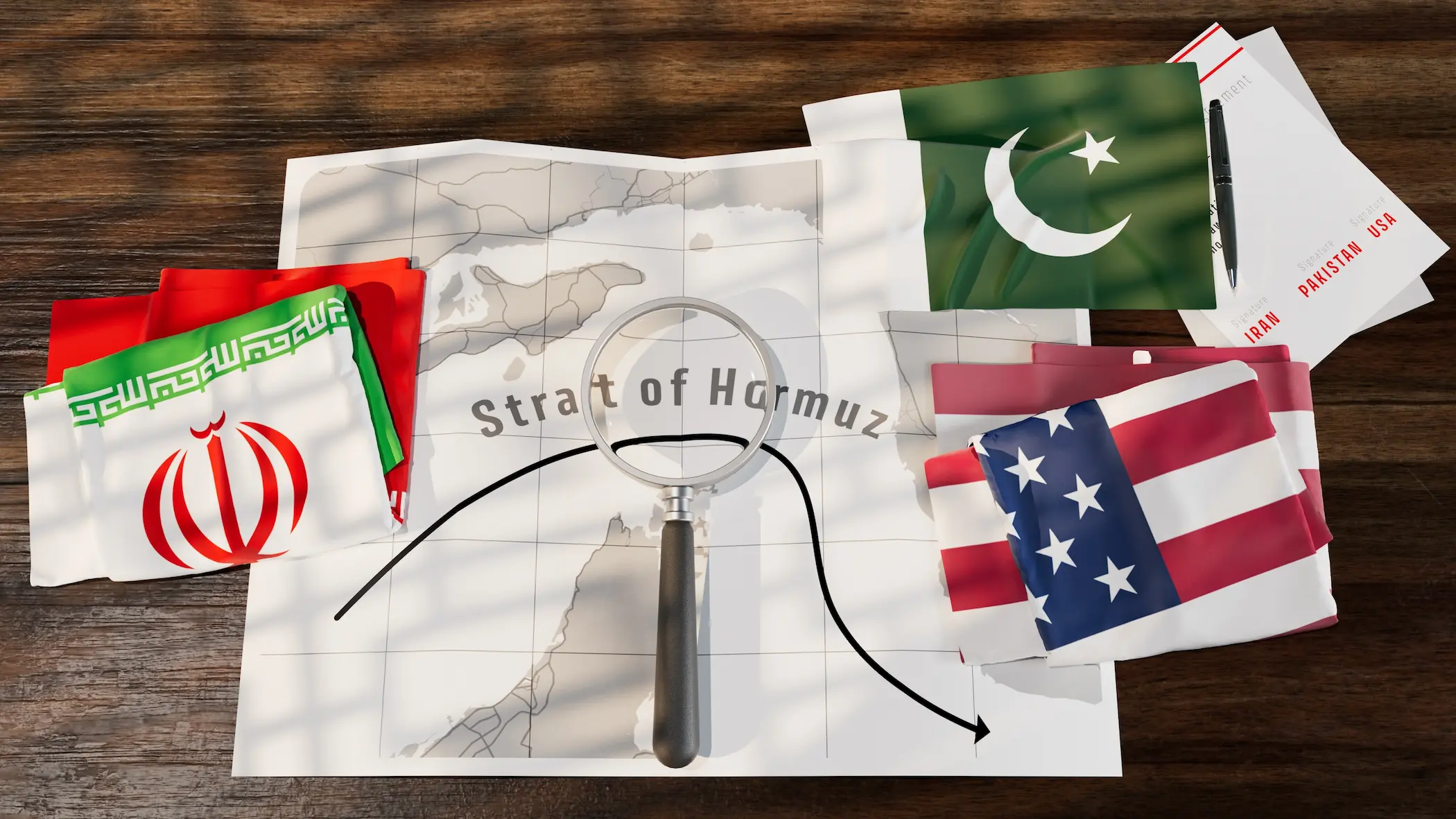
Diplomacy without Resolution: What Comes After the 60-Day Deadline?
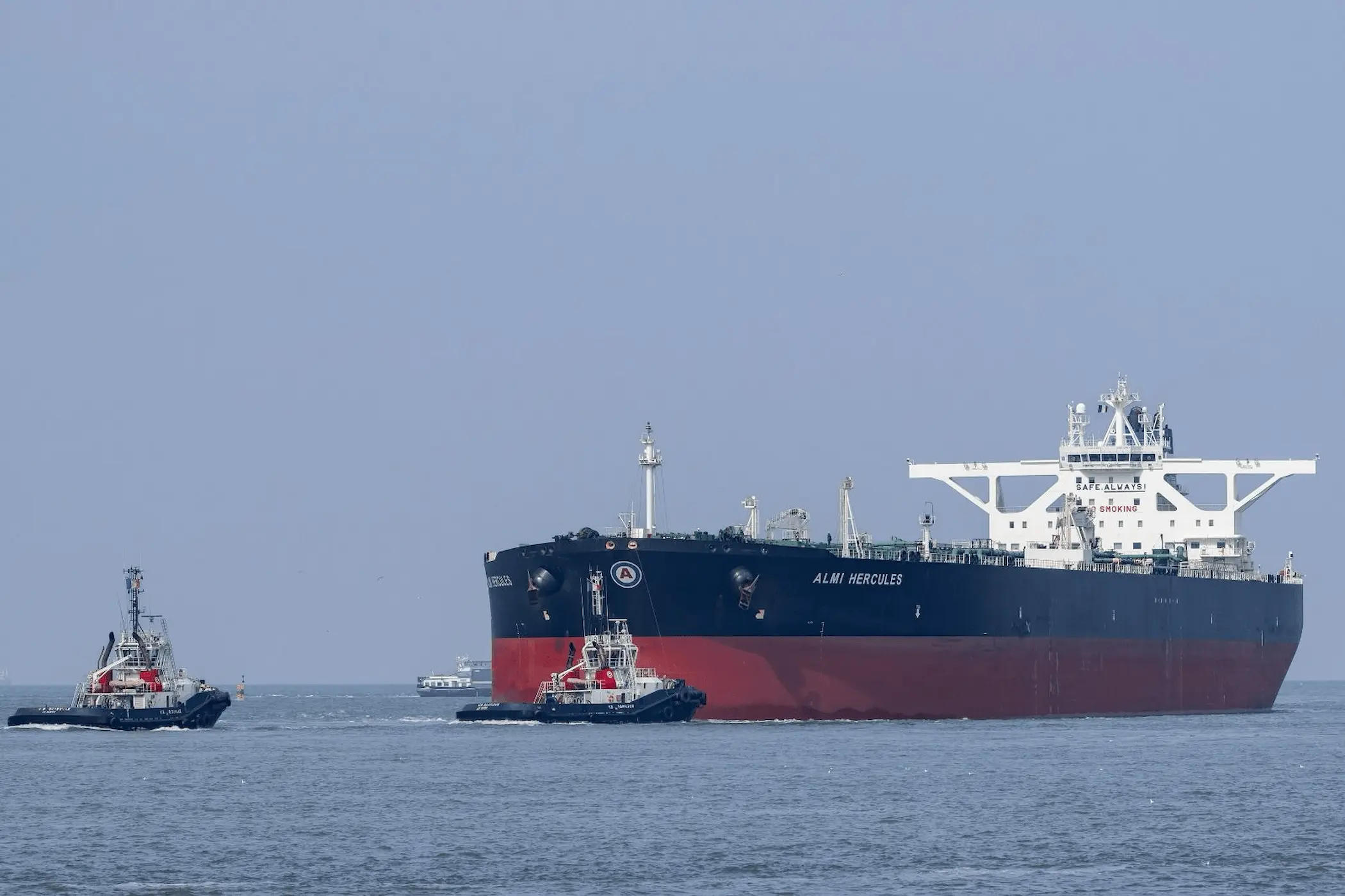
Closure Upon Closure: The Potential Impact of Houthi Threats to Saudi Shipping at Bab al-Mandeb

How Wartime Purges Are Reshaping U.S. Military Doctrine?

The Implications of the April 2026 U.S.–Iran Ceasefire on Oil Prices
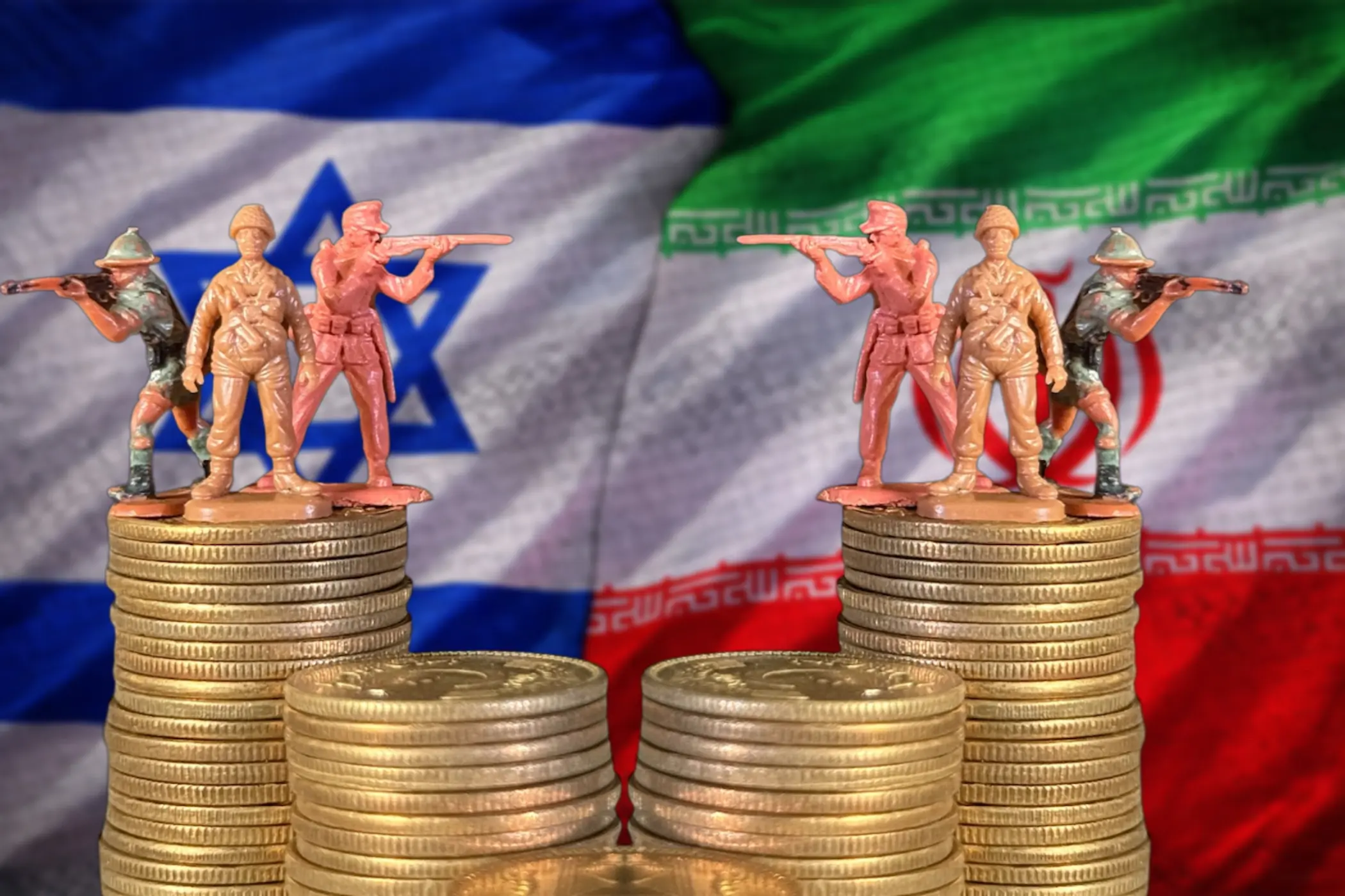
Defence Economies at War: National Budget Stress
Comments