
Programmes
23 Jul 2026
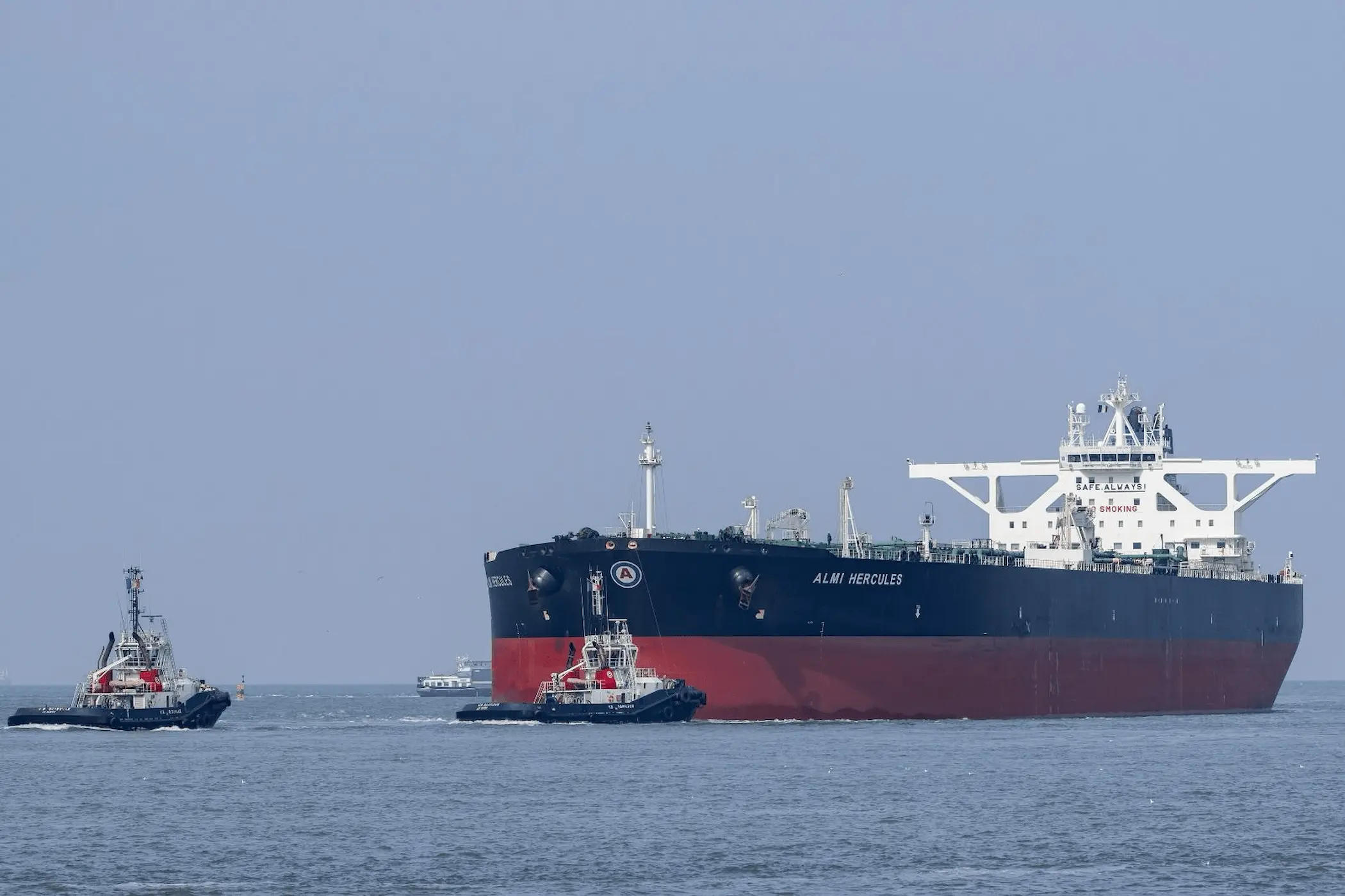
Closure Upon Closure: The Potential Impact of Houthi Threats to Saudi Shipping at Bab al-Mandeb
The events of 2026 have placed global energy markets before an unprecedented test of their resilience. When the effective closure of the Strait of Hormuz in February removed roughly 13 million barrels per day (mb/d) from available supply, Saudi Arabia redirected most of its exports westward to the Red Sea — only to find that outlet itself imperiled when, on 20 July, the Houthis threatened a naval blockade of the Bab al-Mandeb strait aimed squarely at Saudi shipping. For the first time in its modern history, the Kingdom's oil found itself exposed between the two maritime corridors it straddles, and the question “What if navigation through Bab al-Mandeb is severed?” shifted from a theoretical exercise to an operational probability. The answer, however, is not a single figure: it hinges on the scale of the shortfall, the nature of the cargo held back, and the market's capacity to reroute it.
This analysis therefore sets out to quantify the impact of a Bab al-Mandeb closure across three graduated halt scenarios; to unpack the mechanism by which the shock travels from cargo entrapment to a price spike; to trace its non-price consequences for refined products, aviation, and maritime shipping; and to arrive at the fiscal paradox that leaves the gravest harm to Saudi Arabia latent in the intermediate scenario rather than the full halt.
Programmes
29 Jun 2026
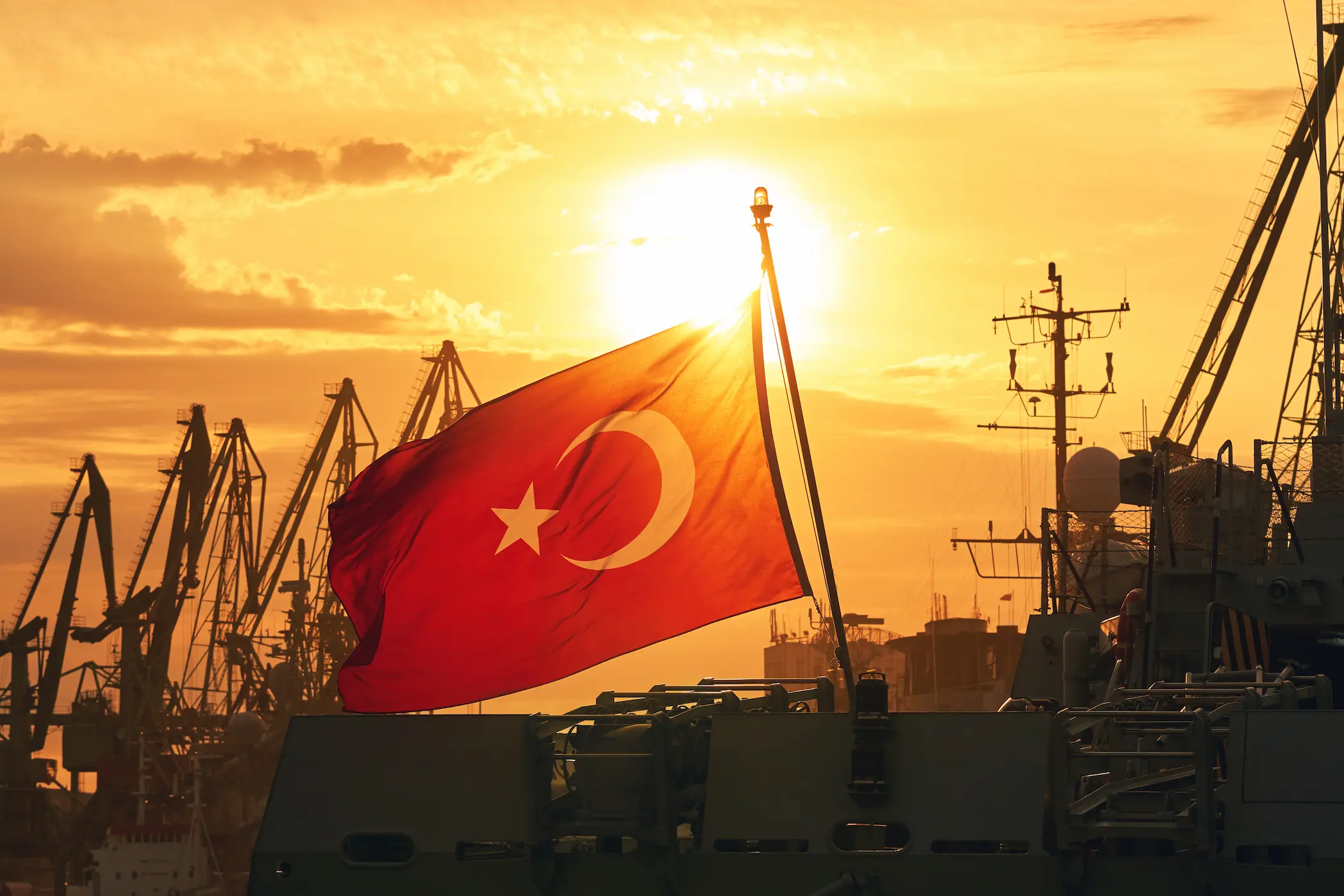
Ankara’s Defensive Rise: A New NATO Path?
Turkey’s rise as a defence-industrial power is no longer a peripheral subplot in NATO politics. It has become a structural development with implications for how the alliance equips itself, how regional powers diversify procurement, and how strategic influence is exercised between Europe, the United States, and the Middle East. While much of the public discussion around NATO still revolves around burden-sharing targets and the Russian threat, a more consequential transformation is unfolding in parallel: Turkey is building a defence-industrial corridor that links alliance demand, regional export markets, and domestic technological ambition.
The timing gives this argument unusual weight. Turkey is set to host NATO leaders in Ankara on 7–8 July 2026, a moment that places its political role and industrial trajectory under the same spotlight. That summit matters not simply because it will convene alliance leaders in the Turkish capital, but because it comes after a period in which Turkey’s defence sector has expanded in scale, deepened in sophistication, and broadened its customer base across Europe, the Gulf, Africa, and Asia.
What emerges from this trajectory is not a Turkish substitute for NATO, nor a coherent anti-Western bloc inside the alliance. It is something more complex and, in strategic terms, more significant: an alternative source of military capability inside NATO that others can increasingly use when Washington or Brussels appear too slow, too restrictive, or too politically encumbered. In that sense, Ankara is not building a rival alliance. It is building an alternative industrial lane within the existing one.

Publications
17 Sep 2025
Arab Airspace Blockade After Doha Attack
This paper provides a comprehensive assessment of the potential economic, political, and security outcomes should the Arab and Islamic worlds enact a coordinated airspace blockade against Israel. The specified catalyst for this action is the Israeli airstrike on Hamas leadership in Doha, Qatar, on September 9, 2025, an event that has already precipitated a significant realignment of regional diplomatic postures.
The central thesis of this analysis is that a coordinated airspace blockade would represent a strategic shock to Israel, not merely a logistical inconvenience. It would function as a form of asymmetric economic warfare, inflicting severe, multi-sector damage on Israel's globally integrated economy by targeting its core vulnerabilities in aviation, high-value trade, and tourism. The direct economic impact is estimated to be a contraction of 4.8% to 5.7% of Israel's Gross Domestic Product (GDP), a shock sufficient to trigger a deep recession.
Politically, the blockade would fundamentally re-order the regional geopolitical landscape, shattering the post-2020 status quo established by the Abraham Accords and rendering further normalization efforts untenable. It would accelerate a strategic pivot by Gulf Arab states away from a singular reliance on the United States as a security guarantor, fostering a new, region-driven security architecture. For the United States, such a development would present an acute diplomatic crisis, forcing a choice between its ironclad alliance with Israel and its vital strategic partnerships with Arab nations, thereby undermining a cornerstone of its Middle East policy.
From a security perspective, the blockade would act as a "gray zone" challenge, a highly coercive act that exists in the ambiguous space between peace and declared war. It would degrade the operational reach of the Israeli Air Force (IAF) and place the onus of military escalation squarely on Israel. A decision by Israel to forcibly challenge the blockade would create a high-probability pathway to a wider regional military conflict, potentially drawing in the Gulf states, Iran and its proxies, and the United States. The airspace blockade, therefore, represents a plausible and potent instrument of collective action that could irrevocably alter the strategic balance in the Middle East.

Publications
19 May 2025
What Does the Lifting of U.S. Sanctions Mean for Syria?
The United States started putting sanctions on Syria as early as 1979, mostly because Syria was labelled as a State Sponsor of Terrorism (SST). The first designation was based on Syria's military occupation of Lebanon and its support for groups like Hezbollah that the government paid for. This early policy took a harsh and threatening stance against a government that was seen as hostile and supportive of non-state actors that were seen as a threat to U.S. interests.
After the Syrian conflict started in 2011, the U.S. greatly increased its sanctions against the Assad government. The goal of these more extensive measures was to stop the Syrian government from using violence against its people and to encourage political changes that could get to the bottom of the conflict. This was a big change from only focussing on counter-terrorism to a wider agenda that included human rights and changing the behaviour of the regime, with some elements of coercive diplomacy.
The end of Bashar al-Assad's rule in early December 2024 marks a major change in Syria's politics. This event changed the main goal of the long-standing U.S. sanctions, which were mostly aimed at the now-deposed government.
In May 2025, during a trip to Saudi Arabia, U.S. President Donald Trump made a big announcement: he would lift sanctions on Syria. He said this would "give them a chance at greatness." Many people see this announcement as a "historic development" that has "major potential to improve living conditions" and "support the Syrian political transition." The goal is to make the area more stable and improve Syria's economic prospects after years of being held back by harsh international sanctions. This paper looks at the United States' sanctions against Syria in depth, putting the recent change in policy in the context of its history and the law.