
Programmes
5 Oct 2026
Clean Commitments, Clean Data Centres?
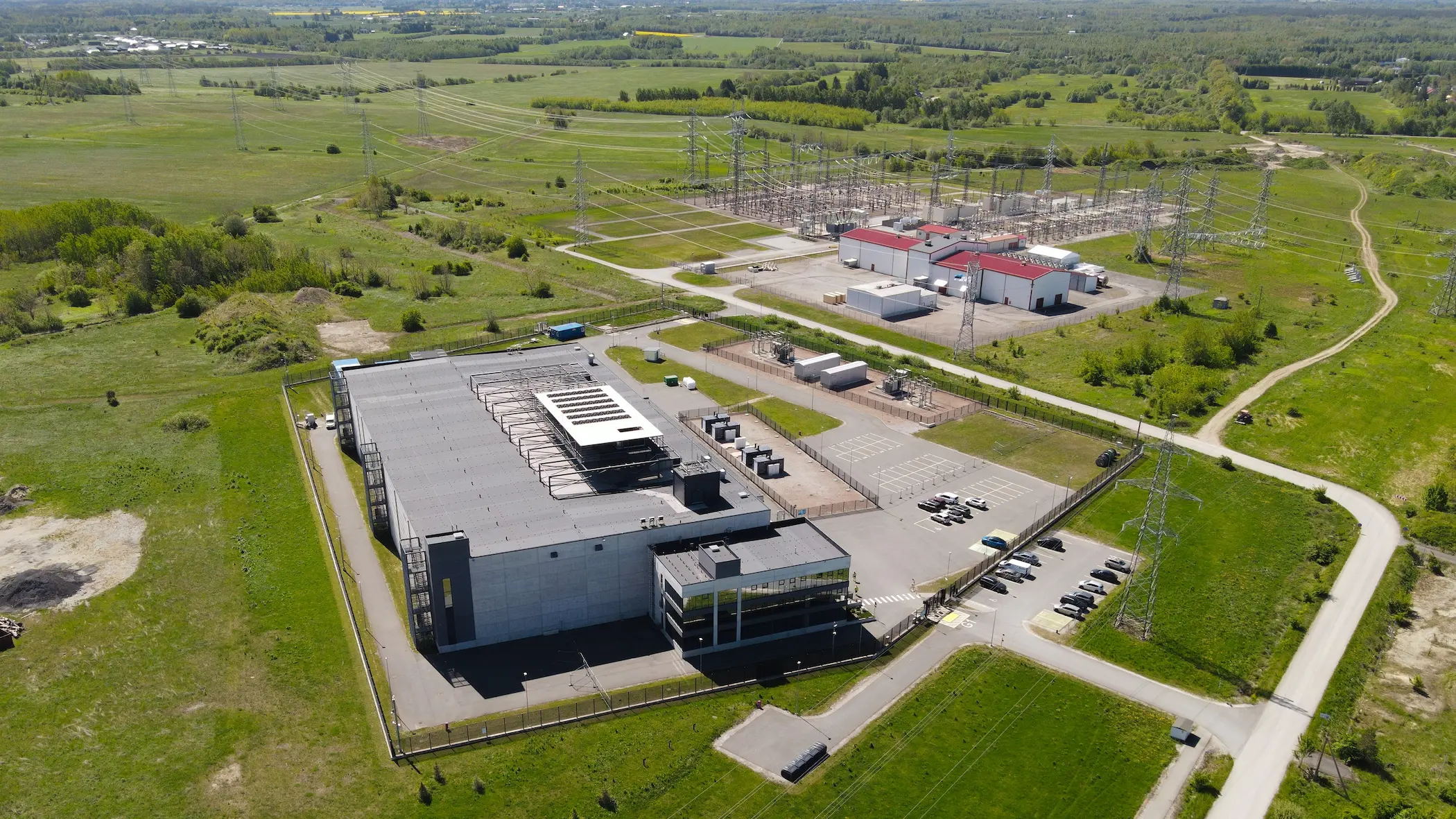
The rapid expansion of artificial intelligence is driving a parallel expansion of the infrastructure on which it depends. Data centres consumed around 415 terawatt-hours (TWh) of electricity in 2024, roughly 1.5% of global demand, and the International Energy Agency's base case projects about 945 TWh by 2030. Governments in the Gulf and Europe have responded by treating data centres as strategic assets while remaining committed to decarbonising their energy systems. Yet a commitment to clean energy does not necessarily amount to clean data centres.
This distinction is becoming increasingly important because the timelines differ so sharply. A data centre can be built in one to two years, whereas transmission takes far longer and new clean generation, nuclear in particular, longer still. When demand arrives before supply, the gap tends to be filled by gas. Ireland illustrates the dilemma: data centres accounted for 23% of its metered electricity in 2025, up from 5% in 2015, and the regulator now requires new large facilities to bring their own generation or storage. The central question, therefore, is whether AI infrastructure and the green transition can advance together.

Programmes
3 Jul 2026
Are Europe’s Capability Gaps Choosing Its Defence Partners?
Germany "needs new partnerships more than ever," declared Chancellor Friedrich Merz as he opened a tour of Saudi Arabia, Qatar, and the UAE, announcing along the way that Berlin would loosen its long-standing restrictions on arms exports to the Gulf. Such words from a German chancellor would have been unthinkable only a few years ago. Yet the scene fits a wider pattern now visible across the continent: Korean tanks arriving at Polish ports, Turkish drones ordered for Baltic skies, Brazilian transport aircraft entering European fleets, and Gulf sovereign wealth courted from London to Berlin. Europe, long accustomed to a single security patron, is visibly assembling a new roster of defence partners, and officials on all sides describe it as a strategy of diversification. The pattern reaches its most symbolic setting this week, as NATO leaders convene in Ankara, the capital of the very partner Europe has never quite decided how to treat. But strategies imply choice, and choice implies a chooser. The pressing question is: is Europe actually selecting its new partners, or is something else doing the choosing?
Programmes
27 Apr 2026
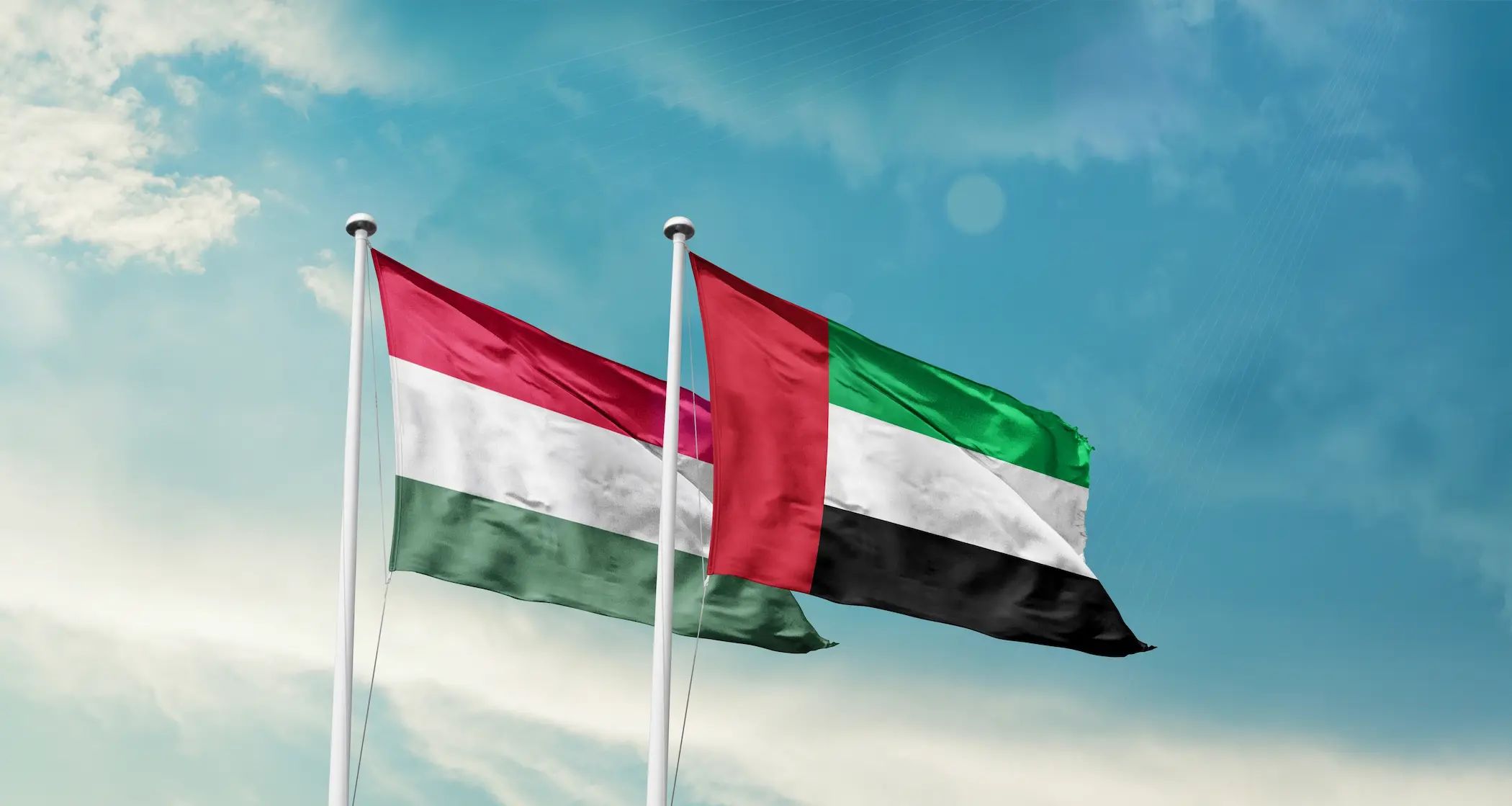
Hungary as a Bridge: How Could Budapest become a Food Security Partner for the UAE?
Hungary has a strong and well-developed agricultural sector. Arable land and permanent crops account for 4.3 million hectares, of which approximately 130,000 hectares are irrigated. The main crops include wheat (0.9 million hectares), corn (0.8 million hectares), and sunflowers (0.7 million hectares). While pastures cover 0.8 million hectares and forests cover 2 million hectares, livestock production includes 2.8 million pigs and 33.8 million poultry.
The country’s economy is export-dependent, so many technological advancements and the easing of financial restrictions, such as VAT, were integrated across various sectors, helping improve products and increase profits. The agricultural sectors benefited greatly from such policies, where crops and livestock exports have increased throughout the years. Agricultural exports constituted 9.1% of Hungary's total exports in 2024, including commodities like grains and grain products (13%), animal feed (12%), meat and meat products (9%), dairy products (5%), and fruits and vegetables (5%). Hungary's pioneering role in the agricultural sector increases its prospects for adopting measures to address food insecurity while increasing the benefits for any country that cooperates with it.

Publications
17 Mar 2026
Defense Density in Modern Air Warfare: What European NATO Can Learn from the Gulf
The U.S.-Israel-Iran war and Recent events that followed in Gulf countries have provided one of the clearest real-world demonstrations of modern air and missile defence under sustained pressure. Modern air warfare is increasingly defined by the ability of states to withstand large-scale saturation attacks involving drones, cruise missiles, and ballistic missiles. The proliferation of relatively inexpensive unmanned systems and precision-guided weapons has altered the balance between offensive and defensive capabilities, allowing even modest actors to launch high volumes of aerial threats. In this environment, the success of air and missile defence no longer depends solely on technological sophistication but also on defence density, the concentration of defensive systems relative to territory and population. Dense, layered air-defence networks provide multiple interception opportunities and reduce the likelihood that incoming salvos can overwhelm defensive systems. As recent conflicts have demonstrated, resilience against saturation attacks increasingly depends on whether states can deploy sufficient numbers of interceptors, overlapping defensive layers, and integrated detection networks.

Programmes
11 Feb 2026
The GCC and the Future of the Rare Earths and Critical Minerals Race
China is a dominant player in the rare earths and critical minerals industry. As of 2025, China is in control of “…about 61% of rare earth production and 92% of their processing”, meaning China monopolized the rare earths and critical minerals industry. While China dominates this industry, countries have been aiming to bolster their own rare earth and critical mineral ambitions to reduce their reliance on China as a supplier of raw materials and processed products. For example, GCC countries, in line with their 2030 visions, have increased their investments in the mining and processing of these elements to diversify their economies and become suppliers in an industry dominated by China. This analysis aims to assess the emergence of the GCC as a rare earths and critical minerals supplier, which will be done by analyzing the reasons and feasibility for GCC involvement in this industry as well as understanding the challenges these countries face in their entry into the market.

Programmes
20 Oct 2025
The Future Role of China in the GCC’s Tech Transition
China has a long-term goal to be a global leader in technology. To achieve such ambition, the country has taken serious steps widening its Belt and Road Initiative (BRI) traditional infrastructure projects to incorporate digital infrastructure projects embodied in the Digital Silk Road (DSR). The DSR was initially launched in 2015 by the government as an idea on paper and during the opening ceremony of the First Belt and Road Forum in May 2017, China’s President Xi Jinping, adopted the DSR term officially and it was incorporated in the government’s BRI strategy as the digital dimension.
The DSR initiative focuses on building digital infrastructure and exporting its technology to the beneficiary countries, it includes telecommunications infrastructure, like 5G networks, overland fibre-optic cables, data centres, cloud computing, artificial intelligence (AI), as well as applications that support e-commerce and mobile payments, along with smart cities and surveillance technology. Additionally, the DSR provides support to Chinese tech companies, like ZTE, Huawei, and Alibaba, to carry on the work with the beneficiaries.
The DSR aims to enhance Beijing's global digital influence as it creates opportunities for a wide range of cooperation and partnerships between Chinses tech companies and other beneficiaries around the world in areas of digitalization and AI. China’s DSR encompass a variety of projects in 5G deployment, e-commerce platforms, and AI applications, such as DeepSeek which is an alternative model to ChatGPT.
China signed DSR cooperation agreements with several countries in Africa, the Middle East, Eastern Europe, Latin America, and Southeast Asia. The cooperation takes place between scientists and engineers from the recipient country and Beijing, like opening a training centre or in research and development (R&D). The areas of cooperation are wide, including smart cities, AI and robotics, clean energy, and surveillance capabilities, like data localization. GCC countries are considered one of the important partners to China’s DSR, where it is closely integrating in the GCC digitalization goals.
Publications
1 Oct 2025
Who Stands to Gain from the H-1B Visa Shake-Up?
Since taking office, U.S. President Donald Trump’s unpredictable decisions have become a puzzle to follow, let alone to anticipate. Amid this growing political turbulence, a dose of rational analysis is badly needed. His recent move on the H-1B visa program, for instance, has reverberated across the globe. Though seemingly aimed at harrassing India, the policy has instead cornered the United States itself, fueling economic strain, draining valuable talent, and unsettling the tech industry. The ripple effects are already visible in Silicon Valley and among those aspiring to join it. Yet, this turbulence also opens a window of opportunity. Nations in Europe, Asia, and the Gulf, if swift and strategic, could position themselves to attract the very talent cast aside by Washington. Still, seizing this chance is no straightforward task. It demands structural reforms, long-term vision, and proactive policies. Dislodging Silicon Valley from its pedestal is not impossible, but neither is it simple or automatic. What matters now is understanding the impact on the U.S., its economy, its talent pool, and recognizing what ambitious countries must do if they wish to challenge the world’s current tech giant.

Programmes
30 Jul 2025
AI’s Crossroads: Decoding the Middle East’s AI Transformation
In a fast-paced world driven by technological advances, the global landscape is being reshaped by the rapid rise of Artificial Intelligence (AI), a technology that is playing a vital role in bringing in major economic shifts, unleashing a new era of GDP growth. One of the most active regions concerning AI integration is the Middle East, a region not only observing or keeping up, rather revolutionizing this integration as governments across the region harness the power of AI to reshape their policies, implement national strategies, attract smarter investments while powerfully reconstructing their futures. Such adaptation has already borne fruit, as different economies in the region became more agile and dynamic, systems evolved to operate more efficiently and smarter, resulting in providing better services to their respective populations.
Despite the rapid progress and fast growth of AI in the Middle East, the region still faces a set of challenges, including the lack of properly trained individuals and the constant need of innovative solutions and new ways to narrow this gap. On the other hand, the region lacks legislative framework to regulate the use of AI in a fair and ethical manner. While a growing need for sustainable infrastructure development underlines the fact that more work is still required, overcoming these obstacles and challenges will lead to unlock the region’s full potential, overcome competition and become a major player in the AI world globally.