
Programmes
24 Jul 2026
The End of Free Passage? The Future Struggle Over the World’s Sea Lanes
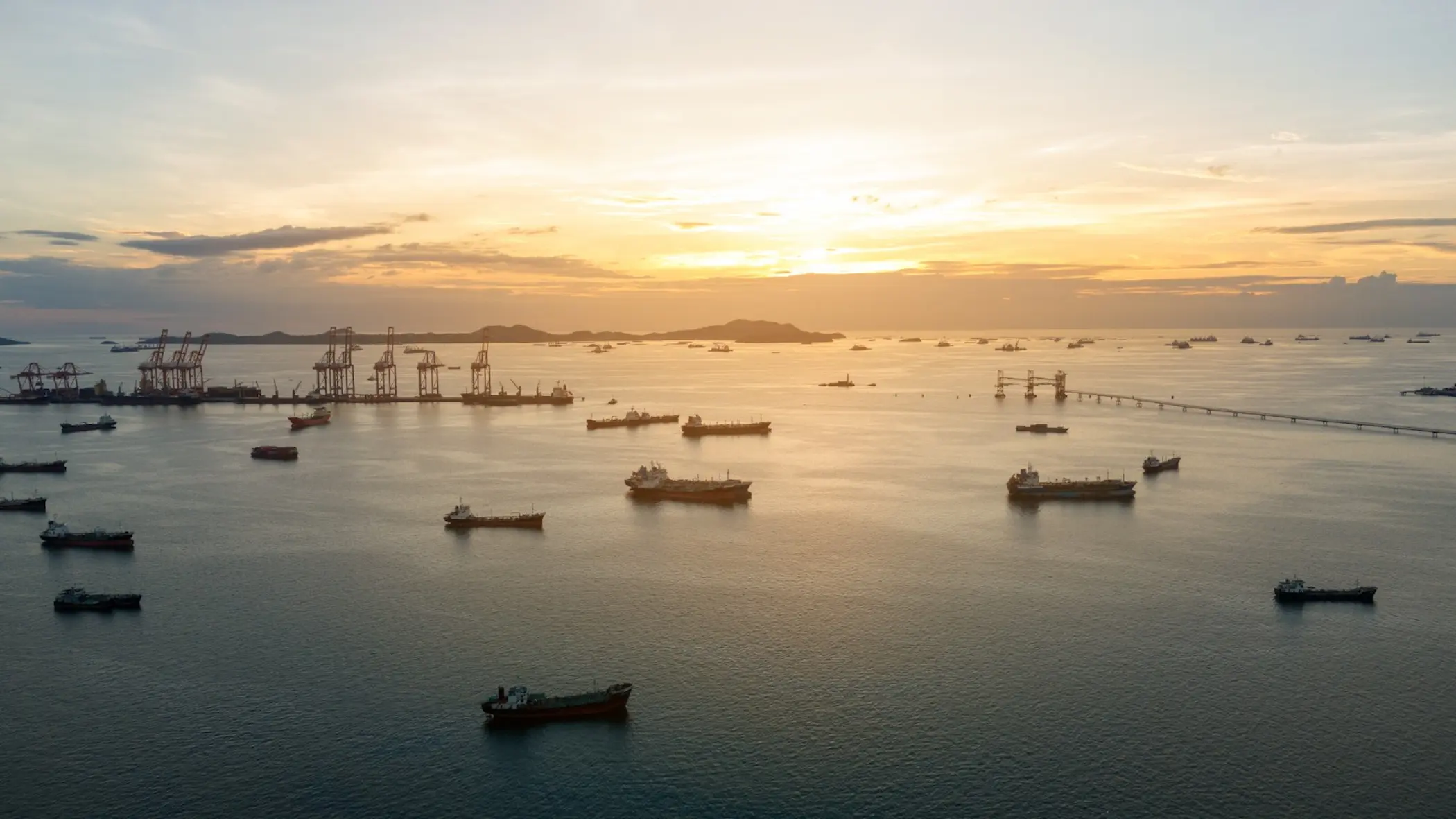
What if the sea lanes were no longer free? For seventy years, the assumption that ships pass through the world's strategic straits without permission, payment, or political approval has underpinned global trade so completely that it was rarely stated, let alone defended. In 2026, that assumption stopped being safe. In one of the world's most critical waterways, passage is now vetted, priced, and rationed by political alignment. At another, a price for safe transit has been openly announced. Along the polar routes, permits and fees are already the law, and older managed regimes are quietly expanding. These are not isolated crises. Taken together, they form the early signal of something larger: the transformation of maritime chokepoints from global commons into sovereign assets, and with it, the quiet repricing of the geography on which world trade depends.
Publications
30 Jun 2026
The Direct and Indirect Cost of the 2026 US-Israel War on Iran
The Al Habtoor Research Centre (AHRC) presents a groundbreaking, equation-based assessment analysing the direct and indirect social and economic resource costs of the 110-day conflict that began on February 28, 2026. Utilising an advanced conflict economics framework—including the Stiglitz-Bilmes convention and counterfactual synthetic controls—this research delivers an unprecedented, exclusive analysis of the financial burdens borne by the belligerents and the wider global economy. The headline finding is one of profound asymmetry, proving that recovery capacity, rather than the size of the initial kinetic blow, dictates the medium-term cost of modern warfare. The largest financial burden fell on the global economy, specifically non-belligerent, bystander oil-importing nations, totalling an estimated $1.41 trillion by 2030. Triggered by the 110-day closure of the Strait of Hormuz, this true burden lies in unproduced global output rather than the temporary oil-price spike, which ultimately nets to zero globally. Among the combatants, Iran absorbed an existential, structural blow equivalent to roughly 81% of its pre-war output, costing $305 billion by 2030, or $720 billion on a purchasing-power parity (PPP) basis. Locked out of international capital markets, its output gap fails to close by the end of the decade, triggering a step down to a permanently lower economic path. In contrast, the United States faces a heavily back-loaded bill ranging from $200 billion to $1.1 trillion by 2030. While structurally insulated from the immediate oil shock due to its net energy exporter status, this massive range in projections depends on whether standard cash-budgeting or full multi-decade liabilities—such as veteran care, war-debt interest, and budget ratchets—are present-valued. Meanwhile, Israel sustained a sharp but recoverable macroeconomic shock of $135 billion by 2030, equal to roughly a quarter of a single year's GDP. Advanced air defense mitigated physical destruction, concentrating the cost instead on reserve mobilisation, interception economics, and a transient output gap. Ultimately, this exclusive analysis details how the poorest bystander nations subsidised the conflict's macro cost, marking the 2026 war as one of the most economically disruptive events of the century.
Programmes
25 Mar 2026
Iran as a Potential Arena for Great Power Competition
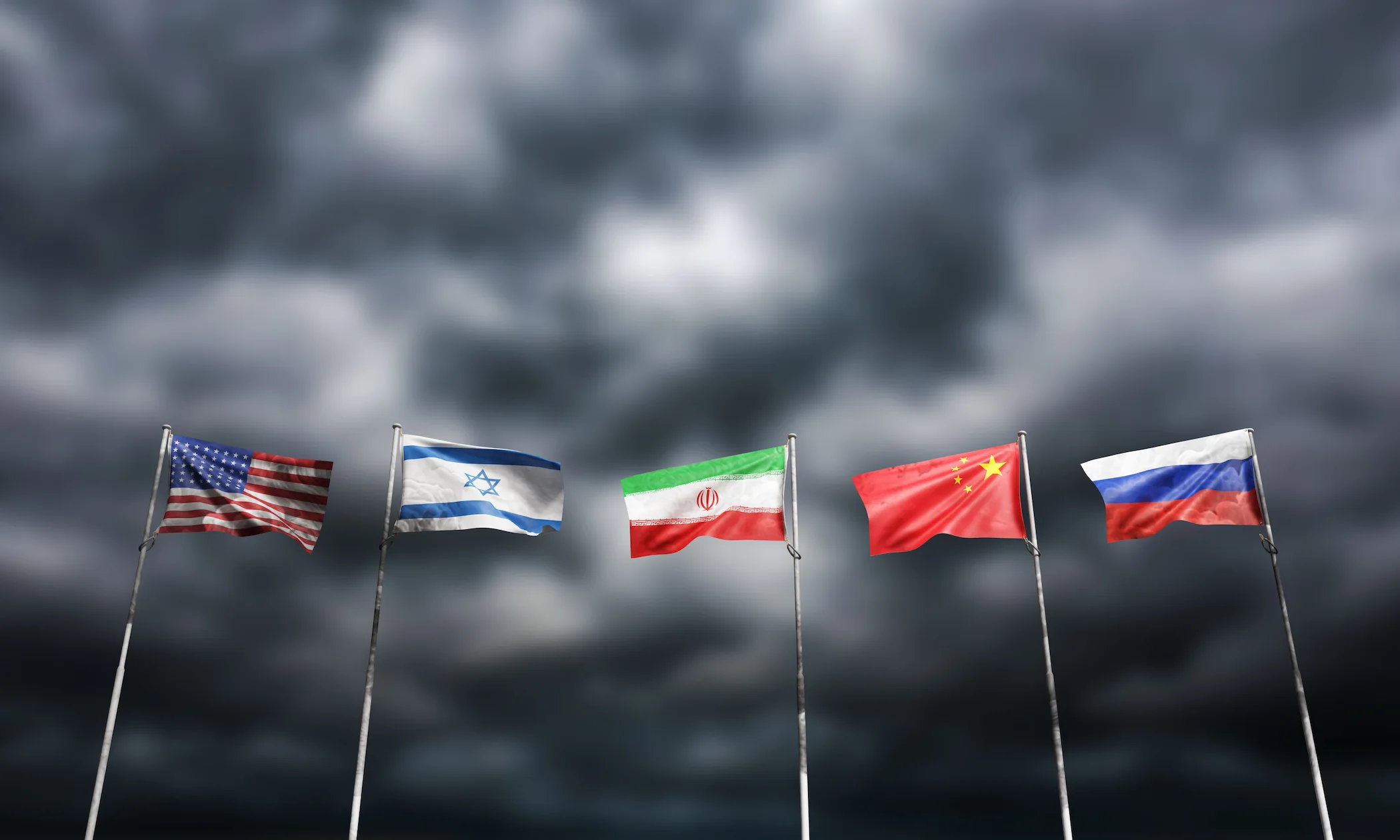
The U.S.-Israel-Iran War is well underway, and the risks of spillover and enlargement is becoming more of a reality as the war goes on. As the conflict continues to expand, several actors are seeking out opportunities to challenge the existing balance of power in the region and aim to exploit the war to expand their influence. In the past decade, Russia has been working to court the United States’ MENA allies into its sphere of influence through the concept of regime stability, while China is taking on a soft power approach through economic and diplomatic cooperation. A prolonged war between the U.S.-Israel and Iran can result in global powers such as Russia and China getting more involved in the region to diminish American influence globally, which can result in a great power competition. The potential of Iran serving as an arena for great power competition will be explored through the American strategic overstretch and the economic shock caused by energy crisis.
Programmes
5 Jan 2026
The Capture of Nicolas Maduro: The Consequences of US Regime Change in South America
Tensions between the United States and Venezuela have exploded into a forceful attack that has resulted in the capture and detention of Venezuelan President Nicolas Maduro. The U.S. President Donald Trump has accused President Maduro of instigating a mass migration of Venezuelan citizens, being involved in the fentanyl drug trade, and stealing oil wealth to fund drug operations. Consequently, President Trump authorized attacks on Venezuelan vessels, which he claimed to be transporting drugs to the U.S. while also increasing the number of troops stationed in the Caribbean Sea. Now that President Maduro has been captured after months of U.S. escalation, there is an uncertainty regarding the future of Venezuela, the region, and the world.
The attack as part of Operation Absolute Resolve can be seen as an attempt by President Trump to force regime change in Venezuela. The capture of President Maduro could have serious ramifications not only for the warring factions but the regions of South America and the Caribbean as well as the world. This may come in the form of collapsing institutions and industrial sectors such as energy, a loss of credibility for the U.S., regional destabilization brought on by a devastating refugee crisis, while also having a negative impact on the global economy.

Programmes
20 Jan 2025
Is the Russia-Ukraine War Nearing Its End?
President-elect Donald Trump has pledged to bring an end to the Russia-Ukraine war, though he has yet to specify how. A negotiated settlement appears to be the only viable path forward, as a decisive military victory for either side seems unlikely. Western nations, particularly those in Europe, are struggling with internal challenges, leaving them in a weak position with limited leverage at the negotiating table. Meanwhile, Russia also finds itself in an unenviable situation, creating a potential opening for Trump to encourage both parties toward a resolution. However, for any agreement to lead to lasting peace, security guarantees for Ukraine must be a central component. These guarantees are likely to be the key trade-off for any concessions that Europe would likely offer.

Programmes
25 Jun 2024
The Threat of Darkness: Can Hezbollah Disable Israel’s Electric Grid
On June 19 and 22, Hezbollah released two recordings showing high-resolution aerial images, catching Israeli security authorities and regional observers off guard. Apparently captured by a drone flying at medium to low altitudes, the footage highlighted security and strategic sites, including fuel storage facilities, thermal power stations predominantly located in Haifa, and the city's docks. This move underscored the potential reach of Hezbollah's missiles and drones to critical Israeli energy infrastructure.
The release triggered widespread speculation about Hezbollah’s missile capabilities, with analysts suggesting these missiles could directly strike the highlighted facilities. Such an attack could further destabilise Israel's economy, which is already experiencing significant challenges. The current economic situation is considered one of the worst in Israel's history, rivalled only by the first two decades after the state's founding and the Yom Kippur War.
On the other hand, many of these analyses have overlooked the Israeli electrical grid's distribution of generation stations, electrical load, maximum voltage, and generation sources, leaving the assessment incomplete. Even if Hezbollah’s missiles were to reach these stations and hit their targets with enough power and accuracy to disable them, it does not necessarily mean the entire electrical grid would be taken out of service or significantly reduce its capacity to produce electrical energy, which could impact daily life in Israel.
This analysis aims to review the generation stations, their capabilities, and their locations within Israel to investigate the potential impact of Hezbollah’s anticipated attacks on these facilities.