

The U.S.-Israel-Iran War is well underway, and the risks of spillover and enlargement is becoming more of a reality as the war goes on. As the conflict continues to expand, several actors are seeking out opportunities to challenge the existing balance of power in the region and aim to exploit the war to expand their influence. In the past decade, Russia has been working to court the United States’ MENA allies into its sphere of influence through the concept of regime stability, while China is taking on a soft power approach through economic and diplomatic cooperation. A prolonged war between the U.S.-Israel and Iran can result in global powers such as Russia and China getting more involved in the region to diminish American influence globally, which can result in a great power competition. The potential of Iran serving as an arena for great power competition will be explored through the American strategic overstretch and the economic shock caused by energy crisis.
American Strategic Overstretch
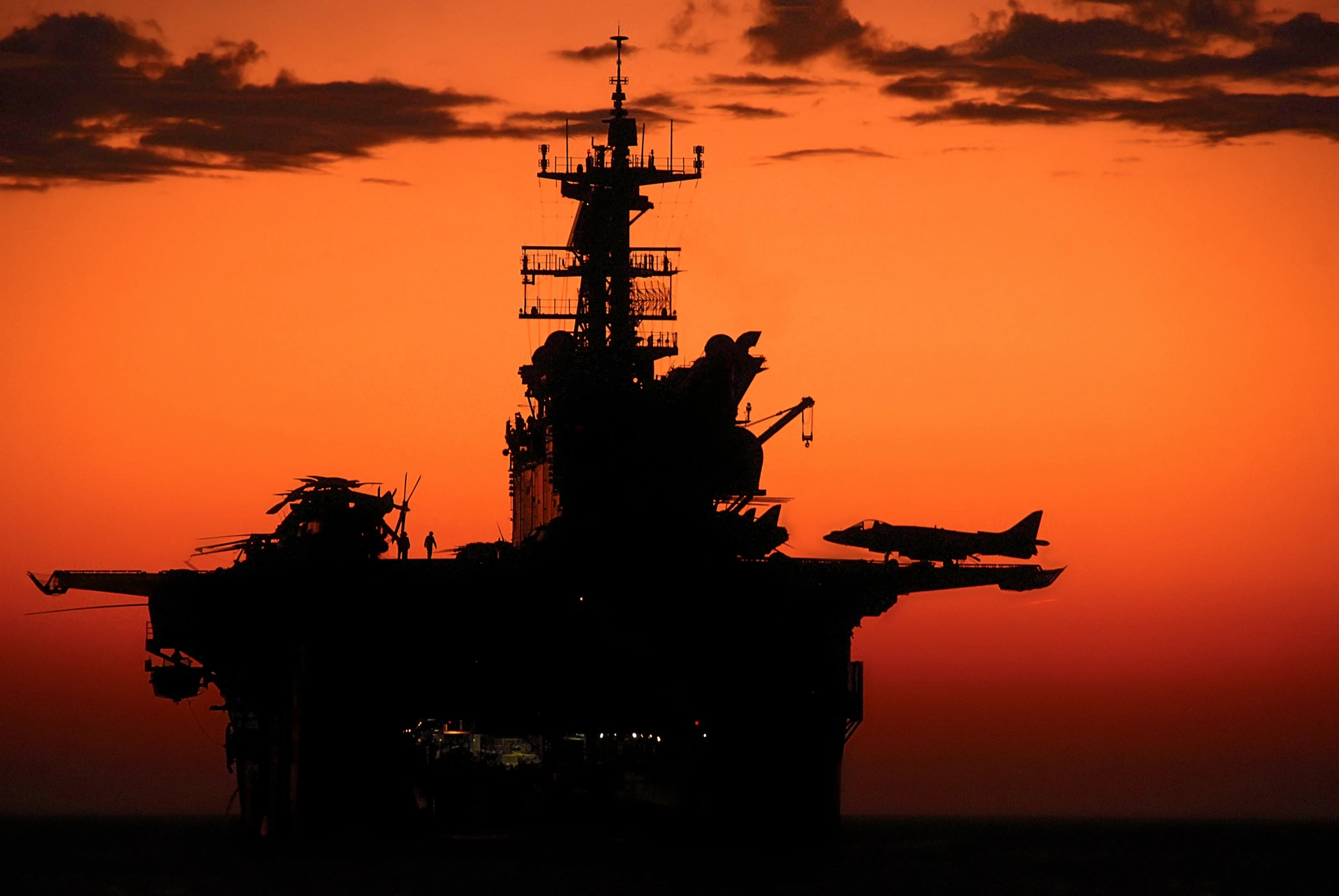
One way to understand the concept of Iran serving as an arena for great power competition is through the U.S. strategic overstretch caused by the current war. Historian Paul Kennedy states the theory behind strategic overstretch is “…empires mainly die when the cost of imperial expansion far exceeds their capacity to mobilise resources to absorb unforeseen shocks. While the risk of a collapse is not imminent, it can no longer be ruled out in the medium term.” The U.S. strategic overstretch is exemplified in its attacks against Iran, as resources are diverted to the MENA region to sustain the U.S. and Israel’s war effort. Since the beginning of the war, the U.S. has increased the number of aircraft carriers in MENA waters, increased aerial attacks, and potentially can deploy troops to the region.
The reallocation of military resources contributes to the perceived strategic overstretch, as the U.S. is currently involved in strategic competition in areas such as Europe and Indo-Pacific regions as well as domains such as cyber and advanced technology. The US’ strategic overstretch can have consequences for any pre-existing economic and security frameworks and can force its partners in numerous regions to diversify their security and economic ties, which can lead to its position in the world to become unsustainable.
The overstretching of American strategy leaves it vulnerable to exploitation by China and Russia, revealing how Iran can serve as an arena for great power competition. China and Russia are partners with Iran as shown through a history of diplomatic, military, and intelligence cooperation. In the case of Russia, the U.S. strategic overstretch and distraction can be a net benefit, as a prolonged war between the U.S. and Iran provides Russia with an opportunity to make sustain its own war with Ukraine relatively free of U.S. pressure, while also engaging with Iran to take out U.S. military targets and assets in the region. Russia can continue to share intelligence with Iran as a way of distracting the U.S. from engaging in peace talks with Ukraine, hence giving Russia the ability to continue its war effort. In this way, Russia can continue to make gains its war against Ukraine, while also potentially exploiting the United States’ overexertion in the MENA region to find opportunities to weaken U.S. influence in the world.
Although Russia has much to gain from U.S. strategic overstretch concerning the U.S.-Israel-Iran War, it can be said that China has as much to gain. It should be known at this point of the conflict, China has yet to get involved explicitly and is placing emphasis on calls for diplomacy despite Iran being a longstanding partner in the MENA region. Moreover, China “… has spent years cultivating influence through trade, energy partnerships, infrastructure, and diplomacy rather than permanent war”. It is through this soft power approach to the chaos created by the war that serves as China’s entry to the great power competition. If this were the case, China can use its stable and strategic partnership with Iran as well as the chaos spurned by the US-Israeli war effort to “…accelerate the erosion of American influence”.
The U.S.-Israel-Iran War has left the U.S. strategically overstretched, which provides Russia and China the opportunity to exploit the war for their own benefit. The U.S. overstretch provides Russia the opportunity to delay peace talks with Ukraine to achieve their war objectives without U.S. pressure, while China can present itself as a stabilizing force in the MENA region and beyond in comparison to an America that lacks clear strategic objectives.
Energy Related Economic Shock
Although the U.S. strategic overstretch can contribute to the rise of a great power competition with Russia and China, one can argue the ongoing energy crisis is also a contributing factor. Due to the war, the price of oil reached over $100 per barrel, which caused by the effective closure of the Strait of Hormuz as well as Iranian attacks on oil and gas infrastructure in the region. Due to these developments, global energy markets are in a volatile state and is generating energy related economic shocks throughout numerous regions in the world.
While this is the case, the Trump administration’s messaging regarding these energy related shocks can be considered relatively aloof. According to Duncan Wood, visiting fellow for North America at the Wilson Center, the U.S. will not struggle with oil or gas supply issues due to “…resilience of domestic production and export infrastructure…”, which provides the US with a strategic advantage over countries that are over reliant on GCC oil and gas. Although the Trump administration is not worried about maintaining a production or supply line, the volatility of the energy market caused by the U.S.-Israel war effort is currently influencing the domestic economy of the U.S. and inflation. This is explained as the war resulted in a significant increase in the price of gas at the pump from $2.9 to $3.7, which does not bode well for the Trump administration when it comes to keeping up with campaign promises of making ‘America affordable again’. Therefore, the U.S.-Israel-Iran War forced the energy markets to go into overdrive, which will impact domestic American markets as well as the global energy market.

For Russia, a prolonged U.S.-Israel-Iran War can provide Russia with the means to increase its oil exports at higher market prices to countries that need it. The interruption in the GCC oil trade provides Russia with an opportunity to exploit these interruptions for material gain, which can be beneficial to sustaining its Ukraine war effort. Beyond possibly providing Russia with an income stream to sustain the war in Ukraine, the U.S.-Israel-Iran War can inadvertently benefit Russia and encourage great power competition through improving Russia’s economy. Historically, Russia tends to benefit fiscally from slightly increased oil prices, as higher prices create a stream of revenue, which helps Russia deal with sanctions and improve its economy. Since the war began, Russia has made $6.7 billion in oil sales and with the potential loosening of sanctions by the U.S., it is possible that Russia can become a reliable energy provider while MENA exports are impacted by restricted Strait of Hormuz. Naturally, this temporary reprieve from sanctions allows Russia to sell oil to its partners and use the revenue to fund its defense industry, which can allow for more aggressive attacks on Ukraine.
While the energy related economic shock provides Russia with an opportunity to use Iran as an arena for great power competition the same can be said for China. Although China is reliant on Iran (as well as the GCC and Iraq) for oil and the closure of the Strait of Hormuz creates a challenge for China’s ability to import said oil, it can be said that China’s economy is somewhat insulated from most of the energy market’s volatility. China is still importing oil from Iran through the Strait of Hormuz (due to Iran allowing friendly ships to pass), while also maintaining their strategic oil reserves. Sitting on their strategic reserves and continuously importing oil from Iran during the crisis will allow China to deal with the significant impact of global energy market volatility.

Beyond the maintenance of their imported oil supply, China has a competitive advantage over the U.S. and Russia due to the diversification of their energy sector. China is a global leader in clean energy, which is clearly shown in their $1 trillion investment in this sector which provides China with the flexibility to shift its reliance on fossil fuels to alternative forms of energy. This shift can allow China to become a global supplier of clean energy if the U.S.-Israel-Iran War were to devastate the global oil markets, as energy importers across the world would be inclined to diversify away from fossil fuels, possibly increasing China’s stature as a stronger economic power than the U.S. or Russia.

Final Takeaway
The U.S.-Israel-Iran War provides Russia and China with a potential avenue to engage in an open great power contest with the United States. This is shown through a potential US strategic overstretch, which Russia and China can take advantage of to pursue their own global ambitions without pressure from the United States. Furthermore, the argument can be made that Iran can serve as an arena for great power competition, as the energy related economic shock can potentially allow Russia and China to compete with the U.S. as an energy supplier. While the argument can be made that Iran can serve as an arena for great power competition, Russia and China’s roles have been limited. Russian involvement has been limited to intelligence sharing, while China has taken a step back and has been calling for a diplomatic resolution to the hostilities. Although their current roles are limited, ultimately, the fallout of the war will leave Russia and China will opportunities to challenge U.S. power and can result in a three-way competition for global hegemony.
References
Baroud, Ramzy. 2026. “Washington’s War on Iran: A Strategic Gift to Russia and China.” Palestinechronicle.com. The Palestine Chronicle . March 9, 2026. https://www.palestinechronicle.com/washingtons-war-on-iran-a-strategic-gift-to-russia-and-china/.
Bruchmann, Sascha , Martin Sampson, Nick Childs, Dana Allin, and Hasan Alhasan. 2026. “The US-Israel Campaign in Iran.” IISS. March 2, 2026. https://www.iiss.org/online-analysis/online-analysis/2026/02/the-us-israel-campaign-in-iran/.
Butter, David. 2026. “The Iran War Is Exacting a Heavy Toll on Gulf Oil and Gas Exporters – and Creating Risk and Opportunity in North Africa.” Chatham House – International Affairs Think Tank. March 17, 2026. https://www.chathamhouse.org/2026/03/iran-war-exacting-heavy-toll-gulf-oil-and-gas-exporters-and-creating-risk-and-opportunity.
Collinson, Stephen. 2026. “How Trump’s Iran Exposure Can Hand Putin a Lottery Win.” CNN. March 12, 2026. https://edition.cnn.com/2026/03/12/politics/trump-iran-war-russia-putin-analysis.
David, Dharshini. 2026. “The Global Winners and Losers of the War in Iran.” BBC News, March 20, 2026. https://www.bbc.com/news/articles/c3wlwnn05zqo.
Evriviades, Euripides L. 2026. “Iran and the Limits of Force.” Cyprus-Mail.com. March 8, 2026. https://cyprus-mail.com/2026/03/08/iran-and-the-limits-of-force.
Goodley, Simon. 2026. “Russia Earned €6bn from Fossil Fuel Exports since Start of Iran War, Data Suggests.” The Guardian. The Guardian. March 12, 2026. https://www.theguardian.com/world/2026/mar/12/russia-fossil-fuels-revenue-us-israel-war-iran-data.
Hashmi, Sana. 2026. “US ‘Self-Centrism’ Can Be Costly.” Taipeitimes.com. March 7, 2026. https://www.taipeitimes.com/News/editorials/archives/2026/03/07/2003853392.
Luxmoore, Matthew. 2026. “Zelensky Says Russia Making Money from Oil Sales after U.S. Eased Sanctions.” The Wall Street Journal. March 22, 2026. https://www.wsj.com/livecoverage/iran-us-israel-war-updates-2026/card/zelensky-says-russia-making-money-from-oil-sales-after-u-s-eased-sanctions-UdyWFu0P7Md3yCkqPSTe.
Paglia, Morgan. 2024. “The United States and the Trump Administration Facing the Strategic Overstretch Syndrome – Futuribles.” Futuribles. November 14, 2024. https://www.futuribles.com/en/les-etats-unis-et-ladministration-trump-face-au-syndrome-de-la-surextension-strategique/
Rasoul, Muhammad Hasab al-. 2026. “Will America Lose the War in Iran? A Reading of Professor Jiang Xiuqin’s Prediction.” Palestinechronicle.com. March 9, 2026. https://www.palestinechronicle.com/will-america-lose-the-war-in-iran-a-reading-of-professor-jiang-xiuqins-prediction/
Rimmer, Jules. 2026. “China Is Emerging as a Winner from Iran War Volatility, Says Veteran Strategist.” MarketWatch. March 17, 2026. https://www.marketwatch.com/story/veteran-strategist-highlights-how-china-is-coming-out-on-top-of-the-iranian-war-d1e67667.
Salzman, Avi, and Reshma Kapadia. 2026. “It’s Not Just Oil. The Iran War Sparked a Supply-Chain Mess That’s Hitting Tech, Medicine, and More.” Barrons. March 19, 2026. https://www.barrons.com/articles/iran-war-economy-supply-chain-9680cc98.
Wood, Duncan. 2026. “Energy Markets in the Shadow of the Iran War.” Wilson Center. March 4, 2026. https://www.wilsoncenter.org/article/energy-markets-shadow-iran-war.
Zurcher, Anthony. 2026. “Surge in US Gas Prices Deepens Political Peril for Trump over Iran.” BBC News, March 17, 2026. https://www.bbc.com/news/articles/c70k29914q4o.


Related Articles
Diplomacy without Resolution: What Comes After the 60-Day Deadline?
Closure Upon Closure: The Potential Impact of Houthi Threats to Saudi Shipping at Bab al-Mandeb
How Wartime Purges Are Reshaping U.S. Military Doctrine?

The Implications of the April 2026 U.S.–Iran Ceasefire on Oil Prices
Defence Economies at War: National Budget Stress
Comments