

Publications
10 Sep 2024
The Silent Rise: How China is Changing the Middle East
China has mediated a Palestinian reconciliation dialogue in Beijing, and has succeeded in bridging the rift between Saudi Arabia and Iran. These steps indicate a change in China's approach to the Middle East, as it has become an active player in the region by expanding its policies to include political and strategic considerations, in addition to its energy interests. Its "non-interventionist" policy has attracted many countries in the region, which see their growing relations with Beijing as a means of diversification. However, China's increasing involvement may pose a threat to US interests in the region. As Washington has increasingly focused on the Indo-Pacific region, China has emerged as an active player in the Middle East, reshaping regional security dynamics, signing strategic partnerships and memoranda of understanding for its economic activities with most Middle Eastern countries, and strengthening its ties with various regional organizations over the past two decades. Recent Chinese diplomatic initiatives demonstrate Beijing’s deep investment in further developing relations with Middle Eastern countries, with Beijing hosting the Arab-Chinese Summit and the Gulf-China Summit, demonstrating its commitment to strengthening strategic partnerships among the region’s countries and promoting economic development beyond its traditional energy interests. China’s growing engagement in the Middle East is seen as a significant factor shaping the region’s geopolitical landscape and has significant implications for global politics. This raises the question: how China’s methods diverge from those of the United States (U.S.) in the region?

Programmes
5 Sep 2024
El-Sisi’s Visit to Ankara: A Key Diplomatic Move During Unrest
In a move with significant political and economic implications, Egyptian President Abdel Fattah El-Sisi embarked on an official visit to Ankara Sept. 4, 2024. This highly anticipated visit comes months after Turkish President Recep Tayyip Erdogan's visit to Egypt earlier this year and his invitation to President El-Sisi to Ankara. The current visit, considered a turning point in Egyptian-Turkish relations, aims to strengthen bilateral cooperation and open new avenues for coordination on regional and international issues. After a decade of tension and estrangement in the relations between Egypt and Turkey.
The Egyptian President's visit to Turkey is of special importance, as it is the culmination of a long phase of discussions aimed at restoring relations between Egypt and Turkey to their normal course. The rounds of talks and meetings concluded with Erdogan's visit to Cairo last February, which witnessed the announcement of the revival of the High-Level Strategic Cooperation Council for relations between the two countries in its new form, where both leaders co-chair the first meeting of the Council. The meeting also involved a comprehensive review of the Egyptian-Turkish bilateral relations and discussions on potential steps to further enhance the Egyptian-Turkish cooperation.
This analysis highlights the motivations of this visit and its implications on regional and Turkish politics.
Programmes
29 Aug 2024
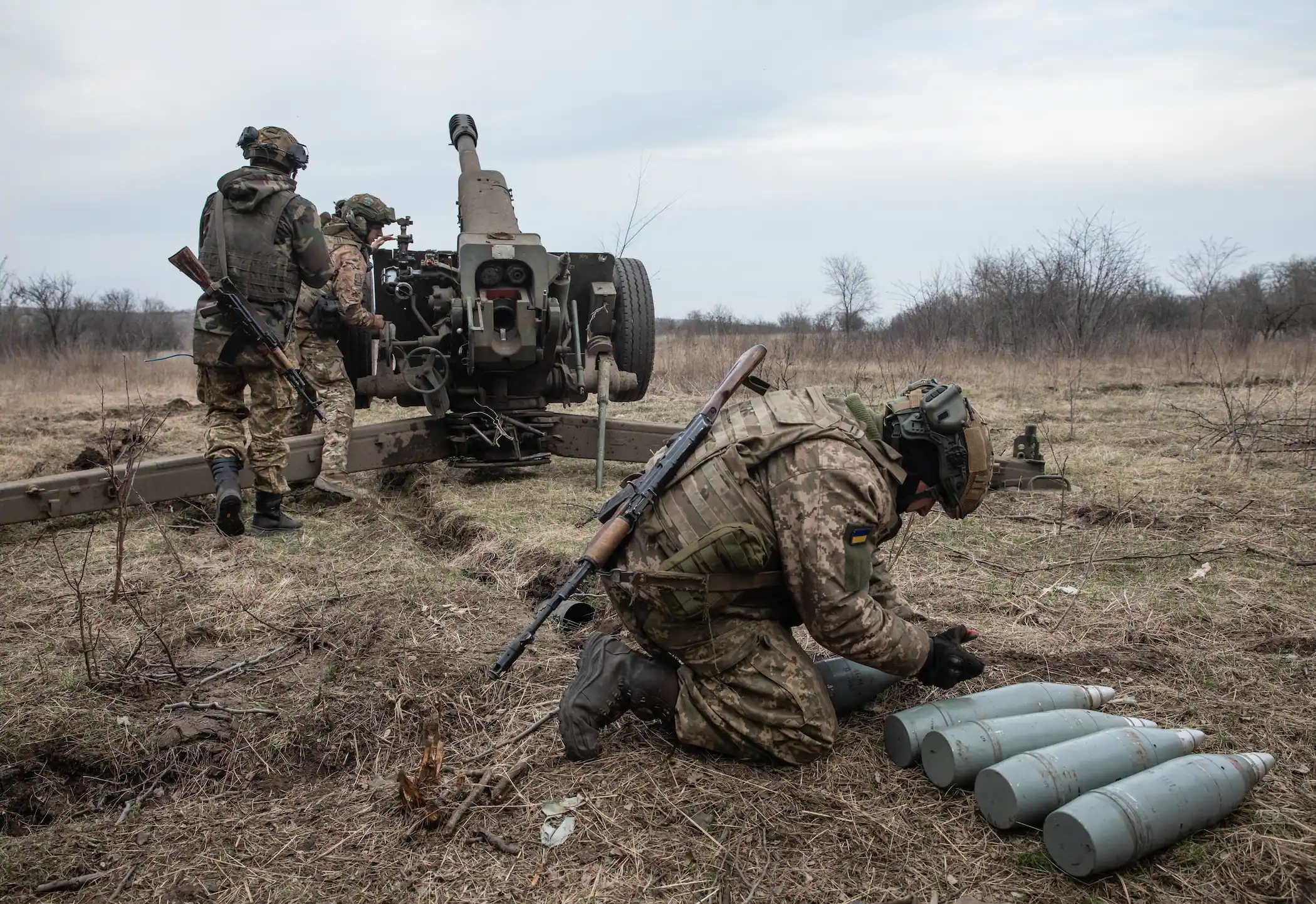
The Core Issue: Ammunition Manufacturing and its Effects on the Russia-Ukraine War
The Russia-Ukraine war has now entered its 18th month, with neither side achieving decisive strategic or operational control, bringing the conflict closer to a protracted stalemate rather than a resolution at the negotiation table. This prolonged uncertainty suggests that the war may continue for several more months before either party considers a truce. A similar situation is unfolding in Gaza, where the war is now in its ninth month, making it one of the longest wars in the history of the Arab-Israeli conflict, rivalled only by the wars surrounding the establishment of Israel and the War of Attrition with Egypt. Here, too, there is little indication that a resolution or even a willingness to negotiate a truce is forthcoming from either side. The possibility of a decade marked by extended wars looms on the horizon, especially if a conflict were to break out between China and one of its neighbours, whether in the Taiwan Strait or the South China Sea. This scenario is increasingly plausible given the United States' (U.S.) involvement in regional and international political and economic skirmishes directly targeting Chinese interests.
The current and anticipated wars share two key characteristics, in addition to the fact that they have taken or may take longer to resolve than expected. Firstly, they are occurring or expected to occur in regions of immense strategic importance to the world, such as the Great European Plain—one of the world's most fertile areas and a major grain-producing region—or in the heart of the Middle East, a critical juncture for global trade and energy routes. Secondly, these wars are not merely between individual countries or parties but involve broader alliances. For instance, in the Russia-Ukraine War, North Korea and Iran are indirectly aligned with Russia, while NATO supports Ukraine. Similarly, in the Israel-Hamas War, the U.S., Britain, and France are aligned with Israel, whereas Iran, Hezbollah, the Houthis, and numerous Shiite militias in Iraq and Syria support Hamas.
These two characteristics have imparted the ongoing wars with traits that, to some extent, echo those of the First and Second World Wars, particularly in terms of the intense consumption of ammunition and the resulting high death rates among the warring parties, as well as the extended length of the engagement lines. As a result, both wars have begun to consume vast quantities of ammunition and conventional weapons, especially artillery shells, to the point where the stockpiles of the forces involved have been significantly depleted or are nearing exhaustion. This depletion has made the replenishment of supplies inevitable, transferring the pressure of the battlefield to the production lines in factories. However, these factories have frequently struggled to meet the front lines' demands or replenish stockpiles, leading to a severe shortage of ammunition on all fronts for all parties involved.
This scarcity has transformed the war into a series of industrial battles, where the side with greater industrial capacity gains the upper hand by supplying its forces with more ammunition, thereby securing a tactical advantage. As a result, industry has become a direct and critical component of national security in its most narrow sense. Consequently, this analysis examines the impact of industrial capacity on the Russia-Ukraine war, focusing specifically on the artillery capabilities of both sides.

Publications
22 Aug 2024
Recurring Patterns: How Will Iran Respond to Ismail Haniyeh’s Assassination?
The world has been on edge since July 31,2024, awaiting Iran’s response to the assassination of Ismail Haniyeh, head of the Hamas political bureau, in Tehran by an Israeli attack. Haniyeh was targeted while attending the inauguration ceremony of Iranian President Masoud Pezekshian, marking a direct challenge to Iranian sovereignty and its role as a regional leader of resistance movements. This event underscores the broader confrontation between Iran, which opposes what it perceives as the United States and Israeli dominance in the region. Given the assassination's symbolic and strategic significance, many see Iran’s retaliation as inevitable, particularly amid escalations between Israel and Iran. Notably, this incident is part of a broader series of high-profile killings targeting figures within the so-called resistance axis. Just hours before the explosion in Tehran, Israel launched a missile strike in Beirut's southern suburbs, killing Fouad Shukr, a senior Hezbollah military official, while also claiming—without confirmation—the assassination of Mohammed Deif, a leading Hamas military commander.
While consensus exists regarding the certainty of an Iranian response, there is sharp debate within political and military circles over the nature of this retaliation. The targeted nature of the Israeli strikes suggests that a direct and immediate Iranian response may be needed to restore its deterrent credibility. However, Iran’s extensive network of regional proxies presents an alternative, allowing Tehran to retaliate indirectly while avoiding the military and economic costs of direct confrontation. This calculation has become more critical following the U.S.’s declaration that it would militarily defend Israel against any Iranian attack, reaffirming its earlier stance on Iranian missile strikes against Israel in April.
Predicting the nature of Iran’s response can be facilitated by examining the pattern of its previous reactions to similar attacks, particularly given Iran’s long history of confrontations following the 1979 revolution and its enduring hostility toward the U.S. Among these conflicts, the one most analogous to the current situation is the so-called Tanker War, which took place between Iran and Iraq from 1984 to 1988. Iran successfully drew the U.S. into a large-scale military engagement in the Arabian Gulf during this period. This scenario holds significant parallels to today’s tensions, as will be detailed later.
This paper, therefore, aims to analyse the similarities and differences between Iran’s current posture and its stance during the Tanker War from multiple perspectives—military, political, and economic—both internally externally. By comparing the dynamics at play, including the role of the U.S. in both scenarios, this analysis seeks to clarify what can be expected from Iran in light of these combined variables.

Programmes
15 Aug 2024
Syria-Turkey Normalisation: Are Yesterday’s Enemies Today’s Friends?
Since the eruption of the Syrian Civil War in 2011, several countries have cut diplomatic relations with Syria turning Damascus into a pariah state. 13 years later, the shifting regional geopolitical landscape appears to be ushering in a new reality. Today, both regional and global powers are moving toward rapprochement with Syrian President Bashar Al-Assad’s regime. In a significant U-turn, Turkish President Recep Tayyip Erdogan, once a staunch opponent of Al-Assad, is now seeking normalization with Syria. While, Turkey is not alone in this effort, Syria's potential reintegration could have far-reaching implications.

Programmes
6 Aug 2024
Strategic Ramifications of Unrest in Bab El Mandab: The Arab Cost
The term “unification of arenas” emerged in the discourse of the Arab-Israeli conflict following the 2021 Sword of Jerusalem Battle. This military and ideological strategy is primarily linked to Iran’s regional proxies within the “axis of resistance.” This coalition includes Hezbollah, Hamas, the Houthis, and various Iranian-backed militias in Syria and Iraq. Its objective is to enhance operational coordination among these groups to counter Israel and diminish American influence in the region, aligning with Iranian strategic interests. The approach involves launching simultaneous actions across different fronts, including Lebanon, Gaza, and Yemen, to orchestrate a unified battle against common adversaries, particularly Israel and the United States (U.S.).
While this strategy had been employed on a limited scale prior to October 7, it achieved unprecedented levels of coordination following these operations. The execution involved dividing targets within Israel, with coordinated attacks from Gaza, Lebanon, Iraq, Syria, and Yemen. This meticulous synchronisation and sequence of missile and drone strikes overwhelmed Israeli air defences, with some attacks originating from Yemen and reaching targets in Tel Aviv.
These agents, particularly the Houthis, did not limit their actions to threatening Israeli facilities. Their strikes extended to disrupting navigation in the Bab El Mandab Strait off the Yemeni coast. The Houthis conducted numerous attacks on ships they claimed had ties to Israel, whether through state ownership, ownership by individuals with Israeli citizenship, or simply passing through Israeli ports. This broad targeting strategy encompassed a significant portion of the traffic in this crucial strait for global trade, particularly affecting Arab oil-exporting countries and Egypt, which relies heavily on the Suez Canal for its maritime traffic. As a result, shipping routes have shifted from the Suez Canal to the Cape of Good Hope, prompting long-term strategic transformations and immediate economic repercussions for the Arab countries involved. This analysis aims to assess the Bab El Mandab Strait's importance for Arab countries and explore the strategic implications of its disruption on their economies.

Programmes
4 Aug 2024
Iranian Influence in Sudan: Balancing Drone Diplomacy and Conflict Pressures
Relations between Sudan and Iran have experienced a volatile history of rapprochement and estrangement over the past eight years, mainly due to the strong tensions between the two countries. The relationship was notably strained after Iranian protesters stormed the Saudi embassy in Tehran in 2016, prompting the Sudanese government to close all Iranian schools and cultural centres. However, amid escalating regional tensions between Tehran and its supporters on one side and Washington and its allies on the other, Sudan and Iran are moving quickly to open a new chapter in their relations. This development comes against the backdrop of the ongoing war between the Sudanese army and the paramilitary Rapid Support Forces since April 2023.
The current regional changes have created an opportunity for Sudan and Iran to address past differences in a calculated manner. Relations have shown noticeable growth over the past year, marked by a series of high-level official meetings between Sudanese and Iranian officials. One significant meeting took place on the sidelines of the Non-Aligned Movement Ministerial Committee meeting in the Azerbaijani capital, Baku, in July 2023, where former Sudanese Foreign Minister Ali Al-Sadiq, met with his Iranian counterpart, Hossein Amir-Abdollahian. This meeting signalled a rapprochement, culminating in Sudan’s announcement of the official resumption of its diplomatic relations with Iran Oct. 9, 2023.
A year after the resumption of relations, the Chairman of the Transitional Sovereignty Council, Abdel Fattah al-Burhan, received the credentials of the Iranian ambassador, Hassan Shah Hosseini, July 21, 2024, appointing him as his country’s ambassador and plenipotentiary to Sudan. This move raised many questions, particularly due to its timing, which coincided with escalating regional tensions and months of ongoing battles between the Sudanese army and the Rapid Support Forces. Additionally, it occurred in the context of the normalisation of relations between Khartoum and Tel Aviv, which began approximately four years ago.
This rapprochement raises many questions about the agreement’s sustainability, particularly given the two countries’ divergent regional priorities. While Iran focuses on the Gulf and the Arab Levant, the future of this relationship hinges on regional developments and Iran’s strategic calculations in the Red Sea region. Will the ties radically shift toward a sustainable strategic partnership or remain captive to regional tensions and political tactics?

Programmes
4 Aug 2024
Saudi Arabia’s Economic Ascent and Persistent Challenges
With GDP of more than $1 trillion USD, Saudi Arabia is the largest economy in the Middle East. A country well-known for its enormous oil reserves has been making significant steps to alter its position in the global economy. These reforms are part of a bigger plan to diversify the country’s economy and lessen its dependency on oil revenues. Consequently, the evolving economic landscape of Saudi Arabia will be explored, with a focus on its diversification efforts, investment strategies, and the obstacles it must overcome to emerge as a global leading economy.

Programmes
28 Jul 2024
Unpacking the Majdal Shams Attack
The Israel-Hamas War has fundamentally altered the dynamics of engagement between Israel and Hezbollah. Before October 7 the two adversaries adhered to a set of engagement rules established after their 2006 conflicts, which restricted their military actions to specific areas like the Shebaa Farms, avoiding deeper incursions into each other's territory. However, over the past nine months, these rules have eroded, leading to an escalation that, while intense, has not yet escalated into full-scale war.
In October 2023, Hezbollah escalated its involvement by launching rockets into Israeli-occupied territories. This marked a significant shift, with both parties engaging in psychological warfare, openly sharing or hinting at intelligence about each other. Hezbollah’s actions soon expanded to include strikes deeper into Israeli territory. In response, Israel targeted Hezbollah military installations near the Israeli-Lebanese border. It conducted a series of targeted assassinations of leaders within the elite Radwan Division, which oversees operations near the border. Israel’s retaliatory measures have since broadened to encompass a wider area of southern Lebanon and the Bekaa Valley, indicating a significant escalation in the conflict dynamics.
The conflict further escalated to encompass the village of Majdal Shams, a Druze village in the Golan Heights. The Israeli military spokesperson reported that a rocket targeting the village was an Iranian-made Falaq-1, launched from the area north of Shebaa in southern Lebanon, with Hezbollah allegedly responsible for the attack.
According to the Israeli account and preliminary investigations, the missile was indeed launched from Lebanese territory, specifically the Shebaa Farms. However, it was not intended to strike Majdal Shams; an Israeli missile interception redirected it, causing it to land in the village.

Programmes
22 Jul 2024
The Resurgence of Assassination as A Political Tool
Political assassinations have been a constant occurrence in world politics. Assassination as a political tool is, however, not exclusive to states nor state leaders; anyone who has fired a gun against a political figure claims the title of an assassin. Additionally, involvement in politics in any capacity can leave you vulnerable to such acts of retaliation. While gunmen and fanatics still impose a threat, states themselves are considered to be leading the pack. During the Cold War, the business of assassination was largely monopolized by superpowers. The United States and the Soviet Union directed operations targeting high-profile figures such as Cuba’s Fidel Castro, Chile’s Salvador Allende, and Yugoslavia’s Josip Broz Tito. Some "hits" gained more fame than others such as the assassination of dissident Bolshevik leader Leon Trotsky in Mexico City using an ice pick by Stalin’s secret police.
Russia and the United States, once the dominant global poles, continue to hold on to their old love for eliminating those they deem adversaries. The Kremlin has a long tradition, stretching back a century, of eliminating political dissidents both at home and abroad to send chilling messages to other opponents. In February 2024, a Russian pilot who had defected to Ukraine was assassinated in Spain. He was shot six times and then run over by a car, with Russian-made bullet casings left at the scene—a crude warning to others. Recently, U.S. intelligence uncovered a Russian plot to assassinate the chief executive of a powerful German arms manufacturer producing artillery shells and military vehicles for Ukraine. The United States has also continued its practice of carrying out high-profile assassinations with its most recent target being Qassem Soleimani, who was killed in Baghdad in a strike that showed little regard for international law.
States vary in their levels of expertise in assassination, with Israel often considered the maestro of this practice. Assassination has been a foundational principle of the Israeli state. Since its establishment in 1948, Israel has targeted Nazi leaders, Palestinians, Arabs, and scientists serving its enemies, such as German scientists working on the then Egyptian President Gamal Abdel Nasser’s advanced weapons program. Currently, the pool of targets has expanded, with Iranians becoming significant targets of Israeli operations. One of the latest operations against Iranians involved the assassination of Hassan Sayyad Khodaei. Known only to intelligence personnel as a key figure at the tactical level in the Quds Force, Khodaei's primary focus was on attempting (mostly unsuccessfully) to attack Jewish and Israeli targets abroad.
Nevertheless, the pool of nations engaged in assassination attempts appears to be expanding with new entrants. A notable incident occurred in Canada last June, where Sikh separatist Hardeep Singh Nijjar was shot 34 times. Additionally, in January of the same year, British Sikhs were warned by police about increased risks to their lives. This incident marks India’s grand entrance into the stage of those countries using assassination as a tool for advancing both international and domestic agendas. It highlights how political assassinations have resurfaced as a widespread tactic, no longer monopolized by a handful of states.

Programmes
21 Jul 2024
The Power of the Word: How the UAE Redefined International Mediation?
The 21st century has witnessed a resurgence of mediation as a pivotal tool for resolving international disputes. This resurgence is driven by the complexities of contemporary conflicts and the expansion of threats beyond traditional regional conflicts, civil wars, and political crises. The scope of security threats now includes issues such as climate change, cybersecurity, and transnational organised crime.
Several countries have played significant roles in mediation, leveraging their diplomatic acumen, political influence, and economic resources to facilitate dialogue and prevent escalation. Norway has consistently demonstrated its commitment to peacebuilding through active participation in resolving conflicts among the most prominent mediators. From Sri Lanka to Colombia and the facilitation of the Oslo Accords, Norway has embodied its ability to promote dialogue between seemingly irreconcilable adversaries.
Known for its multilateral approach and emphasis on consensus building, Finland initiated the Group of Friends of Mediation in September 2010, significantly contributing to peace processes in the Horn of Africa. Similarly, Switzerland, with its long-standing tradition of neutrality, has provided a safe and neutral venue for countless peace talks and negotiations, fostering an environment conducive to compromise and resolution.
Amid the resurgence of mediation in international diplomacy, the last decade has witnessed the emergence of non-Western actors in this field. At the forefront is the United Arab Emirates (UAE), which has become an essential player in the Middle East and beyond. Since its founding, the UAE has combined traditional Arab values with modern diplomatic practices to address the cultural complexities of regional conflicts, adopting a policy of promoting peace, security, and stability both regionally and globally.
The UAE’s commitment to mediation is evident in its numerous initiatives aimed at calming conflicts and crises, including active mediation in the ongoing conflict in Yemen, facilitating dialogue and humanitarian aid, playing a crucial role in reconciliation efforts between India and Pakistan; its pivotal role in the historic 2018 peace agreement between Ethiopia and Eritrea, marking a significant achievement in regional stability; facilitating prisoner exchanges between Russia and Ukraine, showcasing the UAE's diplomatic reach; mediation efforts between Russia and the United States (U.S.), further highlighting the UAE's influence; and hosting the COP28 Climate Conference in Dubai, underscoring the UAE's active participation in global diplomacy.
However, the path to mediation is fraught with challenges. The inherent complexities of many regional conflicts, the conflicting interests of the parties involved, and the need to balance mediation efforts with national interests can hinder the achievement of sustainable solutions. Additionally, maintaining neutrality in polarised situations, limited influence over non-state actors, and potential capacity constraints are challenges that the UAE must overcome to ensure the continued success of its mediation efforts. Hence, the UAE’s role as a rising international mediator, focusing on the factors that enabled its rise, its mediation strategies, and the impact of its efforts on regional and global conflicts will be examined.

Programmes
17 Jul 2024
The UAE: A Global Magnet for Wealth
With solid inflows from the United Kingdom (U.K.) and Europe, the United Arab Emirates (UAE) has become the top global destination for wealth, attracting businesses, investors, and high-net-worth individuals (HNWIs) for the third year in a row. The UAE’s strategic blend of political stability, a welcoming cultural environment, a thriving real estate market, favourable tax regulations, and economic stability accounts for its resurgence as the top destination for affluent individuals in 2024. Strengthening its position as a leading hub for investment and wealth migration, the country’s forward-thinking vision and dedication to innovation and development ensure its sustained appeal to global wealth. The UAE is expected to gain significant economic advantages as more wealthy individuals and their families relocate there, thereby increasing the country’s appeal and influence on a worldwide scale.