



FIFA's commercial success and its governance decisions are not separate stories — they increasingly appear to be the same story. This analysis examines who benefits from the modern World Cup's business model, how FIFA's revenue depends on star players and marquee fixtures, and where that dependency creates entry points for questionable decision-making around eligibility and officiating.
The question matters now because of scale: the 2026 tournament is FIFA's largest and most commercially valuable edition in history, its sponsorship architecture runs through multiple tiers of global brands and downstream club deals, and this year's tournament has already produced disciplinary reversals and officiating controversies that critics have directly linked to the same commercial incentives driving FIFA's revenue.
The analysis draws on FIFA's own financial disclosures, sponsorship data, and contemporaneous tournament reporting, and it deliberately separates documented facts from contested interpretation, particularly where officiating or disciplinary decisions have been framed by media and analysts as raising questions, not as proof of manipulation.
Betting Products and the Architecture of Wagering
Football betting is not a single product but a portfolio of wagering formats layered onto every match, competition, and even individual player action. Fixed-odds pre-match betting, wagering on an outcome before kickoff at odds set by the operator, remains the traditional core of the market, but live or “in-play” betting, which allows continuous wagering on dynamically shifting odds as a match unfolds, has become the fastest-growing segment because it multiplies the number of decision points a better can act on within a single fixture.
Alongside these sit proposition, or “prop,” bets on discrete in-match events such as cards, corners, and individual player statistics; accumulator or parlay bets that combine multiple selections into a single, higher-payout wager; betting exchanges, where bettors wager against one another rather than against a bookmaker; and, increasingly in the United States, regulated prediction markets that trade tournament outcomes as tradable contracts rather than fixed-odds bets. The 2026 World Cup, the first held under an expanded forty-eight-team, 104-match format, illustrates the scale this generates in practice: major operators are now offering upward of two hundred distinct betting markets per fixture, roughly two-and-a-half times the number offered during the 2022 tournament.

The Scale of the Market: Legal and Illegal Channels
The financial scale of football gambling is best understood by separating the licensed market from its considerably larger illegal counterpart. In the regulated sector, the global sports betting market generated an estimated US$113.8 billion in revenue in 2025, with football consistently identified as the largest single sport-specific segment because of the density of its year-round match calendar and the breadth of its wagering formats. The ongoing 2026 World Cup shows how a single tournament concentrates this activity: H2 Gambling Capital projects global wagering on the tournament will reach approximately US$60 billion, a 71% increase over the roughly US$35 billion wagered during the 2022 World Cup in Qatar.
Within the United States specifically, the effect of the 2018 Supreme Court decision striking down the federal Professional and Amateur Sports Protection Act is visible in the trajectory of legal handle: Americans wagered an estimated US$1.8 billion on the 2022 tournament through licensed sportsbooks, a figure gaming analysts now project could rise to between US$2.8 billion and US$4.3 billion for 2026, reflecting an expansion from nineteen to thirty-nine states with legal sports betting over the same four-year period.
Yet this licensed market, however large, is dwarfed by illegal and unregulated betting. The United Nations Office on Drugs and Crime estimates that up to US$1.7 trillion is wagered annually on illicit betting markets controlled by organized crime networks — a figure roughly fifteen times the size of the entire regulated global sports betting industry, and one that UNODC researchers describe as the “number one factor fuelling corruption in sports”. Because football is the most heavily wagered-on sport worldwide, it is disproportionately exposed to this gap between regulated and unregulated activity.
Where the Money Goes
Once a bet is placed, the mechanics of pricing determine how money moves between bettor, operator, and state. Bookmakers set odds using probabilistic models adjusted for the “overround,” a built-in margin ensuring that the implied probabilities of all outcomes sum to more than 100%, which guarantees the operator a structural edge over time regardless of any single result.
In practice, this margin is realized as the “hold”: the share of total handle retained as gross gaming revenue after winning bets are paid out. Industry estimates place the hold rate for soccer betting at approximately 7 to 9% — lower than for sports with fewer likely outcomes, such as American football — reflecting soccer’s comparatively balanced probability distribution across match results and intense pricing competition among operators. Applied to the 2026 World Cup, this hold rate converts the projected US$2.82–$4.3 billion in U.S. legal handle into an estimated US$197–$387 million in gross gaming revenue for licensed operators from the tournament alone.

Betting revenue does not remain solely with bookmakers. A significant share flows back into football through sponsorship agreements, official betting data rights, media partnerships, licensing arrangements, and advertising. The 2026 FIFA World Cup demonstrates how betting companies have become integrated into football’s commercial ecosystem rather than remaining external market participants.
In January 2026, FIFA appointed Stats Perform as its first official worldwide distributor of betting data and betting streaming rights. Under the multi-year agreement, the company exclusively distributes official betting data and live streams for all 104 matches of the expanded FIFA World Cup 2026 to licensed sportsbooks worldwide. Beyond generating commercial revenue, FIFA stated that the partnership strengthens transparency and integrity by centralizing the distribution of official betting data and improving monitoring of betting markets.
FIFA further expanded these commercial ties in May 2026 by naming Betano, owned by Kaizen Gaming, as an Official Tournament Supporter for Europe and South America. The agreement marks the third consecutive FIFA tournament sponsored by the betting operator following the 2022 FIFA World Cup and the 2025 FIFA Club World Cup. Although the financial terms were not disclosed, FIFA described the partnership as part of its broader commercial strategy surrounding the largest World Cup in history, while Betano characterized the tournament as an opportunity to strengthen its global market position through exposure to billions of viewers.
The commercial relationship extends well beyond FIFA. Domestic leagues illustrate how betting revenues continue to circulate throughout football’s wider ecosystem. The English Premier League remains one of the clearest examples: during the 2025/26 season, 11 of the league’s 20 clubs carried gambling companies as their principal shirt sponsors, generating an estimated £101 million in front-of-shirt sponsorship revenue during the previous season. Industry analysis also indicates that betting companies pay a substantial premium for football sponsorship rights because of the sport’s exceptional audience reach and engagement.
Growing concerns over gambling’s visibility in football have prompted regulatory responses. Beginning with the 2026/27 season, Premier League clubs will no longer display gambling companies as front-of-shirt sponsors under a voluntary agreement first announced in 2023. However, the restriction does not extend to sleeve sponsorships, stadium advertising, LED perimeter boards, or other commercial rights, meaning betting brands continue to maintain a significant presence within professional football.
Taken together, these examples demonstrate that football betting operates as a broader commercial ecosystem rather than a simple exchange between bettors and bookmakers. Revenue generated through betting increasingly flows to governing bodies, leagues, clubs, broadcasters, governments, and commercial partners through sponsorship agreements, data licensing, media rights, and taxation. At the same time, the coexistence of a regulated global sports betting market valued at approximately US$113.8 billion and an illegal betting market estimated by the United Nations Office on Drugs and Crime (UNODC) at up to US$1.7 trillion underscores a significant governance challenge: a substantial proportion of football-related wagering continues to occur outside formal regulatory oversight.
Who Cashes In
FIFA sits at the centre of the direct-beneficiary chain, not on its periphery. The organization’s commercial cycle culminating in the 2026 World Cup is projected to generate roughly $11–13 billion in revenue, with broadcasting rights ($4.3B) as the largest stream and marketing/sponsorship deals worth roughly $1.8–2.7 billion. That sponsorship revenue is structured in tiers: top-level FIFA Partners like Adidas, Coca-Cola, Visa, and Aramco hold rights across all FIFA competitions, while a second tier of World Cup-specific sponsors, including Bank of America and Verizon, pay for tournament-only exposure. Clubs sit downstream of this same commercial architecture: shirt, stadium, and kit sponsorships increasingly convert matchday and broadcast attention directly into corporate revenue, with major European clubs now deriving a substantial share of commercial income from these deals rather than gate receipts. This creates a layered beneficiary structure, FIFA capturing the largest share centrally, brands buying access to fan attention and data, and clubs monetizing the same audiences a second time through their own sponsorship portfolios. The result is an ecosystem where the World Cup’s commercial success depends less on any single actor and more on maintaining audience size and star appeal across all three tiers simultaneously.
The Hidden Ledger
The indirect beneficiaries gain from an incentive structure, not a transaction. FIFA’s commercial model depends on star players and marquee fixtures to sustain the audiences that betting operators and broadcasters both monetize, creating a structural — not necessarily conspiratorial, alignment between keeping stars on the pitch and revenue across the ecosystem. Several 2026 episodes illustrate this without proving intent.
Cristiano Ronaldo’s red card against Ireland would ordinarily have cost him World Cup matches; FIFA instead deferred most of the ban under Article 27, preserving his run. That precedent was cited when FIFA reversed Folarin Balogun’s ban before the host nation’s Round of 16 match — reportedly after U.S. presidential pressure, which UEFA called “incomprehensible. Messi went unpunished for a comparable challenge on an Algerian defender, a comparison Algeria’s federation formally protested.
A parallel pattern runs through officiating technology, where precision has outpaced the game’s traditional visible standard of proof. Croatia’s stoppage-time equalizer against Portugal was ruled out on marginal “Connected Ball” sensor data invisible on television replay, eliminating Croatia while Ronaldo remained in the draw, and prompting a formal Croatian complaint over what it called technology-driven “abuse” of the review.
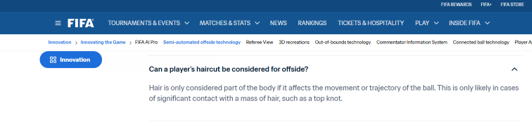
Germany’s shock elimination followed a disallowed extra-time goal for a foul on the goalkeeper that former players and officials, including Peter Schmeichel, called too soft to overturn. Belgium then beat Senegal on a stoppage-time penalty after a seven-minute review that independent VAR-analysis accounts argued should never have been awarded.
None of this proves manipulation, each call was defended procedurally, and slow-motion review inflates minor contact. But discretionary calls have disproportionately favoured the tournament’s most commercially valuable players and fixtures, feeding the same betting-and-broadcast attention economy discussed above regardless of correctness. The resulting erosion of trust in officiating is itself a risk to that same commercial model: an audience that doubts fairness is one less inclined to keep watching or wagering.
The Eyeball Economy
Broadcasters and commercial sponsors round out the indirect tier. Viewership figures set advertising rates, and advertising rates are themselves a function of the same star power and dramatic knockout moments that keep betting markets active, more eyeballs on a Ronaldo appearance or a host-nation upset translate into both higher ad revenue and higher betting volume, reinforcing the same incentive loop from a different commercial angle.
With both Ronaldo and Neymar already eliminated, Messi is now the tournament’s last remaining global icon of that stature, which raises an obvious question for an incentive structure already visible throughout this pattern: does FIFA’s commercial interest in a marquee final now rest on keeping him in the draw for as long as possible?
Match-Fixing and Regulations Calculations
Ensuring a specific score causes what is called match-fixing, which is the result of manipulation on the field to alter the course of a match. It can be done by a referee, a player, or an official, driven by financial incentives. These financial incentives are created by the betting market. It can take different forms, but ultimately achieves the required result.
Result Manipulation (Match-Fixing) refers to manipulating the outcome of a match by deciding which team wins and which team loses. It can be carried out through several mechanisms, such as bribery, threats, or financial incentives involving players, referees, or club officials. For instance, referees exercise an immense amount of on-field power. Therefore, they have the ability to make biased calls, such as calling phantom fouls, awarding penalties, or sending off key players, fostering the required trajectory of the match. Similarly, a player may deliberately miss an easy goal. By doing so, they can ensure that a specific win is achieved, thus driving profits for pre-placed bets.
Event Manipulation (Spot-Fixing) refers to targeting a specific incident during the match, such as a referee awarding an unnecessary penalty, a player deliberately receiving a yellow card, or a team intentionally giving away a corner kick. It is mostly preferred because the player or referee can indirectly influence the outcome of the match without making the manipulation explicitly noticeable to match-monitoring algorithms. The last form is Betting-Related Misconduct, where players, referees, or officials place bets on matches or share confidential information. For instance, a referee informs a beneficiary that an injured star player will not play before the information becomes public.
Profit-Viewership Nexus
Although FIFA has regulations that contain detailed provisions regarding match-fixing, the rapid growth of global betting and online gambling markets allows gambling-related misconduct to continue through the exploitation of underpaid athletes, athletes with debt or financial problems, as well as regulatory gaps and weaknesses in implementation. Thus, a major global sporting event becomes vulnerable to manipulation and criticism.
What adds to the problem is the growth of unlicensed betting platforms that operate outside regulatory oversight. Unlicensed operators are gaining more ground than licensed operators. According to Gaming Compliance International, more than half a trillion dollars will be gambled during the 2026 World Cup, and a large portion of that will pass through unlicensed crypto operators.
Major sporting events with large sponsorship markets and global viewership provide a flourishing opportunity for illegal operators to expand and increase their reach. Unlicensed betting platforms frequently exploit the high global viewership of the FIFA World Cup to target fans through scam websites, unregulated crypto betting, and illegal prediction markets. Because these operators lack valid regulatory licenses, anti-money laundering controls, and consumer protections, people who engage with them and consumers who cannot distinguish between fraudulent and regulated operators, are vulnerable to financial losses and fraud.

With such a large-scale event, mitigation becomes difficult and increases the risk of oversight. Institutional corruption within FIFA is extensively documented, primarily through the landmark 2015 corruption scandal uncovered by U.S. and Swiss authorities. The case involved several FIFA officials and sports marketing executives who allegedly received more than $150 million in bribes in exchange for broadcasting, marketing, and commercial rights. The investigations led to the arrest or indictment of numerous high-ranking officials, including FIFA vice presidents and leaders of continental federations. Joseph Sepp Blatter, the president of FIFA at the time, resigned. Although he was initially not charged, he was later banned from all football-related activities, along with several other senior executives. The scandal prompted sweeping governance reforms and highlighted how FIFA’s enormous revenues from World Cup broadcasting, sponsorship, and marketing were systematically used for personal enrichment rather than for the development of the sport.
In this context, FIFA has taken serious steps to address the issue. In accordance with FIFA’s mitigation mechanisms, it has established a comprehensive anti-match-fixing framework that combines prevention, monitoring, reporting, and cooperation. Prior to tournaments, FIFA conducts integrity workshops for integrity officers of member associations, participating national teams, and referees to raise awareness and prevent corruption. During competitions, FIFA’s Integrity Task Force (FITF) monitors betting markets and every match in real time to detect suspicious activity, investigate potential match-fixing, and coordinate with law enforcement, integrity partners, and national football associations. FIFA also provides confidential reporting channels for whistle-blowers to report suspected match-fixing or corruption and works closely with member associations and confederations to strengthen their integrity programs and promote consistent anti-corruption measures globally.
However, as sponsorships and partnerships continue to increase alongside the growing global viewership of the World Cup, these mechanisms are exploited by some gambling companies and corrupt FIFA personnel. Consequently, mitigation mechanisms are increasingly challenged by the scale of the event and the rapid expansion of the global gambling market, making it difficult to ensure a completely flawless tournament.
Ultimately, the question is not about the limits of gambling markets in FIFA; it is more about the link between viewership and sponsors. FIFA, sponsors, and gambling operators share the same interest in increasing viewership, as the increase in viewership directly translates into profit for all parties. That is why the expansion of the World Cup can be traced back to profit incentives. As the commercial value of the World Cup continues to grow through the expansion of sponsorships, betting markets, and digital platforms, opportunities for corruption also increase. Therefore, this profit-viewership nexus will likely continue to prevail in the coming World Cups, leaving the question of how to manage this nexus and limit corrupt practices.
References
——. “Preventive measures.” FIFA. May 15, 2026. https://inside.fifa.com/legal/integrity/preventive-measures
Al Jazeera. “Controversial Penalty Ends Senegal’s FIFA World Cup Run against Belgium.” Al Jazeera. July 2, 2026. https://www.aljazeera.com/sports/2026/7/2/controversial-penalty-ends-senegals-fifa-world-cup-run-against-belgium.
Associated Press. 2026. “FIFA Clarifies VAR Call Disallowing Germany’s Goal vs. Paraguay – ESPN.” ESPN.Com. ESPN. July 2026. https://www.espn.com/soccer/story/_/id/49231823/germany-goal-paraguay-fifa-world-cup-2026-disallowed-var.
Barradale, Greg. 2025. “Premier League Clubs Strike New Shirt Sponsor Deals with Gambling Firms despite Looming Ban.” Big Issue. August 7, 2025. https://www.bigissue.com/news/social-justice/premier-league-clubs-shirt-sponsors-gambling-companies/.
Betting and Gaming Council. “As the World Cup approaches, illegal gambling advertising is booming.” June 3, 2026. https://bettingandgamingcouncil.com/news/as-the-world-cup-approaches-illegal-gambling-advertising-is-booming
Bıçak Hukuk. “Beyond the Scandals: Understanding the Legal and Regulatory Landscape of Match-Fixing in Turkish Football.” November 15, 2025. https://www.bicakhukuk.com/en/football-match-fixing-and-betting-manipulation/
Brewer, Contessa. 2026. “The World Cup Will Likely Be the Biggest Gambling Event in History.” CNBC. June 10, 2026. https://www.cnbc.com/2026/06/10/the-world-cup-will-likely-be-the-biggest-gambling-event-in-history.html.
Carp, Sam. 2026. “Crisis or Opportunity? How the Premier League Betting Ban Is Resetting the Shirt Sponsorship Market – SportsPro.” SportsPro. April 24, 2026. https://www.sportspro.com/analysis/sponsorship-marketing/premier-league-betting-shirt-sponsorship-ban-categories-value-april-2026/.
Davies, Andy. 2026. “Messi, Balogun and Why Two Tackles Have Sparked World Cup Outrage – ESPN.” ESPN.Com. ESPN. July 2, 2026. https://www.espn.com/soccer/story/_/id/49252206/messi-balogun-why-two-tackles-sparked-world-cup-outrage.
De Rosi, Andreas. 2026. “How FIFA Turns the 2026 World Cup Into a $13 Billion Machine | Mappr.” Mappr. June 13, 2026. https://www.mappr.co/fifa-world-cup-2026-revenue/.
ESPN News Services. 2025. “FIFA: No World Cup Ban for Cristiano Ronaldo after Ireland Red – ESPN.” ESPN.Com. ESPN. November 25, 2025. https://www.espn.com/soccer/story/_/id/47096172/portugal-cristiano-ronaldo-escapes-world-cup-ban-red-card-ireland.
Europe’s Human Rights Watchdog. 2019. Review of Match-Fixing – Europe’s Human Rights Watchdog. Europe’s Human Rights Watchdog. September 2019. https://www.europewatchdog.info/en/treaties_and_monitoring/sports_conventions/match-fixing/.
FIFA. 2026. Review of Betano Unveiled as Tournament Supporter of FIFA World Cup 2026TM for Europe and South America. Fifa.Com. 2026. https://vod.fifa.com/tournament-organisation/commercial/media-releases/betano-unveiled-as-tournament-supporter-of-fifa-world-cup-2026-tm-for-europe-and-south-america.
Jian, Aaron Lim Wei. 2026. “World Cup 2026 Betting: US Sportsbooks Project Record $2.8B–4.3B Handle as Tournament Opens | BSN.” Bright Side of News. June 12, 2026. https://brightsideofnews.com/gambling/world-cup-2026-betting-us-sportsbooks-record-handle/.
Kemp, Jake. 2025. “Over 50% of EPL Clubs Promote Gambling Brands, as Front-of-Shirt Ban Looms.” Sportcal. August 26, 2025. https://www.sportcal.com/analyst-comment/over-50-of-epl-clubs-promote-gambling-brands-as-front-of-shirt-ban-looms/.
Polaris Market Research. 2026. Review of Sports Betting Market Size Global Report, 2022 – 2030. Www.Polarismarketresearch.Com. May 21, 2026. https://www.polarismarketresearch.com/industry-analysis/sports-betting-market.
Premier League. 2023. Review of Premier League Statement on Gambling Sponsorship. Premierleague.Com. April 13, 2023. https://www.premierleague.com/en/news/3147426.
Rollin, Jack. “2015 FIFA corruption scandal.” Britannica. June 17, 2026. https://www.britannica.com/event/2015-FIFA-corruption-scandal
Saeed, Mohamed. 2026. “Croatia Lodge FIFA Complaint over ‘Abuse of Technology’ after Controversial World Cup Exit against Portugal.” Goal. Goal.com. July 6, 2026. https://www.goal.com/en/lists/croatia-fifa-abuse-technology-controversial-world-cup-exit-portugal/blta3fc118716982ea6.
Senkiw, Brad. 2026. “H2 Projects $60 Billion Global Sports Betting Handle for 2026 World Cup.” Yahoo Sports. Yahoo! Sports. June 8, 2026. https://sports.yahoo.com/articles/h2-projects-60-billion-global-123900212.html.
Sports Desk, Outlook. 2026. “Heartbeat Data, Heartbreak Results: The ‘Tech’ Controversy Consuming the FIFA World Cup 2026.” Outlook India. July 4, 2026. https://www.outlookindia.com/sports/football/portugal-vs-croatia-offside-controversy-var-explained-fifa-world-cup-2026.
Sullivan, Kelsey . 2026. Review of The Complete List of Brands behind the 2026 FIFA World Cup: A Tiered Breakdown of Official Sponsors. Zappi. May 11, 2026. https://www.zappi.io/web/blog/complete-list-of-brands-behind-the-2026-fifa-world-cup-official-sponsors
The Associated Press. 2026. “Historic World Cup Furor at ‘Incomprehensible’ FIFA Decision to Let U.S. Forward Balogun Play.” NPR. July 6, 2026. https://www.npr.org/2026/07/06/g-s1-132108/world-cup-balogun-uefa-fifa-belgum-trump.
UN News. 2023. Review of ‘Illegal Betting Is the Number One Factor Fuelling Corruption in Sports,’ UN Conference Hears | UN News. News.Un.Org. December 16, 2023. https://news.un.org/en/story/2023/12/1144857.
University of Kansas School of Business. 2026. Review of KU Researchers Examine Sports Betting Behavior and Finances during the World Cup. Ku.Edu. 2026. https://business.ku.edu/news/article/how-major-events-like-the-world-cup-influence-sports-betting-activity.


Related Articles
The FIFA World Cup 2026: How the U.S. Weaponized Borders and Mobility
World Cup 2026: When Sport Exposes the Fault Lines of Politics

Pulse: Who Controls the Region’s Food?

Beyond PEPFAR: How America’s Aid Retreat Is Reshaping Global Health Governance

Digital Abundance, Experiential Scarcity, and the New Economics of Cinema

Comments