
Programmes
3 Mar 2026
The Difficult Path to Regime Change in Iran
In remarks on 2 March 2026, U.S. President Donald Trump did not rule out the possibility of sending American ground troops into Iran if it became necessary. However, he didn’t acknowledge that such a move would carry serious risks given Iran’s size and military capability. Any U.S. ground invasion would likely involve significant casualties and could fail to achieve its goals. Trump has generally shown reluctance to engage in large-scale ground wars. While he has authorized military actions, including airstrikes, against Iran and other states in recent months, his preference historically has been for limited use of force, such as air power and specialized units, rather than deploying tens of thousands of troops.
Part of this approach stems from his broader view that prolonged, chaotic conflicts are unpredictable and often produce uncertain outcomes. Major ground combat operations can create widespread instability and make strategic consequences hard to forecast. Throughout both his first term and the early part of his second term, Trump has shown no strong inclination to commit large numbers of U.S. ground forces abroad.
Trump and Bibi (also known as Israeli Prime Minister Benjamin Netanyahu) recognize that forcing a full regime change in Tehran would be one of the toughest strategic tasks imaginable. Iran’s political and military structure is robust and not solely driven by personalist rule; it is anchored in a religiously grounded system that has endured since 1979. With the challenges of a successful ground invasion in mind, their current strategy relies on a combination of military pressure and other techniques intended to weaken the regime over time, though there is no guarantee this will bring about its collapse.
Programmes
23 Jun 2025
Containment to Confrontation: US Intervention in Iran
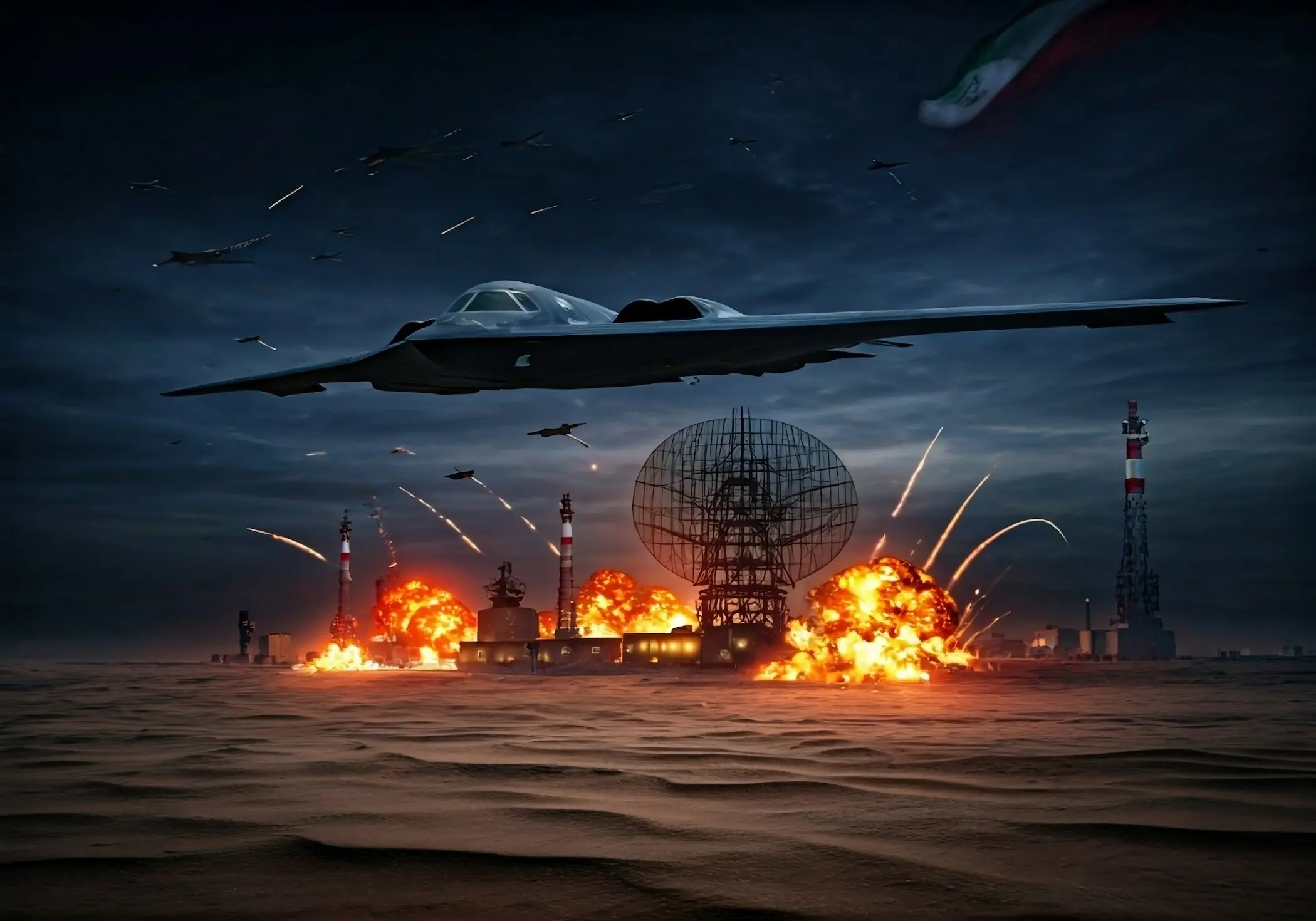
In the early hours of June 22, 2025, the Middle East entered a new phase of strategic confrontation following the United States' execution of a calibrated series of precision airstrikes against three of Iran’s most critical nuclear facilities: the Fordow Fuel Enrichment Plant, the Natanz Enrichment Complex, and the Isfahan Nuclear Technology Center. These strikes marked a significant inflection point in American policy toward Iran's nuclear program, signifying a deliberate departure from the long-preferred instruments of sanctions, diplomacy, and covert sabotage toward direct military action aimed at functionally dismantling Iran’s enrichment capacity.
The U.S. intervention did not occur in a vacuum but was preceded by a sweeping nine-day Israeli air campaign— “Operation Rising Lion”—which inflicted substantial damage on Iran’s conventional military and nuclear infrastructure. Yet U.S. strategic assessments concluded that Israeli capabilities alone would fall short of neutralizing the deeply buried Fordow facility, located nearly 90 meters beneath the mountains near Qom. Accordingly, Washington deployed B-2 Spirit bombers from Whiteman Air Force Base and launched submarine-based Tomahawk cruise missiles, employing—for the first time in combat—the GBU-57 Massive Ordnance Penetrator, a 30,000-pound precision-guided “bunker buster” weapon. The strikes were designed not merely to degrade but to decapitate Iran’s uranium enrichment trajectory at every critical juncture.
While the U.S. administration proclaimed the operation a “complete and total success,” Iran’s leadership sought to downplay the extent of the damage, signalling both resilience and continued intent to pursue its nuclear ambitions. Tehran’s initial response refrained from large-scale direct retaliation, instead signalling a likely pivot toward asymmetric reprisal via regional proxies such as the Houthis, alongside diplomatic escalation and renewed threats to abandon the Nuclear Non-Proliferation Treaty (NPT). This calibrated restraint highlights the regime’s acute awareness of the potentially existential consequences of a direct confrontation with the United States.
Structurally, the strikes reflect a paradigmatic shift in U.S. non-proliferation doctrine: from risk management through deterrence and arms control to selective, high-precision coercion. The operation also underscores a changing regional deterrence architecture, in which American military intervention is no longer conditioned by alliance consensus or Gulf coordination, as several key Arab states were reportedly excluded from prior notification. This signals an American willingness to act unilaterally—or bilaterally with Israel—when core proliferation red lines are deemed to have been crossed.
Programmes
23 Jun 2025
Will the Houthis Intervene?
On June 22, the United States attacked three main nuclear facilities in Iran (Fordow, Natanz, and Isfahan), claiming that these strikes were successful and incapacitated the facilities. Following this attack, Iran fired a new wave of ballistic rockets at Israel while pledging to respond more fiercely to the U.S. attack. The degree of Iranian retaliation will be determined on whether the U.S. was successful in its attempt to completely destroy Iran's nuclear programme.
If Iran managed to move the enriched uranium into new safe places before the attack, or if these materials are being safely stored in the same facilities underground, beyond the reach of the U.S., the Iranian retaliation might be limited. However, if these materials have been destroyed, it is expected that Iran will retaliate strongly, as the U.S. and Israel have crossed the red lines that Iran has already set. In this case, Iran will tend to activate its proxy groups in the Middle East and get them involved.
Programmes
22 Jun 2025
Red Alert: Will the US Use a Tactical Nuclear Bomb Against Iran?
On June 22, U.S. President Donald Trump announced that, using its “bunker buster” bomb, the United States had launched an attack on Iran’s Fordow nuclear facility. While Trump declared the strike a success, the complete destruction of the facility remains unconfirmed. This raises a critical question: will Trump consider using a tactical nuclear weapon to ensure its elimination?
Tactical nuclear weapons, unlike strategic ones, are smaller in yield and designed for targeted use on the battlefield rather than for widespread destruction. Though less devastating in scale, their use would carry serious regional and global repercussions.
Programmes
22 Jun 2025
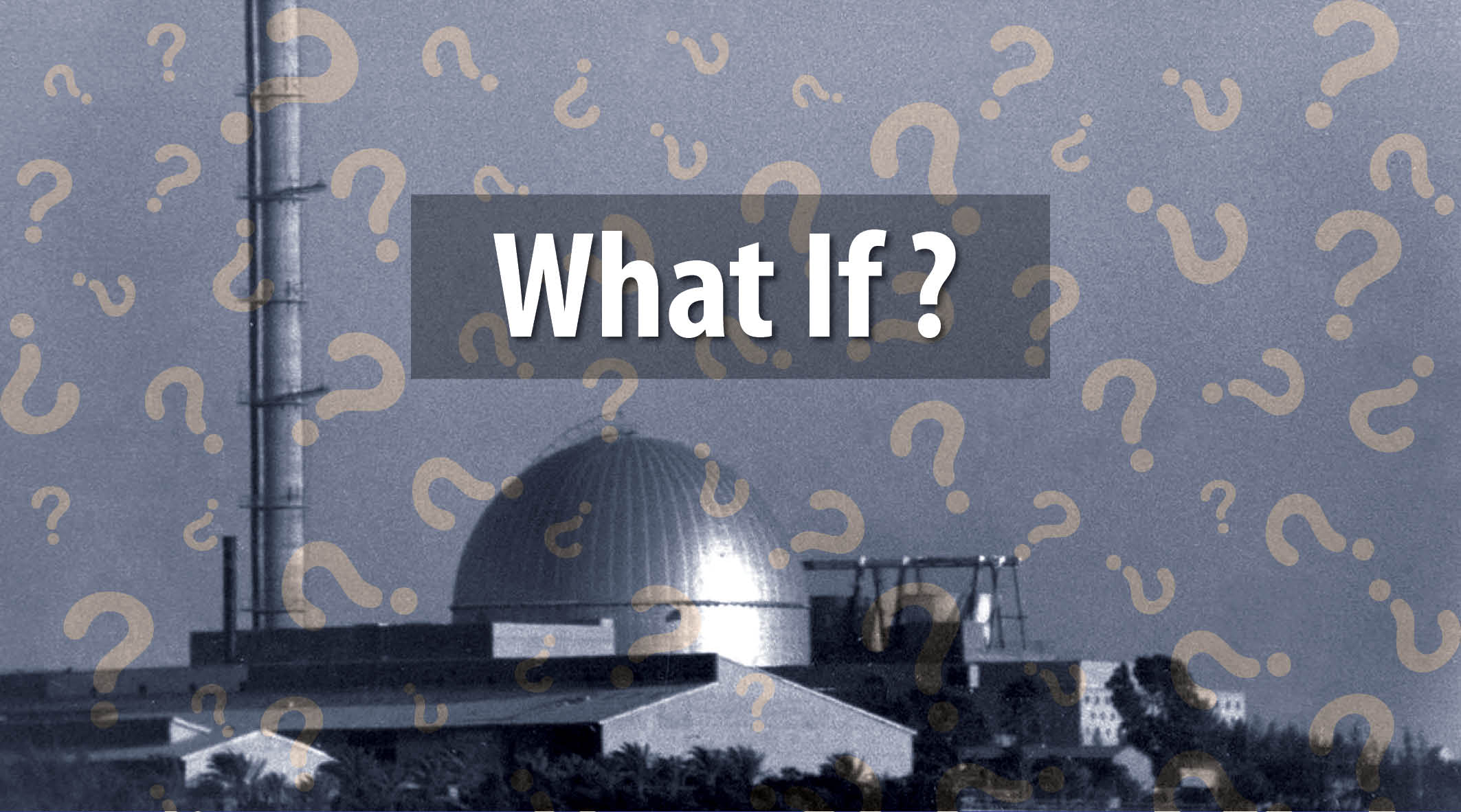
What If: Iran Attacked the Dimona Reactor?
Amid the intensifying confrontation between Iran and Israel throughout 2025, the prospect of a direct strike against Israel’s Dimona nuclear facility has moved from a remote possibility to a plausible escalation scenario. As military operations increasingly target strategic infrastructure on both sides, the regional system faces the risk of a threshold breach—one that could trigger not only military and political consequences but also a multidimensional crisis involving radioactive contamination, mass displacement, and economic collapse across multiple states.
While Israel would undoubtedly bear the immediate brunt—facing mass civilian evacuations, irreversible environmental degradation in the Negev, and the paralysis of its agricultural and tourism sectors—the ripple effects would extend far beyond its borders.
Jordan’s border regions and agricultural zones in the Jordan Valley could face contamination and humanitarian strain, potentially requiring the evacuation of tens of thousands of people. Egypt’s Sinai Peninsula and northern Suez region could suffer fallout exposure, disrupting global shipping through the canal and threatening the Red Sea tourism corridor. Saudi Arabia’s northern provinces, including areas tied to its Vision 2030 megaprojects, could face both environmental and demographic disruption.
Programmes
22 Jun 2025
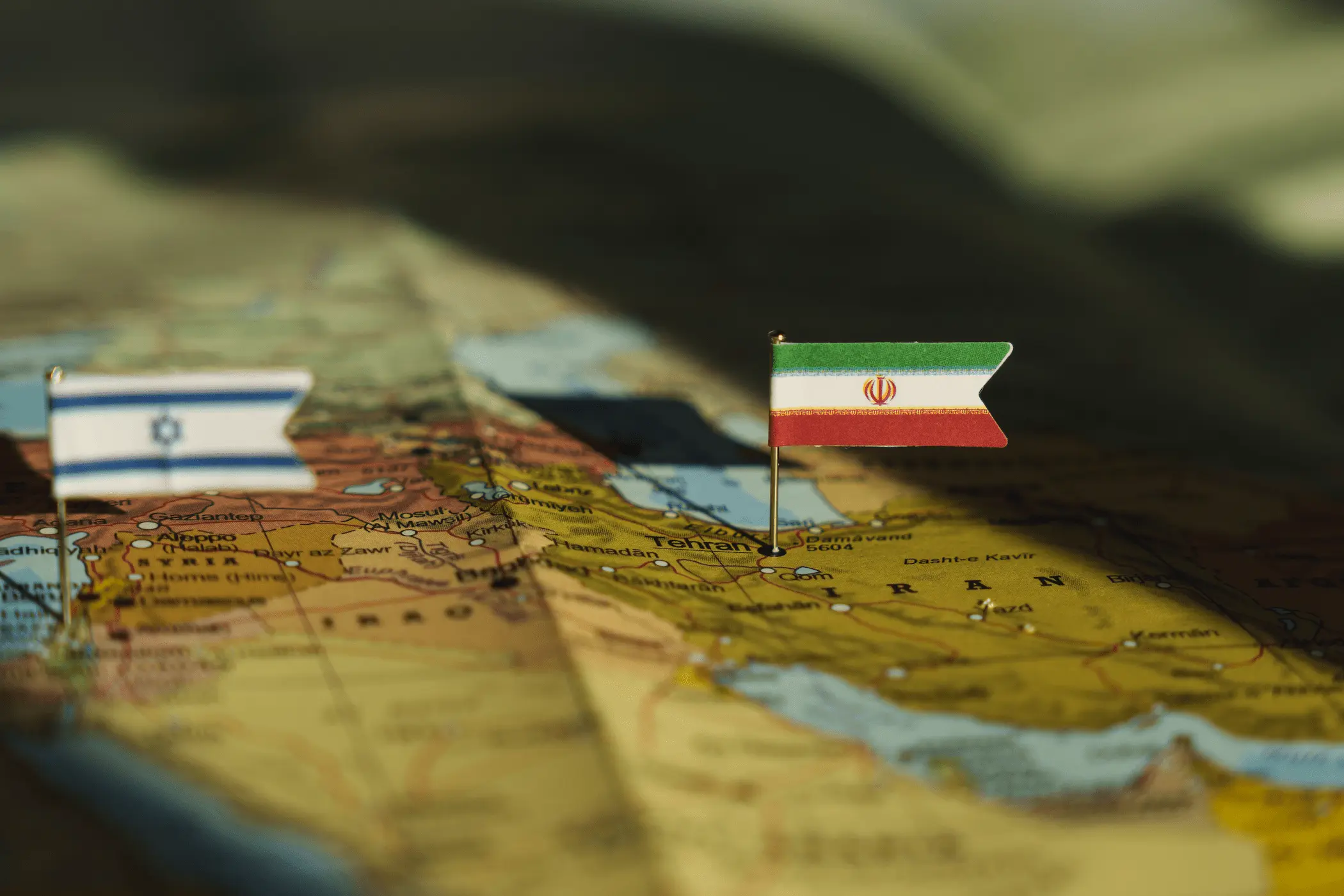
Iran and Israel: The War That Will Redraw the Middle East
The war between Iran and Israel is arguably a war of survival for the regime in Iran. Attacking Iran seemed to be a logical step for Israel after almost destroying its arms of proxies in the region. the regime, which stands on three pillars, namely, its conventional missile arsenal, its extensive network of regional proxy forces, and its nuclear program, is facing a war of attrition that might eventually end the very survival of the regime. The fall of the regime in Iran goes beyond mere regime change, rather, it is considered a state collapse.
The collapse of the Iranian state would have dire consequences for the region. However, the possibility of the regime surviving remains a significant scenario. While the fall of Iran is widely regarded as a regional catastrophe, its continued survival, particularly with Tehran asserting itself as a regional superpower, could prove even more destabilizing for Israel and its allies. Both outcomes carry profound regional and global implications, signalling a transformation in Middle Eastern geopolitics. The pressing question is not whether change is coming, but rather: what will the new Middle East look like?
Programmes
19 Jun 2025
Red Alert: Potential US Attack on Iran
On June 13, 2025, Israel launched a surprise offensive against Iran, striking nuclear facilities, missile bases, air defenses, and targeting military leaders and nuclear scientists. In response, Iran retaliated the same evening with firing over 150 ballistic missiles and 100 drones at Tel Aviv and Haifa.
Israel and Iran have continued to trade blows and there are no significant signs of a potential slowdown in the conflict between the long-time adversaries. The spectre that looms over both is that of U.S. President Donald Trump, who has gone from negotiating with Iran for a nuclear deal to pushing for its “unconditional surrender” in the span of a week. as the U.S. simultaneously repositions its military assets to potentially strike Iran.
Programmes
19 Jun 2025
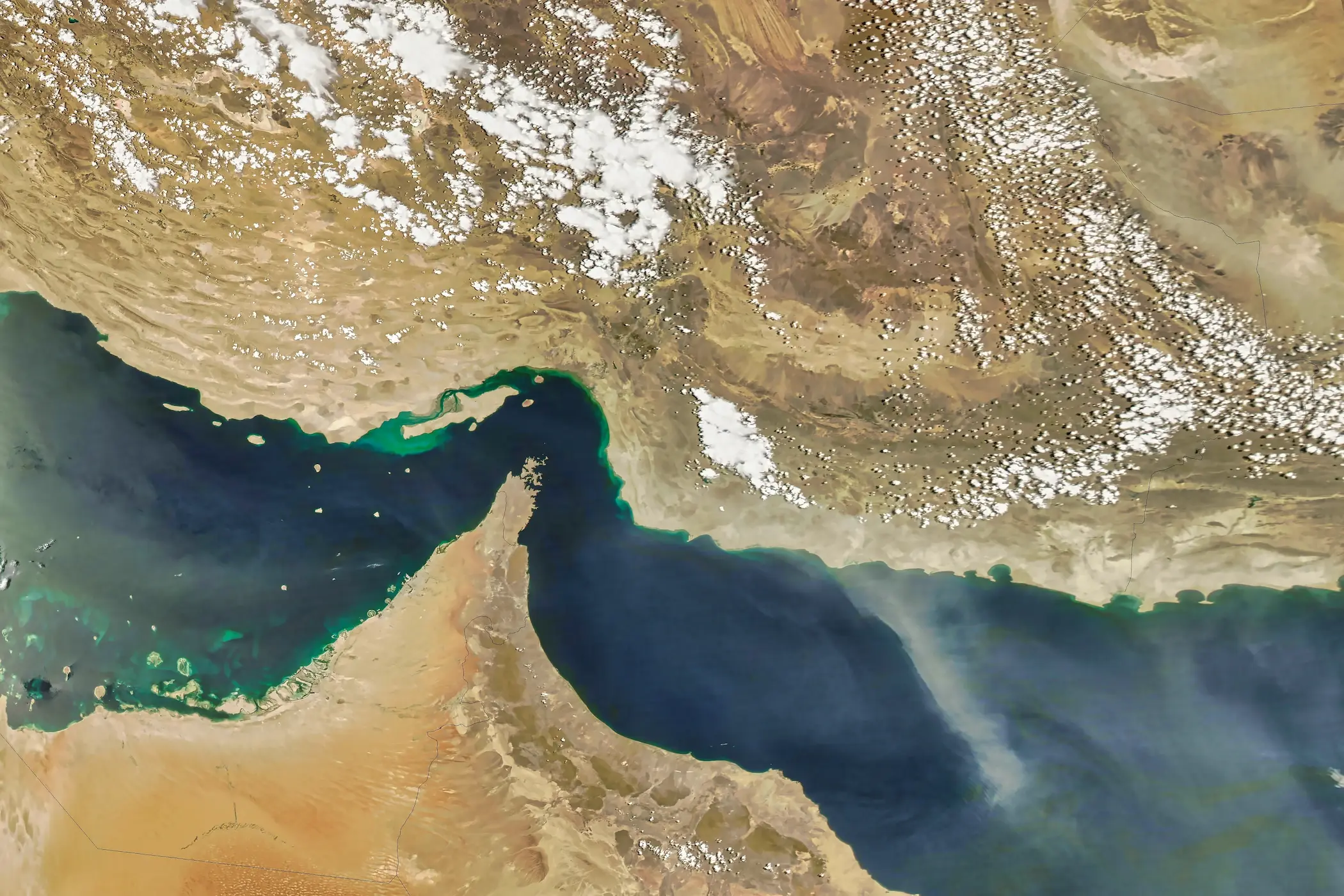
What If: Iran Closed the Strait of Hormuz?
The Strait of Hormuz – a narrow, indispensable artery through which nearly a fifth of the world’s oil and a third of its liquefied natural gas (LNG) flows– stands on a cliff. As geopolitical tensions intensify across the Middle East, fuelled by escalating Iran-Israel tensions and the shadow of direct United States (U.S.) involvement, the once-unthinkable threat of its closure looms larger than ever with Iran’s threat to close or block the Strait. In spite of the catastrophic global implications of such an act, the volatile depths of this potential crisis will be explored, unravelling the motives that could push Iran to choke this global lifeline, exposing the monumental security and geopolitical fallout, and revealing the catastrophic economic shockwave that would consume nations far beyond the region.
Programmes
15 Jun 2025
Why Did Iran Fail to Repel Operation Rising Lion?
Operation Rising Lion, executed by Israel on June 13, 2025, constituted a lightning strike aimed at crippling the very core of Iran's nuclear and military infrastructure. Israeli Prime Minister Benjamin Netanyahu characterised this pre-emptive operation as a necessary measure to "roll back the Iranian threat to Israel's very survival," drawing upon the Begin Doctrine previously brought to bear in analogous strikes against Iraq in 1981 and Syria in 2007. The operation's objectives were marked by strategic multiplicity and diversity, encompassing the targeting of numerous nuclear facilities, alongside senior Iranian military commanders and nuclear scientists, in an endeavour to inflict maximum damage upon Iran's military and nuclear capabilities. Israel's intent was not merely confined to disrupting the nuclear program; it extended to undermining Iran's capacity to mount retaliatory assaults and to fend off future waves of Israeli attacks.
The timing of the Israeli operation came on the heels of a meticulous assessment by the Israeli leadership, which had concluded that Iran was on the cusp of achieving a dangerous breakthrough in its pursuit of nuclear weaponry, thereby necessitating the exploitation of a narrow temporal window before Iranian nuclear facilities became either too advanced or too robustly protected. In this context, this analysis aims to delve into the rationale underpinning the operation, to account for Tehran's apparent failure to parry the assault effectively, and to examine the attack's repercussions on Iran's domestic landscape. Furthermore, it seeks to investigate the potential pathways Iran might pursue to reconstitute its deterrent capability.

Programmes
15 Jun 2025
The Erosion of Iranian Deterrence
Between June 13 and 14, 2025, Israel executed one of the most daring and sophisticated military operations in its contemporary history: a multi-pronged aerial strike that penetrated deep into Iranian sovereign territory in an unprecedented fashion. The offensive targeted critical nuclear infrastructure, including the Natanz and Fordow enrichment facilities, alongside additional military installations near Isfahan. Furthermore, the operation struck key airbases integral to Iran’s air defence network, most notably Hamadan and Tabriz airfields. In parallel, Israeli forces targeted senior leadership within both the Islamic Revolutionary Guard Corps (IRGC) and the conventional military, with subsequent intelligence assessments confirming direct hits and casualties among Iran’s high command.
Iran's response, though swift, bore the hallmarks of operational improvisation. Seeking to reassert deterrence and project resilience, Tehran launched over one hundred unmanned aerial vehicles (UAVs) on the same day, primarily of the Shahed-136 and Shahed-131 variants. These drones traversed approximately 2,000 kilometres through Iraqi and Syrian airspace. However, the majority failed to reach Israeli territory. Instead, they were intercepted by a multi-layered defensive network composed of Jordanian, Saudi, and Israeli air defence systems, all heavily supported by U.S. early-warning and tracking technologies. A large number were neutralized over Iraq’s Anbar province and the deserts of Jordan, while others were downed over northern Saudi Arabia.
On June 14, Iran escalated by launching its principal retaliatory strike in the form of a large-scale, coordinated ballistic missile attack. Over 150 ballistic missiles were deployed, prominently including Ghadr-110 (with a range of up to 3,000 km), Khorramshahr, and Sejjil-2—among the most advanced systems in Iran’s medium-range missile arsenal. These missiles targeted multiple sites deep inside Israeli territory. A notable strike occurred near Israel’s Ministry of Defence compound in the Kirya complex in central Tel Aviv, where one missile reportedly caused structural damage and minor injuries, though no fatalities among military personnel were confirmed. Additional missiles struck civilian infrastructure in Tel Aviv, Ramat Gan, and Rishon LeZion, injuring several individuals—one critically—with the majority suffering only mild to moderate wounds.
Despite the magnitude of the missile barrage, the strategic yield fell significantly short of Tehran’s expectations. This underperformance prompted Iranian authorities to broaden the scope of their confrontation, issuing explicit warnings that U.S. military assets across the region—particularly in the Gulf—would henceforth be considered legitimate targets. These threats referenced high-value installations such as Al Udeid Air Base in Qatar, Al Dhafra Air Base in the United Arab Emirates, and U.S. military positions in Iraq, including Ain al-Asad and Camp Victoria in Baghdad, as well as naval facilities in Bahrain.
From Iran’s strategic vantage point, any U.S. involvement—especially in reinforcing Israeli air defences—constitutes direct participation in the hostilities. This rationale is now used to justify Tehran’s threats to strike American military positions across the Gulf. The implications of this shift are profound: for the first time since 2020, the prospect of open military confrontation in the Persian Gulf has become a credible geopolitical scenario. The regional deterrence equation, long balanced on latent threat and calculated ambiguity, has now entered a phase of dangerous volatility.
This analysis seeks to offer a comprehensive examination of the strategic motivations underpinning Iran’s threats to target U.S. military bases in the Gulf region. By synthesizing operational data—namely, Iran’s patterns of ballistic missile and drone deployment—with broader structural dynamics of regional and international power distribution, to elucidate the strategic logic through which American military installations in the Gulf emerge as priority targets within Iran’s evolving deterrence doctrine.
Programmes
14 Jun 2025
Strategic Assessment: The “Rising Lion” Strike and the Reshaping of Regional Security in the Middle East
On June 13, 2025, Israel launched an unprecedented and overt military operation against Iran, codenamed "Operation Rising Lion", marking a decisive shift in its strategic doctrine regarding Tehran’s nuclear trajectory. The operation, involving more than 200 combat aircraft—including F-15Is, F-16Is, and F-35s—targeted key nuclear infrastructure, foremost among them the Natanz enrichment facility, in addition to sensitive military and intelligence compounds in Tehran and suspected subterranean missile installations across multiple provinces.
The aerial strikes were not executed in isolation. They were accompanied by limited ground incursions carried out by Israeli special operations forces inside Iranian territory, alongside locally launched drones and sabotage missions activated by embedded networks, indicating a hybrid warfare architecture integrating airpower, cyber capability, and covert assets.
The operation resulted in the assassination of several senior Iranian military officials, including IRGC Commander Hossein Salami and Armed Forces Chief of Staff Mohammad Bagheri, as well as prominent nuclear scientists. Nevertheless, the intensely fortified Fordow enrichment facility, situated beneath a mountain near Qom, remained untouched, preserving Iran’s technical capacity to resume high-grade uranium enrichment if it chooses to do so.
Iran’s immediate response consisted of launching over 100 armed drones toward Israeli airspace, followed by announcements to construct a new, “impenetrable” enrichment site and to upgrade centrifuge infrastructure at Fordow. Globally, oil prices surged by over 10% within 24 hours, reflecting fears of regional destabilisation, particularly in light of Iran’s proximity to critical maritime chokepoints.
This paper thus aims to analyse the likely contours of Iran’s retaliatory strategy and to assess the broader geopolitical ramifications of the Israeli strike, particularly as they pertain to the security and strategic postures of the Arab Gulf in light of the retaliatory actions of Iran.