
Russia is holding Duma elections between 18 and 20 September 2026 amidst the fallout from its 2022 war in Ukraine and the accompanying economic, political, and security challenges. Several parties are competing in these elections, most notably the ruling United Russia party, which has been in power since 2001.
On the surface, the elections appear to offer little uncertainty. But digging deep, the Kremlin is quietly reshaping the political landscape. The emergence of young, loyal bureaucrats, the mobilisation of presidential aides, and the increasing integration of veterans into the government all point to changes that extend far beyond the mere formation of the next Duma.
This makes it difficult to predict the outcome of the 2026 elections by simply asking who will win. The more important question may lie beyond the ballot itself: What kind of political system is Russia preparing to carry forward? As the war continues to reshape the state, the elite, and the relationship between the Kremlin and society, the new Duma may offer a base to a political order whose most crucial stage has yet to unfold.
When the War Comes Home
The war in Ukraine has become the most important factor shaping the 2026 Duma elections. Its fallout is becoming increasingly tangible domestically through attacks on Russian energy infrastructure, fuel supply disruptions, military and industrial capabilities, as well as its impact on Crimea and the Black Sea. These developments made the war directly relevant to ordinary Russians, where dissatisfaction is intensifying, putting pressure on the government.
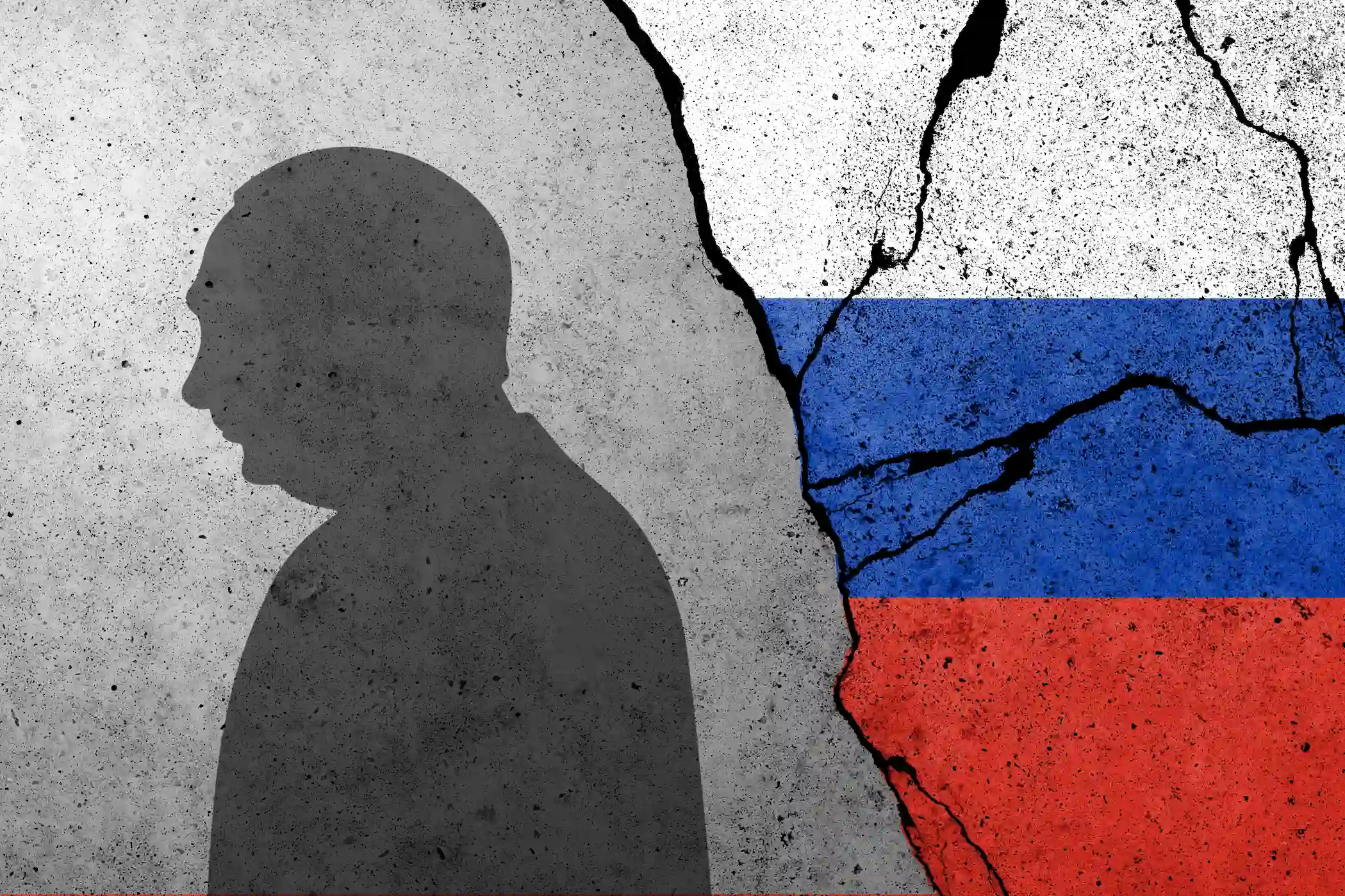
At the same time, the prolonged war, international sanctions, economic decline, repression, and competition for scarce resources are intensifying tensions among various segments of the ruling elite. Some elite members seek to maintain existing wartime security order, while others experience the devastating costs of sanctions, vulnerability to resource distribution, and financial pressures. These differences lead to competing interests regarding the duration of the war, the allocation of resources, and the future structure of political power “Silent elite fragmentation” becomes closely linked to the significance of the elections, embodied in increasing internal disagreement over war management and declining confidence in Putin’s strategic competence.
Elite discontent has therefore become a key factor in the preparation for the upcoming elections, fuelled by fears that the war’s fallout would significantly weaken the system that protects their wealth, influence, and security. Against this backdrop, the Kremlin’s management of political competition is not limited to suppressing external opposition, but also includes managing divisions within the ruling elite.
The Kremlin allows limited space for political competition, on the condition that issues do not threaten the regime, while eliminating actors capable of articulating fundamental alternatives. The war has therefore exposed a red line for the Kremlin amidst the broader security agenda: opposition to the war. Russia’s Supreme Court banned the liberal opposition party, Yábloko, from participating in elections. The party was accused of receiving foreign funding, violating copyright law, and promoting “extremism,” providing the justification for its exclusion. However, the party’s opposition to the war and its use of electoral participation primarily as a legal channel for Russians to express their opposition are central to understanding its elimination.
The exclusion of the Yábloko party demonstrates where these limits lie. It is unlikely to win enough seats to threaten United Russia; its significance instead lies in its ability to consolidate and articulate anti-war sentiment. Therefore, its exclusion indicates that political alternatives, even symbolic ones, are becoming less acceptable. The war has consequently become a major factor shaping not only the outcome of the election, but also the limits of political competition itself.
Furthermore, one of the key policies that Putin seeks to continue is his plan for Ukraine and the incorporation of the occupied regions. The Duma elections are already setting the base for this plan: Donetsk, Luhansk, Zaporizhzhia, and Kherson will participate in the Duma elections and be incorporated into the same Russian federal architecture. These areas are being integrated into the federal electoral structure through special arrangements that regulate voting under martial law, along with other mechanisms such as multi-day voting and remote electronic voting.
These arrangements enable Moscow to extend federal electoral procedures to the occupied regions, presenting their participation as part of the normal Russian institutional framework. The occupied territories are therefore being institutionally normalised as Russian regions through “post-war integration.” By giving them a place in the federal electoral system, Moscow presents them as functioning parts of its territory.
The Election Nexus
The Russian Federal Assembly is the legislative branch, consisting of the upper house, the “Council of Federation,” which has representative functions, and the lower house, the “Duma,” which carries the core legislative functions, including bill approval and bringing charges against the president for his impeachment. The Duma, in that sense, is vital for the regime. Its significance is therefore both institutional and part of a broader process of regime restructuring.

The main mechanism is candidate selection, rather than necessarily vote counting. The most significant point is that the Kremlin can influence the composition of the future Duma before voters even reach the polling station. This is particularly visible in the political integration of veterans into the new elite. The Kremlin’s efforts are displayed in “Time of Heroes” (Vremya Geroev) program that provides a formal pathway for veterans to receive training and assume government and administrative positions. Also, the ruling United Russia adding a 25% bonus to the final vote for veterans is highly significant. This suggests an effort to translate wartime participation into political representation, potentially creating a new electoral base of pro-war elites.
However, many of those classified as veterans were reported to be current political or administrative elites who served for relatively short periods, often three to six months, in military units in the rear. This suggests that the Kremlin’s “new elite” project may involve rebranding existing elites with military credentials, rather than replacing them with substantial numbers of genuine frontline veterans. The Kremlin is therefore actively seeking to exploit wartime credentials to gain political capital that could potentially form a new wartime political class.
It seems that the Kremlin is preparing for a wartime political class and an elite that ensures the continuity of a system that has long preserved their interests. The institutionalisation of security and wartime legitimacy raises a broader question: Is Putin designing the 2026 Duma for the Russia he governs, or for the Russia that will exist after he is gone?
A New Political Order or the Same Russia Post-Putin?
Succession Mechanism: The prolonged fallout from the war, seizure of assets, and competition among elites over limited resource distribution have intensified the Kremlin’s need to manage succession without undermining the political system that protects the interests of the existing elites. The Kremlin’s approach could follow three overlapping pathways that could enable the system to reproduce itself.
The first is the “Dynastic/Patrimonial” path, in which second-generation members of established elite families and networks are gradually promoted to political, administrative, and governmental positions, allowing the current elites to maintain their influence, wealth, and institutional connections across generations. The second is the “Praetorian Technocrat” path, which relies on promoting trusted and loyal figures from the presidential administration and security apparatus, including the Federal Security Service (FSB) and the Russian National Guard (Rosgvardia), to governorships, ministerial positions, and potentially the State Duma. This would enable the Kremlin to reproduce its political system model by recruiting a younger generation whose candidacy is based on loyalty to the system rather than independent electoral competition.
The third path is that of “Dual-Power”, in which Putin retains significant strategic influence while delegating formal executive and administrative responsibilities to a younger, trusted generation. While this arrangement may facilitate a controlled transfer of power, it could also create competing power factions if successors gradually develop independent institutional networks and interests. Under such circumstances, these factions would be capable of challenging the existing political order.
Therefore, to preserve the system, efforts would focus on the Duma elections to prepare a new generation that can uphold the same beliefs and principles, ensuring the system’s continuity for decades to come. The key indicator is that the Duma elections are being used to restructure the United Russia party by selecting war veterans and young bureaucrats, while banning anti-war parties. Even if the party loses popularity, weakens politically, or is ultimately dissolved, its core loyalists and governing principles could be preserved under a rebranded political entity. In this scenario, the party might change its name, structure, or public image while retaining much of the same political elite and ideological foundations. The Kremlin is therefore preparing an institutional architecture through which the existing system can reproduce itself after Putin.
The elections are significant for many reasons. They are the first parliamentary elections since the start of the war with Ukraine and are being used as a tool to reinforce the political system post-Putin, or restructure the power arrangement post-Putin. In this sense, they represent part of the succession mechanism for the Putin system. The Duma elected in 2026 will remain in office until 2030–2031, including during the 2030 presidential election. In this context, Duma is not required to choose Putin’s successor, but its most important function may be to ensure the institution’s continuity and legitimacy during a period of instability.
Moreover, the Duma can serve as a base to contain the silent elite fragmentation. Under Putin, the siloviki have accumulated considerable influence within Russia’s political, security, and economic institutions, making it unlikely that a new generation will be able to independently challenge their entrenched power in the near term. Instead, generational renewal is more likely to occur from within the existing security apparatus, with senior security officials training and promoting younger, more loyal figures who will gradually inherit their positions, networks, and influence. In the long run, this could lead to a smooth generational transfer of power while preserving the institutional and political doctrine of the security establishment.
The selected or endorsed candidates in the Duma could then, in the long run, move into the inner circle of the Kremlin upon demonstrating unconditional loyalty to Putin’s system, which would keep the siloviki’s interests safe. However, the war could become a point of conflict. Even though this process seeks to contribute to the formation of a new generation of pro-war siloviki who, similar to the current siloviki, some elites may eventually seek to end the war as its continuation could further harm their interests, contributing to the silent elite fragmentation that this strategy originally sought to address. Nevertheless, siloviki loyalty remains tied to a system that provides them with authority, power, and security. This could likely decrease the possibility of major escalation, whether between the older and newer generations of siloviki.
The Duma elections are therefore not primarily important for selecting Putin’s successor; rather, they are important for building a new faction of elites – young aides and war veterans – that is closely aligned with and loyal to the Putin system. These elections can lay the foundations for the regime’s long-term stability and continuity. Even if the individuals occupying institutional positions change at any point, particularly amid the volatility generated by the war, the political foundations of power remain concentrated around Putin and the system he has built, allowing the system to survive beyond changes in personnel.
Succession Dilemma: The inner circle continues to govern through a process of elite circulation. Older siloviki train and support carefully selected younger bureaucrats, aides, and loyal figures to take over in the future. Two models may emerge for the transition of power and circulation of authority.
First, a new elite is recruited and gradually becomes the new inner circle; afterwards, one of them succeeds Putin, continuing the same political order. Second, these figures become integrated into or associated with the security apparatus, and eventually gain autonomy, become separated from the existing security apparatus, or even come to control it. They could then form their own institutional power base, networks, and doctrine. Here, a bigger problem could emerge: a power struggle between a young, autonomous authority faction and the remaining loyalties of Putin’s faction. The Kremlin’s strategy of elite management could therefore unintentionally lead to a new generation of siloviki becoming a power centre independent from Putin system.
For Putin, in addition to the goal of maintaining the regime, there is also the preservation of his political survival, which is closely linked to his remaining in power and the continuation of this regime. A key question arises from this perspective: whether these younger loyalists remain dependent on Putin’s personal authority or eventually develop independent institutional bases, particularly within the security apparatus. This could transform a managed transition into a genuine succession struggle.
In conclusion, the Duma could help produce an elite generation increasingly normalised around the regime’s security policies, including the war, thereby legitimising policies widely adopted by the Kremlin. The Duma may become an instrument for managing regime succession, elite conflict between the civilian and security apparatuses, and political continuity. The 2026 State Duma election is therefore one piece of a larger process through which the Kremlin reorganises the Russian political system and ensures that key institutions remain loyal to the centre.
Moreover, it is unlikely to cause a radical political division; instead, it is more likely to strengthen the institutional foundations of Putin’s regime and provide a platform for the gradual integration of young civil servants, veterans, and security-linked figures into the ruling elite. It also could serve as an important mechanism for maintaining elite cohesion and political continuity during any potential transfer of power in the 2030 presidential elections.
However, the Kremlin’s strategy contains a structural vulnerability. By excluding moderate and anti-war political factions and favouring an increasingly hard-line, pro-war factions, the regime expose itself to a rigid ruling elite unable to negotiate or evolve. If the costs of war become increasingly unbearable before 2030, the Kremlin may face a rigid elite that limits its ability to negotiate or de-escalate. Hence, the main danger is reproducing a fragile regime unable to manage mounting pressure and demonstrate resilience and flexibility, prioritising the preservation of its doctrine and model of governance over avoiding further damage to the country.
References
——. “Russian Supreme Court Bars Yabloko Party From State Duma Elections.” The Moscow Times. August 10, 2026. https://www.themoscowtimes.com/2026/08/10/russian-supreme-court-bars-yabloko-party-from-election-a93452
Elliott, Bethany. “Kremlin Uses ‘Time of Heroes’ Program to Ensure Loyalty of Ambitious Veterans.” Jamestown. May 22, 2025. https://jamestown.org/kremlin-uses-time-of-heroes-program-to-ensure-loyalty-of-ambitious-veterans/
NEST Centre. “Encountering turbulence: How war is shaping the Russian State Duma elections.” New Eurasian Strategies Centre. June 22, 2026. https://nestcentre.org/encountering-turbulence-how-war-is-shaping-the-russian-state-duma-elections/
NEST Centre. “What to expect from Russia’s 2026 elections.” New Eurasian Strategies Centre. February 1, 2026. https://nestcentre.org/how-the-kremlin-is-preparing-for-the-2026-state-duma-elections/
Noble, Ben, and Nikolai Petrov. “The meaning of September’s State Duma elections.” New Eurasian Strategies Centre. July 8, 2026. https://nestcentre.org/the-meaning-of-septembers-state-duma-elections/
Paneyakh, Ella, and Nikolai Petrov. “Power and Society in Russia: The Political Transformation Index.” New Eurasian Strategies Centre. July 7, 2025. https://nestcentre.org/power-and-society-in-russia-2025/
Pastukhov, Vladimir, and Nikolai Petrov. “Transition without a successor: The transformation of Putin’s regime.” New Eurasian Strategies Centre. September 16, 2025. https://nestcentre.org/transition-without-a-successor/
Prokopenko, Alexandra. “Loyal but Powerless: The Downgrading of Russia’s Elite.” Carnegie Russia Eurasia Center. June 17, 2026. https://carnegieendowment.org/russia-eurasia/research/2026/06/russia-elites-political-overview
REM. “Russian Election Monitor: Update on Preparations for the State Duma Vote.” European Platform for Democratic Elections (epde). June 15, 2026. https://epde.org/?news=russian-election-monitor-update-on-preparations-for-the-state-duma-vote
Rivera, David W., and Sharon Werning Rivera. 2018. “The Militarization of the Russian Elite under Putin: What We Know, What We Think We Know (but Don’t), and What We Need to Know.” Problems of Post-Communism 65 (4): 221–32. doi:10.1080/10758216.2017.1295812.
Storyev, Dan. “Russia’s State Duma Elections Are for Show. But They’re Still Worth Paying Attention To.” The Moscow Times. August 10, 2026. https://www.themoscowtimes.com/2026/08/10/russias-state-duma-elections-are-for-show-but-theyre-still-worth-paying-attention-to-a93448
The State Duma. “Factions.” Accessed August 25, 2026. http://duma.gov.ru/en/duma/factions/
Wiswesser, Sean. “After the War and After Putin: Three Potential Succession Scenarios for Russia’s Modern Tsar.” The CIPHER Brief. March 12, 2026. https://www.thecipherbrief.com/after-the-war-after-putin
Центральной избирательной комиссии Российской Федерации. “Постановление Центральной избирательной комиссии Российской Федерации от 17 июня 2026 г. № 9/89-9 “О проведении выборов депутатов Государственной Думы Федерального Собрания Российской Федерации девятого созыва на части территории Российской Федерации, на которой введено военное положение”.” Accessed August 25, 2026. https://base.garant.ru/414402161/


Europe’s Next Battle: The Coming Food Crisis
Red Alert: Will Russia Stage an Armed Provocation Against Poland?
The Politics of Longevity: How Life-Extension Technologies Could Reshape State Power
Silent Elite Fragmentation: Trajectory of Putin’s Regime in Russia
Europe: NATO, U.S. Retrenchment, and the Cost of Strategic Autonomy
Comments