

Europe is seeking to strengthen its defence capabilities and reduce its long-standing reliance on the United States. This has encouraged European states to increase defence spending, expand domestic production and diversify their procurement partnerships beyond traditional suppliers. Yet diversification does not necessarily amount to strategic independence. Replacing reliance on one external supplier with reliance on several others may reduce concentration risk without giving European states full control over the technologies on which their defence capabilities depend.
This distinction is becoming increasingly important as modern military systems become more dependent on software, data and interconnected command-and-control architectures. A country may possess the physical hardware of a weapons system while remaining dependent on a foreign supplier for critical software, upgrades, maintenance or technological integration. The question of who controls these underlying technologies can therefore be as important as who manufactures or owns the weapon itself.
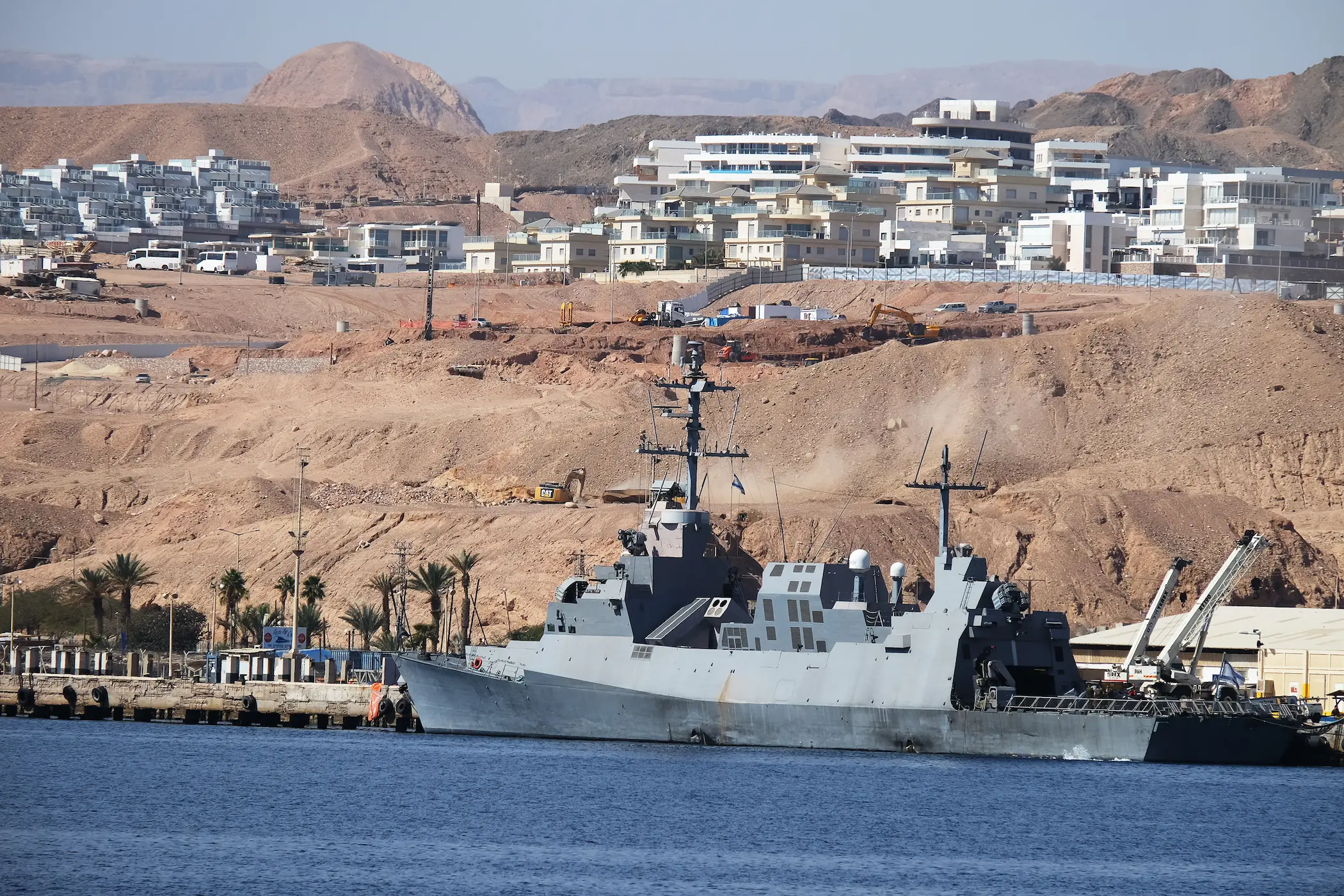
The recent Achilles Shield agreement between Greece and Israel provides a useful illustration of this dilemma. The €3 billion agreement will establish a multilayered Greek air and missile defence network incorporating Israeli systems alongside a Greek-controlled command-and-control architecture. However, a dispute over access to the systems' source code has raised questions over the extent of Greece's technological control. The case highlights a broader issue for European defence: can greater diversification deliver genuine independence if critical elements of military capabilities remain technologically dependent on external powers?
Why Is It Significant?
The agreement, however, has already raised a question that goes beyond the capabilities of the individual systems being acquired: how much control will Greece actually have over the technology underpinning its new air-defence architecture? The question is particularly significant because Athens had previously made access to source code an important principle in its defence procurement policy. Greek Defence Minister Nikos Dendias had stated before the agreement that Greece should not acquire defence systems without access to their source code, except under narrowly defined circumstances. He presented control over command-and-control software not simply as a technical or procurement issue, but as a matter of national sovereignty and security.
The issue appeared to become more complicated after the agreement was signed. Moshe Patel, director of Israel’s Missile Defense Organization and one of the officials involved in the programme, was asked whether Greece would receive the source code associated with the command-and-control capabilities of Achilles Shield. His answer was no. Patel explained that the source code itself was not included in the licence granted to Greece, although Israel would provide maintenance, assistance and technical support.
The response generated controversy in Greece because it appeared to conflict with the position previously articulated by Dendias. Subsequent explanations from the Israeli and Greek sides, however, introduced an important distinction. Greece will not receive the proprietary source code embedded in the Israeli systems incorporated into Achilles Shield. Instead, Greek companies are expected to develop the source code for the central C2 architecture, with Israeli technological expertise and support. The resulting C2 software is intended to remain under Greek control and to be adapted to the requirements of the Greek Armed Forces.
Prime Minister Kyriakos Mitsotakis subsequently reinforced this interpretation, stressing that the command-and-control software would be developed by Greek companies with Israeli assistance. This clarification reduces the apparent contradiction between Athens’ stated position and the agreement itself, but it does not completely resolve the underlying issue. Greece may control the software responsible for integrating the different elements of the network without controlling the proprietary software embedded within each individual Israeli system. The distinction is important because the two forms of control provide different degrees of technological independence.
This is where the significance of source code becomes clearer. Source code is the human-readable set of programming instructions that determines how software operates. In modern military systems, software is no longer a secondary component of the weapon. It determines how sensors process information, how different systems exchange data, how threats are identified and prioritised, and how weapons interact with the wider command-and-control network.
Access to that software can therefore affect a country’s ability to modify and adapt a system independently. Consider the integration of a new domestically produced missile, sensor or targeting system into an imported platform. Such integration may require changes to the platform’s software so that the different systems can communicate. If the purchasing state does not have access to the relevant software architecture, it may have to rely on the original manufacturer to carry out the integration. The result is not necessarily an inability to use the new equipment, but a continuing dependence on the supplier for modifications that may be strategically important.
The same problem can arise when the operational environment changes. Radar and electronic-warfare systems need to adapt continuously as adversaries introduce new platforms, frequencies, sensors and tactics. Threat libraries and other mission data therefore require regular updates. A state that cannot independently modify the relevant software may have to rely on the original supplier to develop and deliver these updates. During a rapidly developing conflict, the timing of such support can become an operational consideration in its own right.
Software dependence can also affect maintenance and troubleshooting. Modern defence systems rely on increasingly complex digital architectures for diagnostics, maintenance and upgrades. Where the customer lacks access to critical parts of the underlying software, it may have less ability to independently diagnose problems, modify system behaviour or develop its own solutions when the original supplier is unavailable. This does not mean that a supplier automatically has the ability to deactivate or remotely control a foreign-operated system. Rather, it means that the customer may remain dependent on another state for some of the technical decisions necessary to sustain and evolve the system over time.
The F-35 programme provides an illustration of this problem even among close allies. The UK is a major partner in the F-35 programme, but it has invested in mechanisms intended to preserve what its Ministry of Defence describes as “freedom of action”. One element of this is the Australia, Canada and UK Reprogramming Laboratory, which allows the participating countries to generate and manage mission data tailored to their own operational requirements. The UK National Audit Office has identified such capabilities as important to the country’s ability to use the F-35 according to its own operational needs. The British example is significant because it demonstrates that technological sovereignty does not necessarily require unrestricted ownership of every line of source code. States can instead seek control over critical layers of software, mission data, reprogramming and maintenance. What matters is whether those arrangements give them sufficient freedom to adapt the system to their own requirements without becoming dependent on the supplier for every significant modification.
A similar distinction can be observed in Pakistan’s experience with U.S.-supplied F-16s and its involvement in the development of the JF-17. Pakistan’s F-16 fleet incorporates sensitive U.S.-controlled technologies, including elements of its mission computer, radar, electronic-warfare and communications architecture. These systems remain subject to U.S. export and security controls, limiting the extent to which Pakistan can independently modify their core architecture.
The JF-17 represents a different model. Developed jointly by Pakistan and China, the aircraft has provided Pakistan with substantially greater involvement in its production, maintenance and integration. Pakistan has subsequently integrated domestically developed weapons and other systems onto the platform, demonstrating a greater ability to adapt the aircraft to its own operational requirements. This does not mean that Pakistan possesses unrestricted control over every component of the JF-17, many of which remain dependent on foreign technology. The difference is instead one of degree: greater domestic involvement in the platform’s development and architecture provides greater room for independent modification than operating a platform whose core technologies remain subject to another country’s controls.
Achilles Question Isn’t Only Greek
The question raised by Achilles Shield extends beyond Greece and points to a broader dilemma facing European defence. European states are increasingly seeking to reduce their dependence on the US, but reducing dependence on one external supplier does not necessarily mean achieving strategic independence. If the response is primarily to diversify procurement among a larger number of foreign suppliers, Europe could end up replacing one form of external dependence with several others. This concern is particularly relevant given the scale of Europe’s existing reliance on external defence suppliers. European states have significantly increased defence spending and arms procurement in response to the war in Ukraine and growing uncertainty surrounding the future of transatlantic security relations. In 2025, European military expenditure increased by 14% to approximately $864 billion, while European NATO members spent a combined $559 billion. Yet increased spending does not automatically translate into greater control over defence capabilities.
The procurement figures illustrate the difficulty. Between 2021 and 2025, European states more than trebled their arms imports, making Europe the world’s largest recipient region. Almost half of those imports came from the United States, while South Korea, Germany, France and Israel were among the other significant suppliers. Among European NATO members, 58% of arms imports during the period came from the U.S., followed by South Korea at 8.6%, Israel at 7.7% and France at 7.4%.
These figures demonstrate both the scale of the challenge and the direction in which European procurement is moving. Europe is not relying exclusively on Washington. Israel, South Korea and other non-European suppliers are becoming increasingly important sources of military technology. In fact, Data show that European NATO states’ imports from Israel increased substantially in recent years, while South Korea has expanded its position through relatively rapid deliveries and arrangements involving national defence industries.
Diversification can reduce the risks associated with relying excessively on a single supplier. But it does not necessarily resolve the underlying problem of technological dependence. A defence system can remain externally dependent even when the supplier is no longer American. If critical software, components, maintenance, upgrades, ammunition, technical data or intellectual property remain controlled abroad, the purchasing state may still have limited freedom to modify and sustain the capability independently. This creates an important distinction between supplier diversification and strategic autonomy. The first concerns where a country obtains its weapons. The second concerns how much freedom it possesses to use, maintain, modify and develop those weapons without being constrained by another state’s political decisions, export controls or technological restrictions.
The distinction matters because Europe is explicitly trying to address the latter problem. The European Commission’s White Paper for European Defence identifies reducing dependencies and ensuring security of supply as priorities, while simultaneously calling for diversification of supply sources and the development of European alternatives. The subsequent Readiness Roadmap sets a political target for at least 55% of defence investment to be procured from the European Defence Technological and Industrial Base. The wording itself is revealing. Europe is pursuing two objectives at once: it wants to diversify its external sources of supply, while also developing greater European capacity. These are not identical objectives. Diversification can provide resilience against disruption from any single supplier, but only domestic or genuinely shared European control over critical technologies can address dependence at its source.
The Achilles Shield case illustrates why this distinction matters. Greece may obtain greater control over the C2 architecture while continuing to rely on foreign-developed systems for important parts of the wider network. Applied across Europe, a similar procurement model could produce a continent with a highly diversified arsenal but limited control over the technological foundations of that arsenal. The risk is therefore not that Europe will simply become dependent on Israel, South Korea, Turkey or any other individual supplier in the same way that it has historically depended on the U.S. The more complex risk is the emergence of multiple technological dependencies. One country could control a missile system, another the aircraft, another the radar, another critical components, and another the software or data required to integrate them. Europe could consequently possess a wider range of suppliers while still lacking control over the critical technological layers that make those systems interoperable and adaptable.
This is particularly consequential for capabilities with long operational lifespans. Purchasing a weapons system is only the beginning of its military lifecycle. Its effectiveness may depend for decades on software updates, spare parts, technical expertise, maintenance infrastructure, ammunition supply, data, upgrades and the ability to integrate new technologies. A state that cannot perform these functions independently remains vulnerable to decisions made outside its borders, even if the original procurement itself was politically independent. The issue becomes even more complicated when several foreign systems have to operate together. Modern European militaries increasingly depend on networked capabilities rather than isolated platforms. Air-defence systems, fighter aircraft, drones, radars, satellites and command-and-control networks must exchange information and operate through common architectures. If each component comes with different restrictions on software, data, intellectual property or technical access, interoperability can itself become a source of dependence.
For Europe, therefore, the objective cannot simply be to replace American equipment with non-American equipment. Nor can strategic autonomy be measured by the number of countries from which European states purchase weapons. The more meaningful question is whether European states possess sufficient control over the critical technologies and industrial capabilities required to operate and adapt those systems throughout their lifecycles.
This does not mean that Europe must produce every weapon domestically. Complete technological self-sufficiency would be difficult, expensive and potentially inefficient. Foreign partnerships will remain an important part of European defence, just as international supply chains are unavoidable across advanced industries. The challenge is instead to identify which capabilities are too strategically important to leave entirely dependent on external suppliers and to ensure that Europe retains sufficient industrial, technological and software sovereignty over them.
References
Defense Update. “Achilles Shield.” Defense Update, August 30, 2026. https://defense-update.com/20260830_achilles-shield.html
Geist Pinfold, Rob. “Why Greece Is Betting on Israel’s Achilles Shield.” Al Jazeera, September 2, 2026. https://www.aljazeera.com/opinions/2026/9/2/why-greece-is-betting-on-israels-achilles-shield
POLITICO. “Greece-Israel ‘Achilles Shield’: Source Code for Air Defense.” POLITICO Europe, 2026. https://www.politico.eu/article/greece-israel-achilles-shield-source-code-air-defense/
POLITICO. “Israel, Greece Strike $3B Air Defense Deal.” POLITICO Europe, 2026. https://www.politico.eu/article/israel-greece-strike-3b-air-defense-deal/


Related Articles

Clean Commitments, Clean Data Centres?

Achilles Shield and the Eastern Med Balance

Europe’s Next Battle: The Coming Food Crisis
Geography Under Siege: How the Sea Became Israel’s Greatest Vulnerability

The Heat Economy: Assessing the Economic Toll of Europe’s 2026 Heatwaves
Comments