

Programmes
10 Sep 2026
Orbital Data Centres and the Limits of National Jurisdiction over Technology Firms
The largest technology firms are moving their data centres into low Earth orbit, having pushed terrestrial infrastructure to the physical and environmental limits of what it can supply in power, cooling and land to an artificial intelligence sector whose demands keep compounding. SpaceX has set the fourth quarter of 2027 for the launch of its first generation of computing satellites, targeting one gigawatt of orbital data centre power capacity in that same year and one hundred gigawatts by 2030. The scale of the pressure behind that schedule is visible in the wider market, where global data centre demand is estimated to require investment approaching €5.7 trillion before the decade closes.
What presents itself as an engineering migration is in substance a redistribution of sovereign authority. Moving processing beyond national territory removes technology firms from the reach of the data localisation rules, compliance regimes and tax frameworks that states have spent a decade constructing. For Arab states the challenge is immediate. Having invested heavily in domestic digital infrastructure and imposed strict data residency requirements, they now face the prospect that the server handling their citizens’ data sits five hundred kilometres overhead, beyond the enforcement reach of their courts.
This analysis therefore examines the economics of moving computation into orbit and the limits of its viability; traces the legal gap that allows technology firms to shelter behind the jurisdiction of the state of registry in order to avoid the laws of every other state; assesses the risks of monopolistic concentration and the environmental costs borne collectively; and identifies the regulatory instruments available to Arab states in defence of their digital sovereignty, chief among them the management of radio-frequency spectrum, satellite landing rights and the supervision of ground gateways.

Programmes
27 Jul 2026
Trump’s Prize: How the July 2026 Tariff Package Installed the Middle East as a Global Manufacturing Hub
The global trading system underwent a fundamental transformation in July 2026, as the United States abandoned limited sector-specific protection in favour of a complex, multi-tiered tariff architecture that turned access to its domestic market into an instrument of economic and political pressure. Four major decisions converged within that single month. The first was the outright repeal of the de minimis exemption, which had allowed small consignments valued below eight hundred dollars to enter the country duty-free. The second was the application of the Section 301 forced-labour tariffs across two distinct bands, imposing 10% and 12.5% according to the compliance record of each partner state. The third was the activation of Section 338, a statutory provision that had lain dormant since the 1940s, to levy 50% duties on a range of Canadian goods. The fourth was the approval of a phased escalation reaching 200% on imports of generic pharmaceuticals.
The consequences of this package extended well beyond the raising of customs duties. They amounted to a comprehensive re-engineering of rules of origin and customs compliance requirements, which in turn altered the cost calculus of every manufacturer and supplier across global supply chains. This new reality pushed firms to search for alternative routes designed not merely to reduce transport costs, but to change the identity of the country of origin itself and so escape punitive duties. That search is precisely what turned the Middle East from a transit corridor into an industrial and logistical node positioned to play a pivotal role on the new map of world trade.
This analysis therefore aims to unpack the effects of the July 2026 package across three connected levels: its domestic cost to the American economy in terms of inflation, compliance friction and the feasibility of reshoring; the realignment of trading partners and the trade diversion and origin leakage that follow from it; and finally its direct implications for the economies of the Middle East and North Africa, together with quantitative estimates of price, investment and shipping trends through the end of the decade.

Programmes
19 May 2026
The Collapse of Trust in the Digital State
For decades, the systems that governments, banks, universities, and public institutions built to verify who someone is rested on a single foundational assumption that personal information, documents, and physical characteristics were difficult to convincingly fake. A Social Security number combined with a date of birth and a driver's license was, for most practical purposes, enough to establish identity.
That assumption has now been broken. The US recorded its highest number of data breaches in 2025 since tracking began, identity theft reports to the Federal Trade Commission rose nearly 20% year over year, and global fraud losses now exceed $534 billion annually. Generative AI, the same technology powering productivity tools and creative applications across the economy, has become a force multiplier for those seeking to deceive digital systems at scale. The speed, sophistication, and accessibility of these tools mean that the problem is no longer confined to the margins of financial crime. It has moved to the centre of a broader question about whether the digital infrastructure modern states depend on to function is as reliable as they have assumed.
Programmes
27 Apr 2026
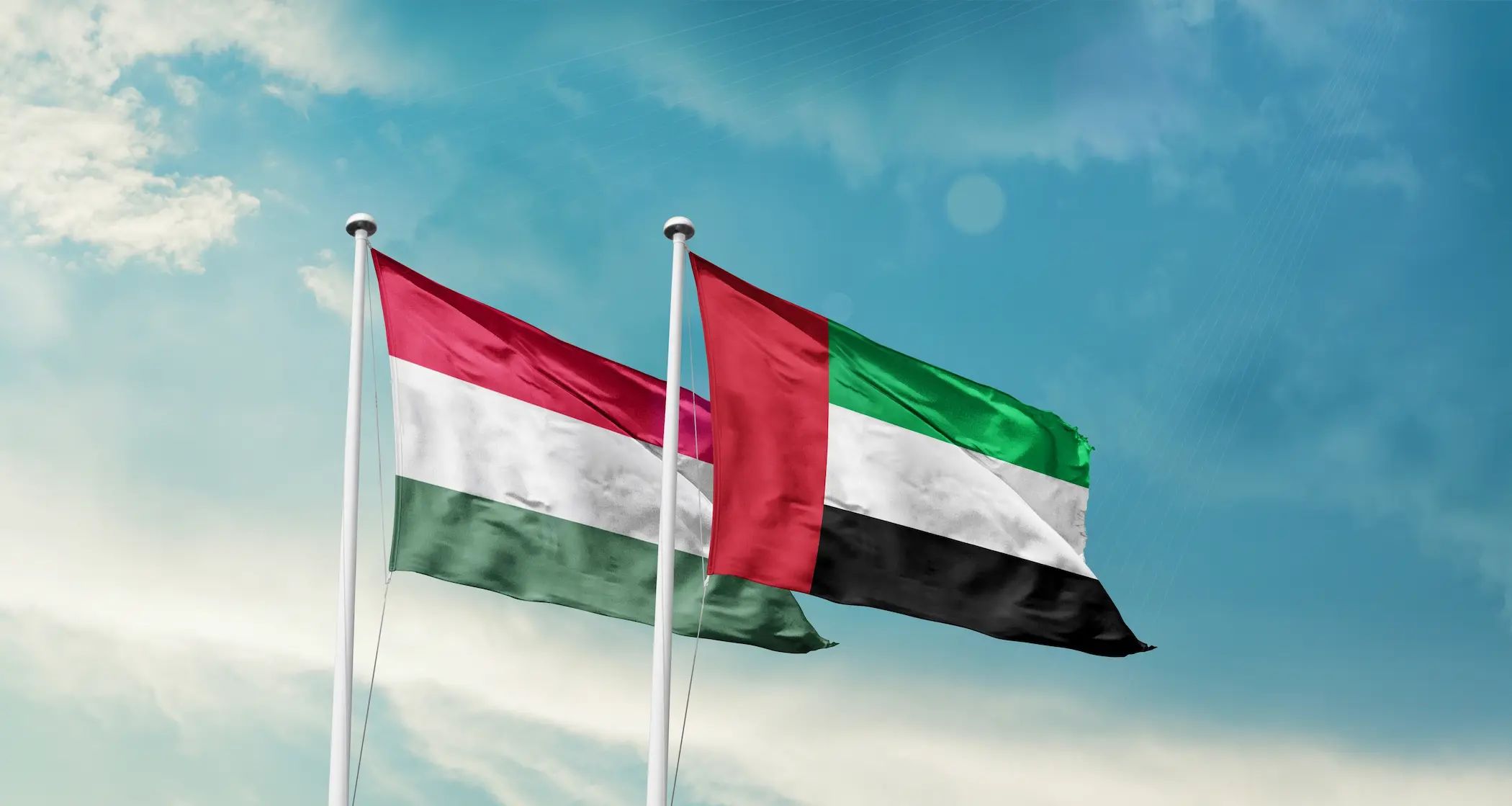
Hungary as a Bridge: How Could Budapest become a Food Security Partner for the UAE?
Hungary has a strong and well-developed agricultural sector. Arable land and permanent crops account for 4.3 million hectares, of which approximately 130,000 hectares are irrigated. The main crops include wheat (0.9 million hectares), corn (0.8 million hectares), and sunflowers (0.7 million hectares). While pastures cover 0.8 million hectares and forests cover 2 million hectares, livestock production includes 2.8 million pigs and 33.8 million poultry.
The country’s economy is export-dependent, so many technological advancements and the easing of financial restrictions, such as VAT, were integrated across various sectors, helping improve products and increase profits. The agricultural sectors benefited greatly from such policies, where crops and livestock exports have increased throughout the years. Agricultural exports constituted 9.1% of Hungary's total exports in 2024, including commodities like grains and grain products (13%), animal feed (12%), meat and meat products (9%), dairy products (5%), and fruits and vegetables (5%). Hungary's pioneering role in the agricultural sector increases its prospects for adopting measures to address food insecurity while increasing the benefits for any country that cooperates with it.
Programmes
23 Apr 2026
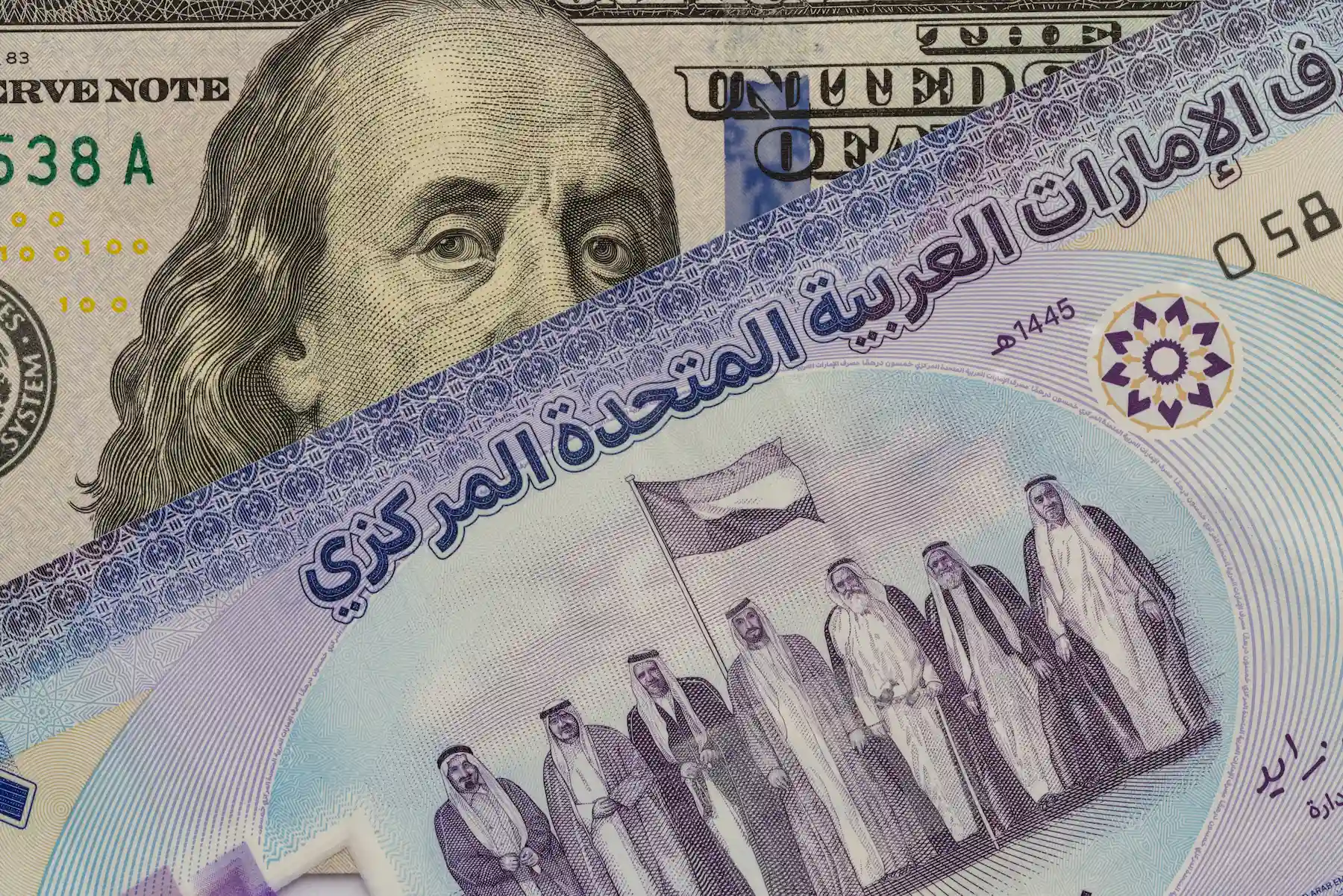
Challenging Dollar Supremacy: Is the UAE Rethinking the Dollar Order?
For more than five decades, the petrodollar system has served as one of the central structural pillars of American financial supremacy. Since its establishment in the 1970s, the system has anchored the United States’ monetary power by ensuring that Gulf oil exports remain overwhelmingly denominated in United States dollars. Under this arrangement, Gulf producing nations receive American security guarantees in exchange for recycling their oil revenues into US Treasury securities and dollar-denominated financial markets—a self-reinforcing cycle that has entrenched the dollar’s status as the world’s foremost reserve currency and systematically reduced American sovereign borrowing costs for decades.
The United Arab Emirates has, historically, been among the most faithful participants in this arrangement. Its national currency, the dirham, remains pegged to the USD, and its extensive sovereign wealth funds are invested predominantly in dollar-denominated assets. Nevertheless, a convergence of recent developments—an armed conflict in Iran, severe disruptions to Gulf oil exports, and an acute domestic dollar liquidity constraint—has placed the UAE at an unprecedented geopolitical and financial crossroads.
Programmes
23 Apr 2026
From Resilience to Ascent: How the UAE Transforms Crises into Opportunity
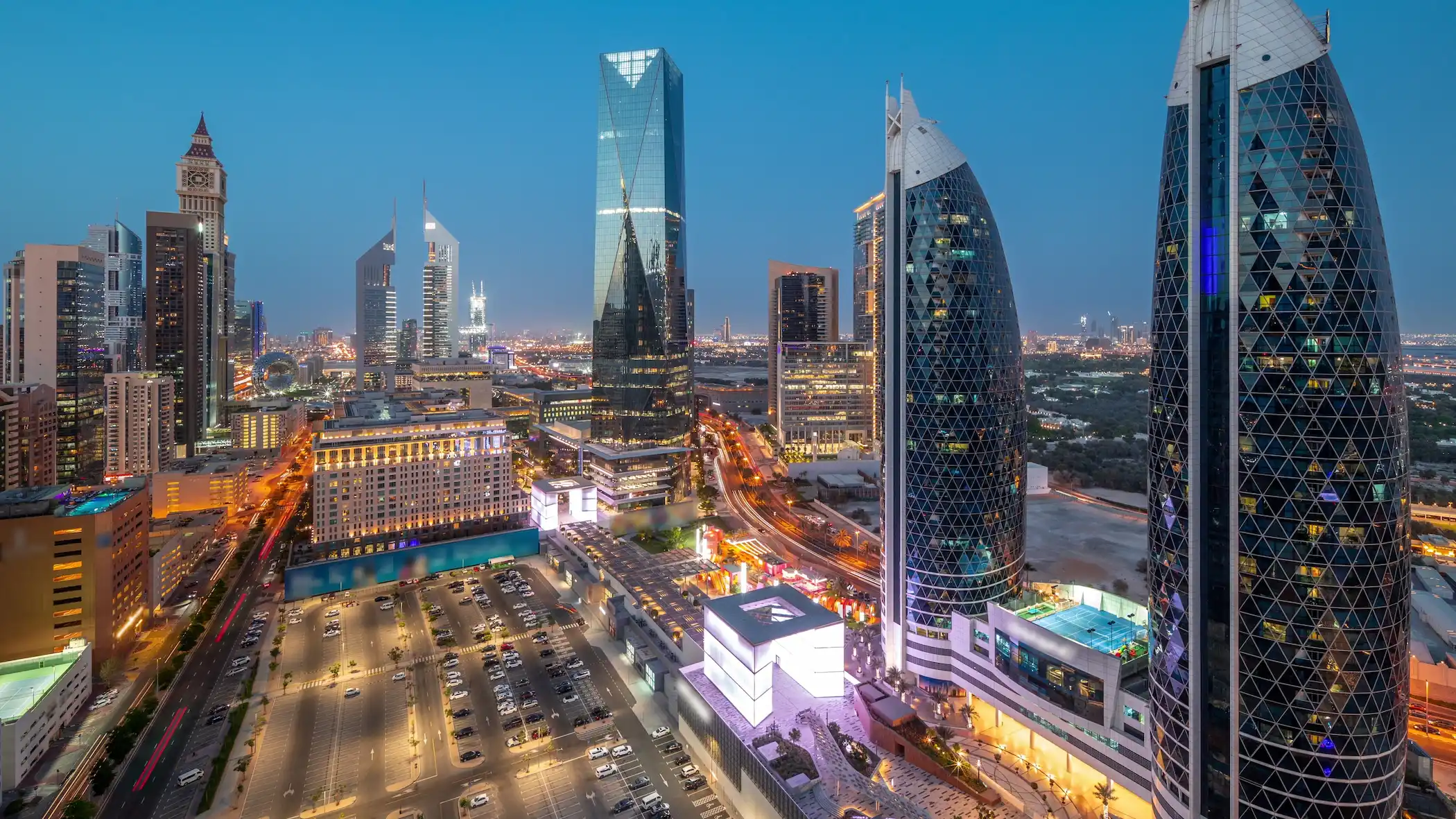
Many analysts fall into a recurring methodological error when assessing the United Arab Emirates’ (UAE) position amid regional turbulence. They measure the country’s resilience by its geographical distance from centres of risk, overlooking its exceptional capacity for strategic reinvention in the face of crises. This misreading, in particular, lends early credibility to pessimistic narratives of a “decline of the Gulf”, narratives that quickly unravel under the weight of empirical evidence and the firmness of facts. The UAE has not navigated successive regional crises by relying on geographic insulation or external protection. Rather, it has done so through deeper, more enduring foundations: a demonstrated ability to convert shocks into substantive reform, and to elevate those reforms into sustained competitive advantage.
Accordingly, this analysis does not seek to downplay the scale of the challenges posed by a regional war that is casting a heavy shadow over the security of the Strait of Hormuz, maritime insurance markets, and investment flows. Rather, it offers a structured attempt to address three interrelated core questions: how has the UAE historically navigated major crises; how did it anticipate the current crisis by fortifying its infrastructure and economic systems to sustain resilience; and, finally, how should the present moment be understood, not as signalling the end of a development model, but as marking the transition to a more mature and deeply embedded position within the global economy.

Programmes
25 Mar 2026
Manufacturing the Narrative: How Western Media Distorted What Really Happened in Dubai
Since late February 2026, the regional and international geopolitical landscape has entered a phase of accelerating military escalation following the outbreak of direct confrontation between the United States and Israel on one side and Iran on the other. That conflict has triggered successive waves of missile and drone attacks, generating recurrent spillover effects that have directly affected the airspace of Gulf states, particularly the United Arab Emirates.
Although the United Arab Emirates’ defence and institutional infrastructure, particularly in Dubai, demonstrated exceptional resilience and an immediate operational response to these threats through the activation of advanced air defence systems and the careful, precautionary management of brief airspace closures to safeguard air navigation and civilian safety, the real crisis did not lie solely in the direct military dimension. It also extended into a highly complex information war.
These developments coincided with the strict enforcement of domestic cybercrime laws, which restricted the circulation of unauthorised images and video footage in an effort to prevent panic and protect national security. Yet this also created an opening that the Western media machine exploited strategically and systematically to dominate the flow of information and construct a distorted account of events.
Against this backdrop of stark divergence between the coherent reality on the ground and the remote narrative constructed around it, international media outlets, particularly the British tabloid press, turned into vehicles for an extraordinary degree of dramatization. What were, in reality, limited regional spillovers were presented as evidence of an imminent and inevitable collapse of Dubai’s entire economic and social model.
By adopting provocative and polarising headlines that flatly declared Dubai “finished”, and casting the crisis as the tragic collapse of the safe tax haven dream, these outlets embraced a line of analysis wholly detached from realities on the ground. Verified evidence of business continuity and the strength of the UAE’s security architecture was sidelined in favour of a pre-packaged disaster narrative. This shift demands a deeper analytical and historical examination of the mechanisms and the economic and political incentives that can drive media institutions away from their role as objective conveyors of fact and turn them into instruments for shaping global public opinion.

Publications
17 Mar 2026
Defense Density in Modern Air Warfare: What European NATO Can Learn from the Gulf
The U.S.-Israel-Iran war and Recent events that followed in Gulf countries have provided one of the clearest real-world demonstrations of modern air and missile defence under sustained pressure. Modern air warfare is increasingly defined by the ability of states to withstand large-scale saturation attacks involving drones, cruise missiles, and ballistic missiles. The proliferation of relatively inexpensive unmanned systems and precision-guided weapons has altered the balance between offensive and defensive capabilities, allowing even modest actors to launch high volumes of aerial threats. In this environment, the success of air and missile defence no longer depends solely on technological sophistication but also on defence density, the concentration of defensive systems relative to territory and population. Dense, layered air-defence networks provide multiple interception opportunities and reduce the likelihood that incoming salvos can overwhelm defensive systems. As recent conflicts have demonstrated, resilience against saturation attacks increasingly depends on whether states can deploy sufficient numbers of interceptors, overlapping defensive layers, and integrated detection networks.

Programmes
2 Jan 2026
Gulf Sovereign Wealth Funds and the Video Game Economy
The structural foundations of the global video game economy are undergoing a profound transformation that extends well beyond the traditional triad of dominance in North America, Japan, and China. Strategic gravity is increasingly shifting toward the Gulf region, propelled by unprecedented capital inflows led by sovereign wealth funds across the Gulf Cooperation Council (GCC). This momentum marks a pivotal inflexion point in the investment doctrine of these institutions, most notably Saudi Arabia’s Public Investment Fund (PIF), alongside Abu Dhabi’s Mubadala and ADQ, and the Qatar Investment Authority (QIA). Collectively, they have moved beyond passive portfolio management focused on the accumulation of safe-haven assets such as US Treasury securities and real estate, toward active, operational ownership in high-growth technology sectors.
Within this context, the gaming industry, currently valued at over $200 billion and projected to surpass $300 billion by 2028, has emerged as a central pillar of this strategic shift. Its distinctive convergence with media ecosystems and artificial intelligence positions it as an ideal vehicle for advancing the economic diversification objectives embedded in national development visions.
Gulf engagement in this domain extends well beyond purely financial considerations into the realm of geopolitics. Through the acquisition of intellectual property, distribution networks, and digital infrastructure, these states are seeking to establish a form of “digital sovereignty” as an alternative to the historical dominance of hydrocarbons within their economic models. This objective is being pursued through differentiated strategies, ranging from Saudi Arabia’s vertically integrated approach to the United Arab Emirates’ ecosystem-building model and Qatar’s strategy of strategic linkage and connectivity.
Accordingly, understanding this investment domain requires situating it within the context of broader macroeconomic transformations. Successive price shocks in global oil markets, most notably in 2014 and during the 2020 pandemic and its aftermath, have exposed the limitations of the traditional petrodollar-based model in ensuring long-term wealth sustainability. By contrast, the gaming sector offers a structural response to pressing demographic challenges: it generates a jobs multiplier that exceeds that of many other sectors and absorbs the “youth bulge” that constitutes the overwhelming majority of the population, transforming it from a consumer base of foreign content into a national productive base that consolidates the principles of a new economic nationalism

Programmes
23 Dec 2025
Class, Declinism, and Emotional Turmoil: The Great British Migration to Dubai
Since Brexit, the United Kingdom (UK) has been experiencing a governance issue, as the Conservative Party suffered from instability due to numerous leadership changes, while the recently elected Labour Party lacks the ambition and confidence needed to effectively govern. Combined with the shocks stemming from Brexit, COVID-19, and the Russia-Ukraine War, the UK has experienced economic stagnation and the deterioration of public services, which has resulted in British nationals migrating abroad.
One of these locations is the UAE, more specifically, Dubai. There are approximately 240,000 British nationals currently living in Dubai, with more to join as there was a 420% increase in internet searches in the UK centered on moving to Dubai. Those are staggering statistics, and the number is only going to grow as more British nationals across the socio-economic spectrum continue to migrate to Dubai. However, the reasons explaining British migration to Dubai are not as simple as lower taxes, security, and great weather. One can argue the rise of British migration to Dubai can be attributed to a desire to break from a ridged class system, declinism, and emotional turmoil brought on by the cost-of-living crisis.

Programmes
20 Oct 2025
The Future Role of China in the GCC’s Tech Transition
China has a long-term goal to be a global leader in technology. To achieve such ambition, the country has taken serious steps widening its Belt and Road Initiative (BRI) traditional infrastructure projects to incorporate digital infrastructure projects embodied in the Digital Silk Road (DSR). The DSR was initially launched in 2015 by the government as an idea on paper and during the opening ceremony of the First Belt and Road Forum in May 2017, China’s President Xi Jinping, adopted the DSR term officially and it was incorporated in the government’s BRI strategy as the digital dimension.
The DSR initiative focuses on building digital infrastructure and exporting its technology to the beneficiary countries, it includes telecommunications infrastructure, like 5G networks, overland fibre-optic cables, data centres, cloud computing, artificial intelligence (AI), as well as applications that support e-commerce and mobile payments, along with smart cities and surveillance technology. Additionally, the DSR provides support to Chinese tech companies, like ZTE, Huawei, and Alibaba, to carry on the work with the beneficiaries.
The DSR aims to enhance Beijing's global digital influence as it creates opportunities for a wide range of cooperation and partnerships between Chinses tech companies and other beneficiaries around the world in areas of digitalization and AI. China’s DSR encompass a variety of projects in 5G deployment, e-commerce platforms, and AI applications, such as DeepSeek which is an alternative model to ChatGPT.
China signed DSR cooperation agreements with several countries in Africa, the Middle East, Eastern Europe, Latin America, and Southeast Asia. The cooperation takes place between scientists and engineers from the recipient country and Beijing, like opening a training centre or in research and development (R&D). The areas of cooperation are wide, including smart cities, AI and robotics, clean energy, and surveillance capabilities, like data localization. GCC countries are considered one of the important partners to China’s DSR, where it is closely integrating in the GCC digitalization goals.

Programmes
25 Sep 2025
UAE’s New Trade Bloc: Ambition, Global Positioning, and Challenges
The United Arab Emirates (UAE) is intending to establish a new trade bloc, a strategic and interconnected initiative aimed at achieving multiple goals on both the national and the international level. This trade block should not be interpreted in isolation, rather as part of the UAE’s wider economic and geopolitical strategy, which reflects the changing and evolving dynamics of the global trade landscape.
In a fragmented globalization era, where competition and integration attempt significantly increase between the regional trade networks and the multilateral systems, the UAE is poised to maintain its influence and relevance by positioning itself at the forefront of the global landscape. This approach will benefit the UAE on different levels, including advancing domestic priorities while simultaneously enhancing its leverage within the evolving global economic power. Nevertheless, the bloc’s success is not completely guaranteed, as it will need to navigate significant regulatory, infrastructural, and political barriers to translate its potentiality into tangible outcomes.