
Programmes
13 Aug 2026
Three Decades of Absence: Why Have Arabs Been Shut Out of the UN’s Top Job?
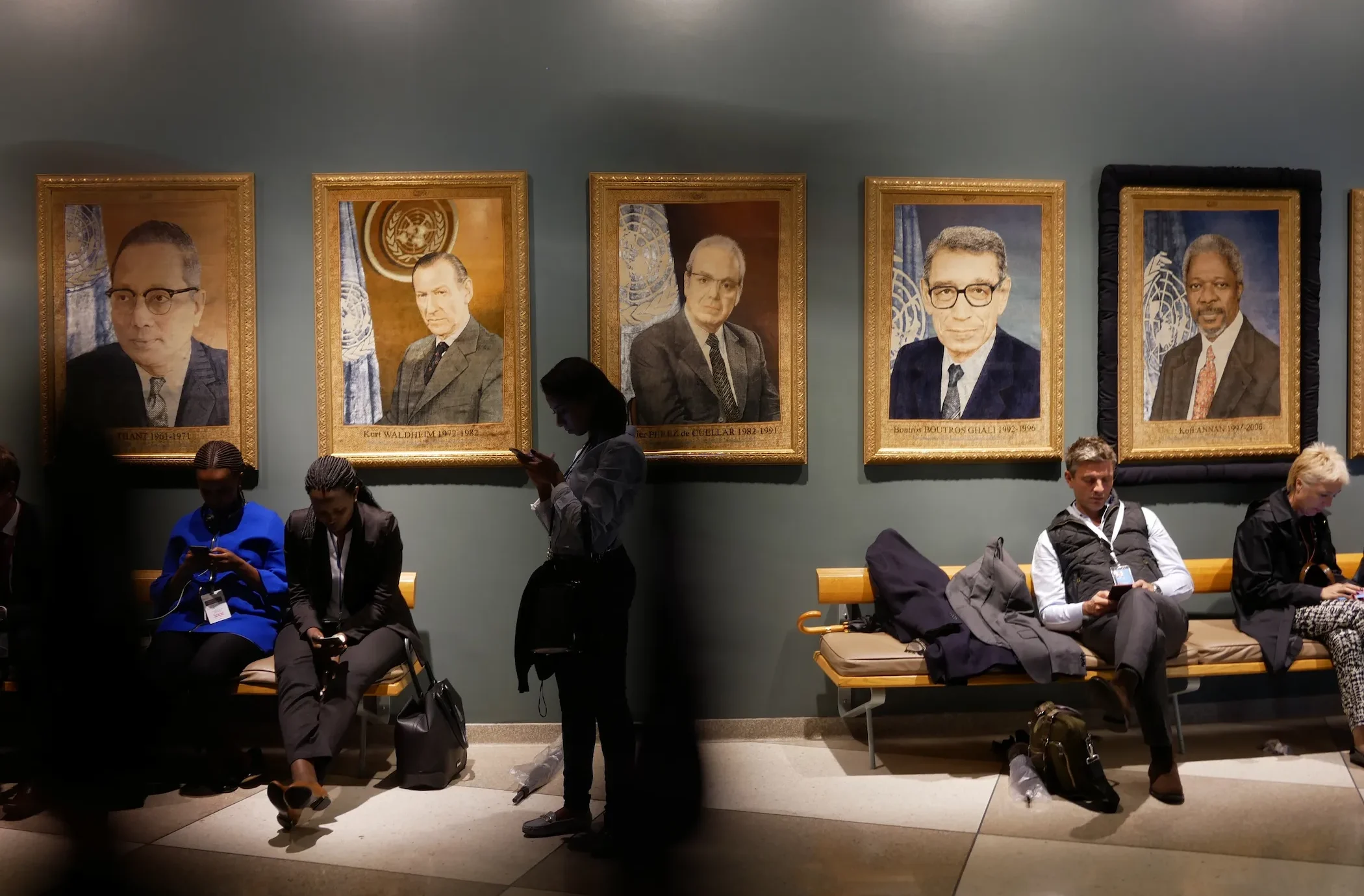
Since Egyptian diplomat Boutros Boutros-Ghali left office as UN Secretary-General in 1996, after a US veto blocked his bid for a second term, no Arab has held the organisation's highest office for nearly three decades. This prolonged absence is neither a matter of chance nor, as some suggest, the result of a lack of Arab diplomatic expertise or competence. Rather, it stems from the interplay between the UN's complex selection process and the calculations of global powers, which together create a barrier to the emergence of new Arab candidates for the organisation's leadership.
The roots of this problem lie in the UN's regional group structure and the rules governing geographic rotation. The selection process does not treat Arab states as a single geographic bloc, but divides them between the "African Group" and the "Asia-Pacific Group". This division dilutes Arab voting strength. When it is Africa's or Asia's turn to put forward candidates for the post, Arab contenders must compete with major states that wield considerable political influence and demographic weight within their respective regions, making it difficult to secure the regional backing and consensus required for a successful candidacy.
Alongside this internal division, divisions among the major powers on the Security Council play a decisive role. The Middle East and North Africa is a key arena of great-power competition, subjecting any Arab candidate to intense political scrutiny by the five permanent members. Since securing the post necessarily requires avoiding a veto from any one of them, identifying a candidate acceptable to all the competing powers becomes exceptionally difficult, particularly as each contender is assessed in light of their country's international relationships and global alignments.
This analysis therefore seeks to unravel the reasons behind this prolonged absence. Does the reluctance of Arab capitals to enter the race in recent decades reflect a retreat and an acknowledgement of diplomatic limitations, or does it instead represent a tactical withdrawal and a calculated strategic decision to avoid electoral contests whose rules are structured in ways that effectively exclude candidates from regions at the fault lines of intense geopolitical rivalry?
Programmes
13 Aug 2026
When Global Competition Becomes about Indispensability
Countries are increasingly shifting toward making themselves indispensable in a specific area. China controls rare-earth minerals, Taiwan pioneers in semiconductor manufacturing, the United States leads in artificial intelligence and advanced technologies, and the Gulf, particularly the UAE, positions itself as a global logistics hub.
This new era introduces the concept of “strategic irreplaceability or indispensability”, in which countries no longer focus solely on maximizing their national power but instead become experts in a specific field, making them an indispensable bottleneck in the global system.

Programmes
28 Jul 2026
Pulse: The New World Order
The international system is undergoing one of its most significant periods of transformation since the end of the Cold War. Intensifying geopolitical competition, prolonged armed conflicts, growing tensions between major powers, and mounting criticism of international institutions have all raised fundamental questions about the future of global governance. As confidence in the post-1945 international order declines, debates over multipolarity, the effectiveness of multilateral cooperation, and the legitimacy of international organizations have become increasingly central to global political discourse.
/* Make the container take 100% width ONLY when it contains .outer-post-summary */
.container:has(.outer-post-summary) {
width: 100%;
max-width: 100%;
padding:0px;
}
/* Hide the col-lg-2 elements inside outer-post-summary */
.outer-post-summary .col-lg-2 {
display: none;
}
/* Make the col-lg-8 element take 100% width */
.outer-post-summary .col-lg-8 {
width: 100%;
flex: 0 0 100%;
max-width: 100%;
}
.post-summary-section {
padding: 0px 0 25px;
padding: 0px 0 0px;
}
.comment-section {
display: none;
}
#related_publications_slider_sec {
display: none;
}
.like_dislike {
display:none;
}
.hero-banner.post-details-banner.program-banner {
display: none;
}
:root{
--bg-a:#8C241C;
--bg-b:#6B1414;
--bg-c:#3A0909;
--card:rgba(0,0,0,0.24);
--card-2:rgba(0,0,0,0.16);
--peach:#F2C6B0;
--peach-2:#EFB394;
--terracotta:#C9614A;
--rose:#8C332B;
--maroon:#4A1414;
--cream:#F3E7D8;
--text:#F3E2D8;
--muted:#D9A793;
--rule: rgba(242,198,176,0.22);
}
*{box-sizing:border-box;}
.outer-post-summary{scroll-behavior:smooth;}
.outer-post-summary{
margin:0;
background:
radial-gradient(120% 85% at 32% 12%, var(--bg-a) 0%, var(--bg-b) 45%, var(--bg-c) 100%);
background-attachment:fixed;
color:var(--text);
font-family:'Barlow',sans-serif;
-webkit-font-smoothing:antialiased;
}
::selection{ background:var(--peach); color:var(--bg-c); }
.eyebrow{
font-family:'Barlow',sans-serif;
font-size:12.5px;
font-weight:700;
letter-spacing:.16em;
text-transform:uppercase;
color:var(--peach);
display:inline-flex;
align-items:center;
gap:10px;
}
.eyebrow::before{
content:"";
width:9px; height:9px;
background:var(--peach);
display:inline-block;
flex:none;
}
h1,h2,h3{ font-family:'Barlow',sans-serif; font-weight:400; margin:0; }
a{color:var(--peach);}
/* ---------- HERO ---------- */
.hero{
position:relative;
min-height:100vh;
display:flex;
flex-direction:column;
justify-content:center;
align-items:center;
text-align:center;
padding:120px 24px 80px;
overflow:hidden;
}
.masthead{ position:relative; z-index:2; margin-bottom:26px;}
.wordmark{
font-family:'Barlow',sans-serif;
font-size:clamp(3.4rem, 13vw, 8rem);
line-height:0.86;
letter-spacing:.03em;
color:var(--peach);
text-transform:uppercase;
margin-bottom:16px;
}
.masthead .eyebrow{ margin-bottom:0; }
.hero h1{
font-size:clamp(1.6rem, 4.4vw, 2.6rem);
line-height:1.05;
letter-spacing:-0.01em;
color:var(--cream);
max-width:18ch;
margin:0 auto;
text-transform:uppercase;
opacity:0.88;
}
.hero .dek{
position:relative; z-index:2;
max-width:520px;
margin:26px auto 0;
font-size:17px;
line-height:1.6;
color:var(--cream);
font-weight:500;
}
.hero .meta{
position:relative; z-index:2;
margin-top:30px;
font-family:'Barlow',sans-serif;
font-weight:600;
font-size:12px;
color:var(--muted);
letter-spacing:.1em;
text-transform:uppercase;
}
.scroll-cue{
position:relative; margin-top:64px;
z-index:2;
font-family:'Barlow',sans-serif;
font-weight:600;
font-size:11px;
color:var(--muted);
letter-spacing:.14em;
text-transform:uppercase;
display:flex; flex-direction:column; align-items:center; gap:8px;
}
.scroll-cue .line{ width:1px; height:30px; background:linear-gradient(var(--peach), transparent); animation:pulse-line 1.8s ease-in-out infinite; }
@keyframes pulse-line{ 0%,100%{opacity:.25} 50%{opacity:1} }
/* ---------- LAYOUT ---------- */
.dossier{ max-width:880px; margin:0 auto; padding:0 24px; }
.intro{
padding:100px 24px 40px;
max-width:880px; margin:0 auto;
}
.intro p{ font-size:18px; line-height:1.75; color:var(--text); margin:0 0 20px; }
.intro p:first-of-type::first-letter{
font-family:'Barlow',sans-serif;
font-size:60px;
float:left;
line-height:0.8;
padding:8px 10px 0 0;
color:var(--peach);
}
.article{
padding:64px 0;
border-top:1px solid var(--rule);
}
.article-head{
display:flex;
align-items:baseline;
gap:18px;
margin-bottom:22px;
flex-wrap:wrap;
}
.article-num{
font-family:'Barlow',sans-serif;
font-weight:700;
font-size:13px;
color:var(--muted);
letter-spacing:.1em;
text-transform:uppercase;
}
.article h2{
font-size:clamp(1.4rem, 3vw, 2rem);
color:var(--peach);
line-height:1.15;
text-transform:uppercase;
}
.article .headline-stat{
font-family:'Barlow',sans-serif;
font-size:clamp(2.6rem,6vw,4rem);
color:var(--peach);
line-height:1;
margin:6px 0 18px;
}
.article .headline-stat span{
font-family:'Barlow',sans-serif;
font-weight:500;
font-size:16px;
color:var(--muted);
display:block;
margin-top:10px;
}
.article p{ font-size:16px; line-height:1.75; color:var(--text); opacity:0.92; }
.article p + p{ margin-top:16px; }
.chart-panel{
margin-top:34px;
background:var(--card);
border:1px solid var(--rule);
border-radius:10px;
padding:28px 26px 20px;
}
.chart-panel .panel-label{
font-family:'Barlow',sans-serif;
font-weight:700;
font-size:11.5px;
color:var(--muted);
text-transform:uppercase;
letter-spacing:.08em;
margin-bottom:14px;
display:flex; justify-content:space-between; align-items:center;
gap:12px;
}
.chart-panel .panel-label .n{ color:var(--peach-2); white-space:nowrap; }
.chart-canvas-wrap{ position:relative; }
.chart-canvas-wrap canvas{ max-width:100%; }
.chart-canvas-wrap.donut{ max-width:320px; margin:0 auto; }
.chart-canvas-wrap.bar{ max-width:100%; }
.legend-custom{
display:flex; flex-wrap:wrap; gap:10px 20px;
margin-top:18px; padding-top:16px;
border-top:1px solid var(--rule);
font-family:'Barlow',sans-serif;
font-size:12.5px;
font-weight:600;
}
.legend-custom .item{ display:flex; align-items:center; gap:8px; color:var(--muted); }
.legend-custom .swatch{ width:9px; height:9px; border-radius:2px; }
.legend-custom .val{ color:var(--text); }
.two-col{ display:grid; grid-template-columns:1fr 1fr; gap:40px; align-items:start; }
.two-col > *{ min-width:0; }
@media (max-width:760px){ .two-col{ grid-template-columns:1fr; } }
.pull{
font-family:'Barlow',sans-serif;
font-size:20px;
line-height:1.5;
color:var(--peach);
border-left:3px solid var(--peach);
padding-left:22px;
margin:30px 0;
text-transform:none;
}
.stat-strip{
display:grid;
grid-template-columns:repeat(3,1fr);
gap:0;
border-top:1px solid var(--rule);
border-bottom:1px solid var(--rule);
margin:20px 0 0;
}
.stat-strip .cell{
padding:26px 22px;
border-left:1px solid var(--rule);
}
.stat-strip .cell:first-child{ border-left:none; }
.stat-strip .num{ font-family:'Barlow',sans-serif; font-size:clamp(1.8rem,4vw,2.6rem); color:var(--peach); line-height:1; }
.stat-strip .lbl{ font-size:13px; color:var(--muted); margin-top:8px; line-height:1.4; font-weight:500; }
@media (max-width:640px){
.stat-strip{ grid-template-columns:1fr; }
.stat-strip .cell{ border-left:none; border-top:1px solid var(--rule); }
.stat-strip .cell:first-child{ border-top:none; }
}
footer{
border-top:1px solid var(--rule);
padding:56px 24px 60px;
text-align:center;
}
footer .eyebrow{ margin-bottom:10px; }
footer h3{ font-size:18px; color:var(--peach); text-transform:uppercase; }
footer p{ color:var(--muted); font-size:14px; max-width:480px; margin:10px auto 0; line-height:1.6; }
/* ---------- Decorative background animation ---------- */
.bg-anim{
position:fixed;
inset:0;
z-index:0;
pointer-events:none;
overflow:hidden;
}
.bg-anim svg{
width:100%;
height:100%;
display:block;
}
.bg-anim .ring-group{
transform-origin:1150px 250px;
animation:bg-rotate 240s linear infinite;
}
.bg-anim .ring-group.reverse{
transform-origin:220px 1050px;
animation:bg-rotate-rev 300s linear infinite;
}
.bg-anim .node{
animation:bg-pulse 7s ease-in-out infinite;
transform-box:fill-box;
transform-origin:center;
}
.bg-anim .link{
stroke-dasharray:6 10;
animation:bg-flow 60s linear infinite, bg-fade 9s ease-in-out infinite;
}
@keyframes bg-rotate{ from{ transform:rotate(0deg); } to{ transform:rotate(360deg); } }
@keyframes bg-rotate-rev{ from{ transform:rotate(0deg); } to{ transform:rotate(-360deg); } }
@keyframes bg-pulse{
0%,100%{ opacity:.22; transform:scale(1); }
50%{ opacity:.55; transform:scale(1.4); }
}
@keyframes bg-fade{
0%,100%{ opacity:.08; }
50%{ opacity:.22; }
}
@keyframes bg-flow{ to{ stroke-dashoffset:-320; } }
main, footer, .hero, .intro{ position:relative; z-index:1; }
@media (prefers-reduced-motion: reduce){
.scroll-cue .line{ animation:none !important; }
.bg-anim .ring-group, .bg-anim .ring-group.reverse, .bg-anim .node, .bg-anim .link{ animation:none !important; }
}
Pulse
Survey Series
The New World Order
The old system is fracturing — and no clear successor is in sight. Findings from Al Habtoor Research Centre.
Read the findings
The international system is undergoing one of its most significant periods of transformation since the end of the Cold War. Intensifying geopolitical competition, prolonged armed conflicts, growing tension between major powers, and mounting criticism of international institutions have all raised fundamental questions about the future of global governance.
As confidence in the post-1945 order declines, debates over multipolarity, the effectiveness of multilateral cooperation, and the legitimacy of international organizations have moved to the center of global political discourse. This Pulse survey examines how the public reads that shift — their trust in institutions, their view of recent great-power behaviour, and their expectations for who, if anyone, leads next.
87%say Trump's positions have hurt international bodies
75%see multilateral cooperation as weaker than a decade ago
43%expect a multipolar world of major powers
Confidence in institutions has collapsed
56.5%say bodies like the UN, WHO and World Bank are no longer as reliable as they once were
Only 4.3% of respondents still describe these institutions as trustworthy and dependable. A further 39.1% express just moderate confidence — a qualified trust that, combined with outright distrust, means 96% of respondents now hold some degree of reservation about the institutions built to anchor the post-war order.
International institutions derive their effectiveness from broad public confidence in their impartiality. When that confidence is this thin, it points to a legitimacy challenge rather than a passing mood — and it sets the baseline against which future Pulse surveys will track whether the erosion is cyclical or structural.
How much confidence do you currently have in international institutions?
The "Trump effect" reads as corrosive, not neutral
87%view Donald Trump's recent positions as a negative influence on international institutions
Positive, neutral, and unsure responses are essentially tied at 4.3% each — a rare degree of consensus in an otherwise divided survey. Respondents appear to read the "Trump effect" as more than disagreement with one leader: when the world's most influential power openly questions or selectively engages with international institutions, it creates permission for other states to do the same.
Over time, that dynamic risks weakening respect for international law, reducing compliance with multilateral rules, and accelerating the fragmentation of the global governance system this survey documents throughout.
How do you view recent Trump positions on international institutions?
No successor to the current order is in sight
43.5%believe no clear leader will shape global governance in the years ahead
Emerging powers are the next most likely candidate at 29%, while the United States (13%) and regional coalitions (14.5%) trail closely behind — essentially split. Rather than a single successor to the current order, respondents anticipate a diffusion of influence.
The absence of a dominant choice suggests people don't expect a straightforward handover from one hegemon to the next, but a more fluid, contested environment where power is dispersed among multiple actors without a universally accepted leader.
Who is most likely to shape global governance in the future?
A decade-long slide in multilateral cooperation
75.4%say multilateral cooperation is weaker today than a decade ago
Only 8.7% believe it has strengthened; 15.9% see it as roughly unchanged. This perception reinforces the broader narrative running through the survey: a system seen as increasingly fragmented and less able to coordinate collective action — on security, public health, climate, or economic governance.
If this view persists, it may further erode public expectations that international institutions can manage the next global crisis.
Cooperation vs. a decade ago
Multipolarity is the expected — not the feared — outcome
43.5%expect power distributed among several major states; another 36.2% expect regional coalitions to lead instead
Together, multipolar and coalition-led futures account for close to four-fifths of all responses. Just 17.4% remain unsure, while a return to unipolarity (2.9%) draws only marginal support.
The post–Cold War unipolar moment, in the public's view, is ending — not in favour of a new single power, but of a system with multiple centres of influence and greater reliance on flexible coalitions.
Which future model of global order is most realistic?
"Respondents don't simply believe the existing order is weakening — they expect the emerging one to be more fragmented, more competitive, and less predictable."
Managing diffusion, not replacing a hegemon
Taken together, the five findings point to one conclusion: the challenge for global governance in the coming years is less about which power replaces the last one, and more about managing a world where power is increasingly diffused across multiple, uncoordinated actors — with public trust in the referee institutions already running low.
Pulse Survey Series
Al Habtoor Research Centre
Figures reflect the share of respondents selecting each response option and may not sum to 100% due to rounding.
function initCharts(){
Chart.defaults.font.family = "'Barlow', sans-serif";
Chart.defaults.color = '#D9A793';
const palette = {
rank1:'#7B1315', rank2:'#994238', rank3:'#D07465', rank4:'#F09988'
};
function tooltipBase(){
return {
backgroundColor:'#3A0909',
borderColor:'rgba(242,198,176,0.4)',
borderWidth:1,
titleFont:{family:"'Barlow', sans-serif", size:11, weight:700},
bodyFont:{family:"'Barlow', sans-serif", size:13},
padding:10,
displayColors:true
};
}
function donutTooltip(){
return Object.assign(tooltipBase(), {
callbacks:{ label:(ctx)=> ` ${ctx.label}: ${ctx.parsed}%` }
});
}
function barTooltip(){
return Object.assign(tooltipBase(), {
callbacks:{ label:(ctx)=> ` ${ctx.label}: ${ctx.parsed.x}%` }
});
}
function buildLegend(canvasId, labels, data, colors){
const panel = document.getElementById(canvasId).closest('.chart-panel');
const legend = document.createElement('div');
legend.className = 'legend-custom';
labels.forEach((label,i)=>{
const item = document.createElement('div');
item.className = 'item';
item.innerHTML = `${label} ${data[i]}%`;
legend.appendChild(item);
});
panel.appendChild(legend);
}
// Chart 1 — Confidence in institutions
(()=>{
const labels=['No confidence','Moderate confidence','Confident & trustworthy'];
const data=[56.5,39.1,4.3];
const colors=[palette.rank1, palette.rank2, palette.rank3];
new Chart(document.getElementById('chart1'), {
type:'doughnut',
data:{ labels, datasets:[{ data, backgroundColor:colors, borderColor:'#3A0909', borderWidth:3, hoverOffset:10 }] },
options:{ cutout:'68%', plugins:{ legend:{display:false}, tooltip:donutTooltip() } }
});
buildLegend('chart1', labels, data, colors);
})();
// Chart 2 — Trump effect
(()=>{
const labels=['Negative impact','Positive impact','Neutral impact','Not sure'];
const data=[87,4.3,4.3,4.3];
const colors=[palette.rank1, palette.rank2, palette.rank3, palette.rank4];
new Chart(document.getElementById('chart2'), {
type:'doughnut',
data:{ labels, datasets:[{ data, backgroundColor:colors, borderColor:'#3A0909', borderWidth:3, hoverOffset:10 }] },
options:{ cutout:'68%', plugins:{ legend:{display:false}, tooltip:donutTooltip() } }
});
buildLegend('chart2', labels, data, colors);
})();
// Chart 3 — Who shapes global governance (horizontal bar)
(()=>{
const labels=['No clear leader','Emerging powers','Regional coalitions','The United States'];
const data=[43.5,29,14.5,13];
const colors=[palette.rank1, palette.rank2, palette.rank3, palette.rank4];
new Chart(document.getElementById('chart3'), {
type:'bar',
data:{ labels, datasets:[{ data, backgroundColor:colors, borderRadius:4, barThickness:26 }] },
options:{
indexAxis:'y',
maintainAspectRatio:false,
plugins:{ legend:{display:false}, tooltip:barTooltip() },
scales:{
x:{ max:50, grid:{color:'rgba(242,198,176,0.12)'}, ticks:{callback:(v)=>v+'%'} },
y:{ grid:{display:false} }
}
}
});
})();
// Chart 4 — Cooperation trend
(()=>{
const labels=['Weaker','About the same','Stronger'];
const data=[75.4,15.9,8.7];
const colors=[palette.rank1, palette.rank2, palette.rank3];
new Chart(document.getElementById('chart4'), {
type:'doughnut',
data:{ labels, datasets:[{ data, backgroundColor:colors, borderColor:'#2A0808', borderWidth:3, hoverOffset:10 }] },
options:{ cutout:'68%', plugins:{ legend:{display:false}, tooltip:donutTooltip() } }
});
buildLegend('chart4', labels, data, colors);
})();
// Chart 5 — Future model of order
(()=>{
const labels=['Multipolar world','Regional coalitions','Not sure','Return to unipolarity'];
const data=[43.5,36.2,17.4,2.9];
const colors=[palette.rank1, palette.rank2, palette.rank3, palette.rank4];
new Chart(document.getElementById('chart5'), {
type:'bar',
data:{ labels, datasets:[{ data, backgroundColor:colors, borderRadius:4, barThickness:22 }] },
options:{
indexAxis:'y',
maintainAspectRatio:false,
plugins:{ legend:{display:false}, tooltip:barTooltip() },
scales:{
x:{ max:50, grid:{color:'rgba(242,198,176,0.12)'}, ticks:{callback:(v)=>v+'%'} },
y:{ grid:{display:false} }
}
}
});
})();
}
if (typeof Chart !== 'undefined') {
initCharts();
} else {
window.addEventListener('chartjs-ready', initCharts);
}

Programmes
24 Jul 2026
The End of Free Passage? The Future Struggle Over the World’s Sea Lanes
What if the sea lanes were no longer free? For seventy years, the assumption that ships pass through the world's strategic straits without permission, payment, or political approval has underpinned global trade so completely that it was rarely stated, let alone defended. In 2026, that assumption stopped being safe. In one of the world's most critical waterways, passage is now vetted, priced, and rationed by political alignment. At another, a price for safe transit has been openly announced. Along the polar routes, permits and fees are already the law, and older managed regimes are quietly expanding. These are not isolated crises. Taken together, they form the early signal of something larger: the transformation of maritime chokepoints from global commons into sovereign assets, and with it, the quiet repricing of the geography on which world trade depends.

Publications
15 Jul 2026
Fired by AI, Rehired by Reality: What Does That Mean for the Rest of Us?
Since mid-2025, a growing number of organizations that aggressively automated human work with artificial intelligence have begun reassessing those decisions. High-profile cases, including Ford Motor Company, Commonwealth Bank of Australia (CBA), IBM, and Klarna, demonstrate a common pattern: AI systems proved highly effective at handling routine, high-volume work but struggled with tasks requiring contextual judgment, tacit expertise, ethical reasoning, and complex customer interaction. Rather than abandoning AI, these organizations have reintroduced or redesigned human roles to complement automated systems.
This paper argues that these developments should not be interpreted as evidence that AI has failed, nor that widespread automation is reversing. Aggregate labor market data points in the opposite direction: AI continues to drive significant workforce reductions across many industries. Instead, the evidence suggests that many early adopters overestimated the extent to which entire jobs, not individual tasks, could be safely automated. The result has been a period of organizational recalibration in which firms are redefining the boundary between machine efficiency and human judgment.
Drawing on these company case studies together with a broader empirical base spanning Orgvue, Forrester, Robert Half, Careerminds, Gartner, and McKinsey, this paper develops a framework of task-conditional complementarity. Under this framework, AI increasingly performs standardized, repetitive, and predictable components of work, while humans concentrate on specialized oversight, exception handling, and continuous system optimization.
The paper also examines important boundary conditions. Not every organization has experienced this recalibration. Firms such as Amazon, Salesforce, and Shopify have not publicly demonstrated comparable reversals, suggesting that industry characteristics, workflow design, organizational maturity, and the pace of AI adoption may all influence automation outcomes. Similarly, Duolingo and JPMorgan illustrate alternative organizational responses, including policy correction and internal redeployment, that differ from direct rehiring.
The central conclusion is that the future of work is unlikely to be defined by either wholesale human replacement or resistance to AI adoption. Instead, competitive advantage will increasingly depend on accurately distinguishing which tasks can be automated, which require sustained human expertise, and how organizations redesign work to combine both effectively. The firms most likely to succeed will be those that treat AI implementation as an exercise in organizational redesign rather than simply a strategy for reducing headcount.
Programmes
14 Jul 2026
From the Climate to the Strait of Hormuz: How Will the Next Food Crisis Begin?
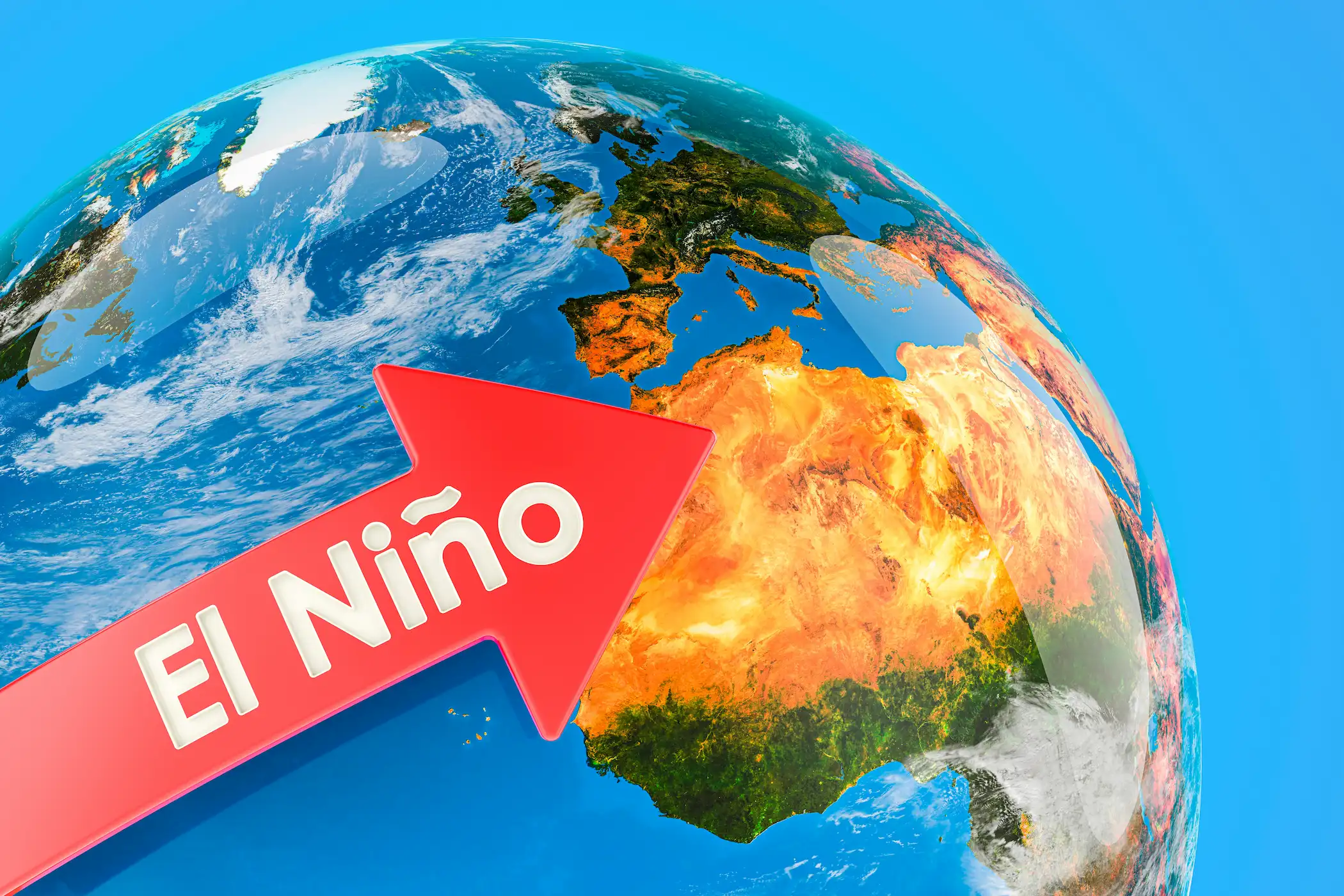
Global food security has rarely faced two simultaneous structural shocks of this magnitude. The February 2026 closure of the Strait of Hormuz, triggered by the escalating US-Israel-Iran conflict, severed the world's most critical maritime corridor for energy, fertilizer, and food trade in a single blow. Thousands of miles away, El Niño, a periodic warming of the equatorial Pacific Ocean that triggers droughts, weakens monsoons, and disrupts growing conditions across the globe, is intensifying at a pace forecasters warn could make it one of the most severe events since records began.
Each shock alone would constitute a serious test for global food systems. Together, they converge on a region structurally designed to withstand neither. In 2026, both shocks are unfolding simultaneously, stacked on top of fertilizer markets already in crisis — a compounding that no previous El Niño episode has faced. The question is no longer whether they will converge, but how severe the consequences will be for a region structurally unprepared for either.
Programmes
13 Jul 2026
A Crisis of Trust: Are International Institutions on the Decline?
International institutions have traditionally operated as the primary arbiters of global security and coordinators for transnational crisis management. However, their recent inability to effectively mediate pressing crises has exposed deep structural flaws, sparking what is widely observed as a profound crisis of trust. Yet, framing this dynamic merely as a "decline" misses the broader strategic shift occurring in global governance. This crisis of trust, rooted in outdated power distributions and systemic inequities, is not simply the decay of the post-World War II liberal order—it is a market correction. Driven by a widening representation gap and the selective enforcement of international law, emerging and middle powers are no longer merely seeking institutional reform; they are engaging in active "institutional hedging." This analysis argues that rather than witnessing the end of multilateralism, the global system is transitioning into a competitive marketplace of governance, where states bypass legacy bottlenecks in favor of agile, interest-based minilateral blocs and alternative institutional architectures.

Programmes
12 Jul 2026
The Age of Vibes: Vibe Coding, Lawyering, and Vibe Everything
In February 2025 the AI researcher Andrej Karpathy named something programmers had already started doing: describing what they wanted in plain English and letting an AI model write the code, rather than reading and understanding it themselves. He called it "vibe coding." A year later, a version of the same habit turned up somewhere far less forgiving of error. A recent Economist report on "vibe lawyering" describes how ordinary people, guided by AI chatbots rather than legal training, are drafting complaints, contesting disputes, and pursuing litigation they would once have needed a lawyer for. Research cited in that report, by Anand Shah at MIT and Joshua Levy at USC, examined 4.5 million federal civil cases and found that the share of self-represented litigants, flat at around 11% for two decades, climbed to 16.8% by fiscal year 2025, while the number of self-filed suits roughly doubled. The chatbots involved don’t just help people write; they tend to invent case law outright, encourage litigation, discourage settlement, and inflate people’s sense of how likely they are to win. Courts have started responding in kind: nearly a thousand reprimands have gone out over improper AI use in filings, and a federal appeals court recently suspended two lawyers over fabricated citations.
Law makes an unusually good case study, because courts keep a public, searchable record of what happens when confidence outpaces competence. But it is a case study, not the whole story. The same dynamic, a fluent AI answer standing in for judgment someone doesn’t actually have, is turning up wherever people now use AI to make decisions they used to need real expertise for. That is what this piece is actually about: not litigation specifically, but what AI does to a person’s sense of their own competence once it is quietly doing part of the thinking for them, and what that could mean as the pattern spreads well past the courtroom.
Programmes
8 Jul 2026
The Other Face of the World Cup: How Profits Shape FIFA’s Decisions?
FIFA's commercial success and its governance decisions are not separate stories — they increasingly appear to be the same story. This analysis examines who benefits from the modern World Cup's business model, how FIFA's revenue depends on star players and marquee fixtures, and where that dependency creates entry points for questionable decision-making around eligibility and officiating.
The question matters now because of scale: the 2026 tournament is FIFA's largest and most commercially valuable edition in history, its sponsorship architecture runs through multiple tiers of global brands and downstream club deals, and this year's tournament has already produced disciplinary reversals and officiating controversies that critics have directly linked to the same commercial incentives driving FIFA's revenue.
The analysis draws on FIFA's own financial disclosures, sponsorship data, and contemporaneous tournament reporting, and it deliberately separates documented facts from contested interpretation, particularly where officiating or disciplinary decisions have been framed by media and analysts as raising questions, not as proof of manipulation.
Programmes
24 Jun 2026
The Politics of Longevity: How Life-Extension Technologies Could Reshape State Power
At a Beijing military parade in September 2025, a hot microphone captured Russian President Vladimir Putin telling Chinese President Xi Jinping that advances in biotechnology could allow humans to continuously replace their organs, grow younger, and perhaps even achieve immortality. Xi responded that people may live to 150 years by the end of this century. The exchange was widely dismissed as eccentric small talk between aging heads of state. It was neither eccentric nor small.
Behind Putin's remarks sat a $26 billion Russian state initiative, a team of scientists working toward bioprinted human organs by 2030, and a broader pattern of powerful states and private actors treating human longevity as a strategic priority. As gene therapies, regenerative medicine, and organ replacement technologies move from laboratories toward clinical settings, a question that has received little attention begins to demand serious consideration: what happens to state power when the biological clock that has always constrained political leaders and their institutions starts to slow down?
Programmes
17 Jun 2026
European Anxiety Over Tech Sovereignty: What Should be Done?
Europe has spent the last few years watching its tech anxiety go from background hum to full orchestra. It's not hard to see why. In June 2026, France's intelligence services announced they were dropping Palantir, the American data analytics firm long embedded in European defence and policing work, in favour of a domestic provider, explicitly citing the need for "strategic autonomy." Germany's military reportedly will not touch Palantir at all, and the UK is now fielding parliamentary debates over a quarter-billion-pound contract with the company, partly because, as one legal analysis bluntly put it, even European data sitting in European data centres can still be pulled by U.S. authorities under American law, contracts or no contracts. It's the kind of detail that makes "data sovereignty" sound less like a policy buzzword and more like a genuine catch.
Then, just days before this was written, the U.S. government ordered Anthropic to cut off access to its most advanced AI model, Mythos, for anyone who wasn't a U.S. citizen, citing national security concerns. Anthropic's response was to switch the model off for everyone, Americans included, rather than build a citizenship checkpoint overnight. The episode lasted only days, but it landed exactly where Europe's anxieties already live: the frontier of AI doesn't just sit outside Europe's control, it sits inside one government's control, and that government can flip a switch.
None of this means Europe should panic, or try to build its own version of everything from scratch by Thursday. As the cost estimates make clear, chasing full autonomy across the entire AI stack would run into the trillions of euros, well past the point of being realistic. The more sensible response, is for Europe to get serious about which parts of the stack actually need to be sovereign, where partnership is a perfectly good substitute for ownership, and where its real strength, regulatory leadership, can be used deliberately rather than as a consolation prize. Sovereignty, in other words, isn't about owning everything. It's about knowing exactly what you can't afford to depend on.

Programmes
9 Jun 2026
The Petrodollar Myth: Why Architecture Beats Ambition
The petrodollar is one of the most invoked and least understood concepts in global finance. Since the 1970s, it has framed how analysts, journalists, and policymakers think about the dollar’s reserve status — equating America’s monetary supremacy with its energy arrangements. Yet this framing obscures more than it reveals. Dollar dominance is not a product of oil deals; it is the product of financial depth, legal architecture, and institutional trust accumulated over decades. To understand the future of global finance, one must look past the geopolitical theatre of energy pricing and examine the far more durable foundations that anchor the greenback at the centre of the global financial system.
The term "petrodollar" entered the global financial lexicon in the early 1970s, coined to describe the US dollars earned by oil-exporting nations following the 1973 Arab oil embargo and the subsequent surge in crude prices. Its origins, however, are rooted in a deeper structural shift. When President Nixon suspended the dollar's convertibility to gold in 1971 — effectively ending the Bretton Woods system, the United States (US) needed a new anchor for dollar demand. The informal arrangement that followed, most notably solidified through US-Saudi negotiations in 1974, ensured that Gulf producers would price oil exclusively in dollars and reinvest their surpluses into US Treasury bonds and American financial markets.
For decades, this arrangement fed a compelling narrative: that the dollar's global supremacy was underwritten by oil. The logic was straightforward since every oil-importing nation needed dollars to purchase energy, global dollar demand was structurally guaranteed. Any challenge to this system, the argument goes, would directly erode the dollar's reserve currency status. This view gained traction among geopolitical analysts and alternative media circles, especially following Saddam Hussein's 2000 decision to price Iraqi oil in euros, and later amid speculation that US military interventions in the Middle East were partly motivated by protecting the petrodollar system.
Yet this narrative, however widespread, rests on a fundamental misreading of how dollar dominance functions. The Economist challenges it directly, arguing that the petrodollar is often misunderstood and is no longer the primary pillar of dollar strength. The volume of oil traded globally, while significant, represents only a fraction of total dollar-denominated transactions. According to the Bank for International Settlements, the dollar is involved in nearly 88% of all foreign exchange transactions worldwide, a dominance that reflects financial depth and institutional trust, not energy dependence.
Historically, the oil-dollar link carried greater weight when global financial markets were less integrated, and US Treasuries represented the default safe asset for a narrower set of alternatives. That structural context has fundamentally changed. The dollar's role today is upheld by the unmatched liquidity of Wall Street, the enforceability of American contract law, and decades of accumulated creditor confidence — foundations far more durable than any bilateral energy arrangement. The petrodollar, in short, was never the dollar's load-bearing wall; it was, at best, a single supportive beam in a much larger structure.