

Programmes
22 May 2026
The New Economics of Security: Priced for Permanence in a Fragmented World
Beyond short-term wartime dynamics, the global defence sector is undergoing a significant and far-reaching transformation. The recent increase in military spending, initially framed as a cyclical response to regional conflicts, is increasingly recognized as part of a broader structural repricing of security across global markets. This has also prompted a reassessment of defence firms’ role, shifting their perception from cyclical industrial contractors primarily tied to procurement cycles toward strategic assets embedded within the dynamics of geopolitical fragmentation and sovereign competition.
Consequently, this shift has contributed to the erosion of the post-Cold War peace dividend model, which underpinned global economic integration for more than three decades. In the aftermath of the Soviet Union’s collapse, advanced economies largely embraced the assumption that economic interdependence would mitigate conflict risk, thereby justifying sustained declines in defence expenditure. This assumption underpinned an efficiency-oriented model of globalization, optimized around lean inventories, cost minimization, and geographically dispersed supply chains, while assigning comparatively limited importance to redundancy and strategic industrial depth.
However, by 2026, this model had demonstrated its material vulnerabilities. Security considerations were no longer treated as external to economic policy, but rather embedded within it, as states sought to integrate defence production, industrial capacity, and supply-chain control into a broader framework of national resilience.
Programmes
21 May 2026
Digital Sovereignty: A World Governed by Algorithms
By 2101, the concept of democracy and the architecture of governance will undergo a profound transformation that moves far beyond traditional mechanisms such as ballot boxes and political rhetoric. In their place will emerge a system built around transparent digital interfaces that display the outputs of exceptionally powerful algorithms entrusted with making consequential decisions on behalf of societies. The central dilemma in political philosophy will no longer concern who holds the right to vote. Instead, the debate will shift toward a far deeper and more consequential question: who will possess the authority to design the code that governs human destinies and shapes control over the world’s resources?
Meanwhile, Nada sat in a soaring glass chamber overlooking the heart of the city, where vast digital walls shimmered with data visualisations and undulating lines. The space was known as the Pulse of the People Hall, the neural hub through which algorithms monitored public sentiment in real time. The main display contained no reference to parties or candidates; instead, it presented dense layers of complex code and finely calibrated colour indicators that measured levels of fear, anger, satisfaction, and trust, using the same precision as that used to measure temperature and humidity.
Nada released a heated exhale and murmured to herself, “All of this happened because democracy eroded from within.” She had studied at university what historians came to describe as the Age of Political Chaos in the late twenty-first century, a period in which elections degenerated into open arenas of cyber warfare, driven by legions of automated bots and engulfed by unending torrents of fabricated news. During that era, borderless capital asserted dominance over every dimension of political life, purchasing electoral campaigns, opinion polls, and platforms for public debate. Confronted with successive climate, pandemic, and financial crises, elected governments stood paralysed, absorbed by internal rivalries far more than by the act of governing.
At that pivotal moment, fatigued governments and weary societies alike came to regard a single path as the only rational recourse: “Let the machine decide.” What first emerged was the Comprehensive Algorithmic Governance System, an advanced suite of frameworks designed to support decision-makers in interpreting data and reaching swifter, more objective judgements. These systems were introduced to the public as neutral entities: unconcerned with transient popularity, untroubled by ballot boxes, and untouched by private interests. Yet what began as an auxiliary tool soon transformed into the primary centre of authority and, ultimately, the sole arbiter of decision-making.

Programmes
19 May 2026
The Collapse of Trust in the Digital State
For decades, the systems that governments, banks, universities, and public institutions built to verify who someone is rested on a single foundational assumption that personal information, documents, and physical characteristics were difficult to convincingly fake. A Social Security number combined with a date of birth and a driver's license was, for most practical purposes, enough to establish identity.
That assumption has now been broken. The US recorded its highest number of data breaches in 2025 since tracking began, identity theft reports to the Federal Trade Commission rose nearly 20% year over year, and global fraud losses now exceed $534 billion annually. Generative AI, the same technology powering productivity tools and creative applications across the economy, has become a force multiplier for those seeking to deceive digital systems at scale. The speed, sophistication, and accessibility of these tools mean that the problem is no longer confined to the margins of financial crime. It has moved to the centre of a broader question about whether the digital infrastructure modern states depend on to function is as reliable as they have assumed.

Publications
15 May 2026
Hantavirus: Contained Threat or Emerging Pandemic?
On May 2, 2026, a cruise ship in the Atlantic Ocean reported the outbreak of Andes virus, a type of Hantavirus that already existed in the Americas and Europe. Casualties, symptoms, and the spread of the virus renewed global attention surrounding it while bringing back the memories of the initial outbreak of COVID-19.
Since then, it has been linked to how COVID-19 is transmitted between humans, leading to the spread of the pandemic. However, evidence suggests human-to-human transmission is different in both cases; the SARS-CoV-2 virus was transmitted to an average of two or more people within populations that had not previously been exposed. As for the Andes virus, the transmission on the ship happened under very specific conditions of human-to human interaction: the presence of symptomatic individuals in crowded, poorly ventilated spaces with direct and continuous contact. Some experts from the World Health Organisation (WHO) note that the current Hantavirus outbreak on the cruise ship doesn’t qualify as the next “COVID-19” pandemic. Although it signals risks for affected people, it replicates slowly, spreads mainly through close contact, and appears to be most effective when symptoms appear. Nevertheless, other experts warn about the implications of the outbreak of the virus, citing its fatal symptoms and its shift in its traditional method of transmission. This raises a crucial question about whether Hantavirus can realistically become a pandemic.
This paper examines the potential for Hantavirus to evolve into a global pandemic threat by assessing its biological characteristics, transmission patterns, mortality rates, as well as its current global situation, including geographic distribution. It also assesses whether Hantavirus meets the established criteria for a pandemic, including sustained human-to human transmission, international spread potential, asymptomatic transmission, urban transmission, and containment challenges. In addition, the paper explores potential future trajectories for Hantavirus outbreaks by analysing scenarios ranging from continued local outbreaks to expanded regional transmission, as well as the low-probability but potentially high-impact pandemic driven by mutations. The report also addresses policy implications, early warning indicators, and lessons learned from the COVID-19 pandemic to assess gaps in preparedness and response capacity.
Methodologically, this paper adopts both qualitative and quantitative approaches that rely primarily on primary data/numbers and secondary sources. It draws on reports and data from international health organizations, such as the WHO, statistical facts, along with peer-reviewed academic literature, epidemiological studies, and expert analyses. The study also employs a comparative analysis of Hantavirus and COVID-19 to identify similarities and differences in defined indicators, such as transmissibility, mortality rates, and pandemic capability. Furthermore, the paper utilises scenario-building and risk assessment methods to evaluate potential future outbreak trajectories and preparedness indicators as well as challenges.

Programmes
20 Mar 2026
Beyond Traditional Treaties: The Future of Nuclear Governance
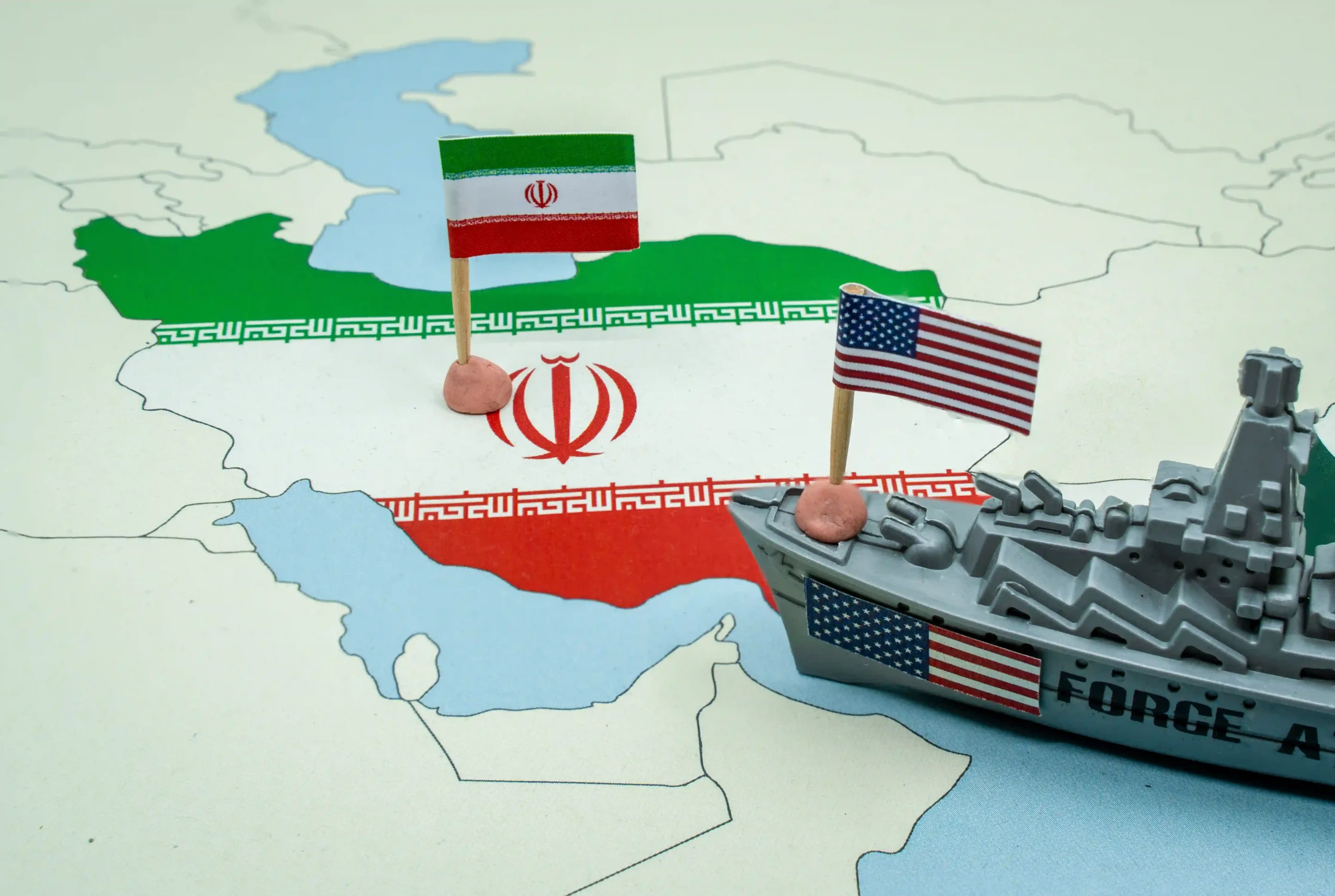
On Feb. 4, 2026, the New START Treaty ended without any incentive for renewal. On February 28, 2026, the U.S. and Israel initiated strikes on Iran, citing a lack of progress in the nuclear talks. This year has witnessed prominent incidents related to nuclear security, where states become more incentivised to develop their own nuclear capabilities and other nuclear states resist such direction. Additionally, global developments prove that traditional nuclear frameworks appear to be losing significance, with some states going further by resorting to violence to ensure their nuclear hegemony.
This development raises questions about the possibility of global shifts from traditional arms control treaties to a new nuclear arms control regime. A new phase of informal signalling and strategic forecasting could emerge, raising concerns about whether this form is sufficient to verify compliance. Such a potential new nuclear arms control regime could be unpredictable in terms of its application, effectiveness, the number of states willing to follow through, and more broadly, the path forward to ensure the world is not dragged into a nuclear war.
Programmes
5 Mar 2026
The Hormuz Inflection: Oil Markets After the Iran Strikes
The Feb. 28, 2026 United States–Israeli offensive against Iran represents the most consequential escalation in Gulf security dynamics in over a decade and introduces immediate, medium-term, and long-term risks to global energy stability. The strikes targeting senior leadership and strategic military infrastructure triggered Iranian retaliation across the Gulf region and sharply increased the probability of disruption to maritime energy flows, particularly through the Strait of Hormuz.
While physical supply outages remain limited at the time of writing, markets have responded by repricing geopolitical risk. Crude benchmarks surged on reopening, freight and insurance costs rose materially, and volatility spiked across commodities and currency markets. The core economic question is not whether prices react, they already have, but whether the conflict transitions from a risk-premium shock to a sustained supply disruption.
The Strait of Hormuz remains the central transmission channel. Roughly one-fifth of globally traded oil and more than one-third of seaborne liquefied natural gas pass through this chokepoint. Even temporary interference has outsized macroeconomic implications. Assessing the implications of the crisis requires examining immediate market reactions, potential disruption scenarios, medium-term supply responses, and the longer-term structural consequences for global energy security and macroeconomic stability.

Programmes
12 Feb 2026
Food Weaponisation: Building Food Resilience in the Global South
Food commodities are becoming strategic resources, increasingly viewed as important as oil and gas. Food is used as a tool of political control, where food export control or bans influence countries' behaviour and policy outcomes. For instance, Russia's actions in the Black Sea’s exports caused price spikes and forced strategic changes to the Black Sea Grain Initiative in favour of Moscow. The Russia-Ukraine ًar has showcased how food can be used as a weapon and how major food importers, like Egypt, have faced direct vulnerabilities impacting their food supply.
As governments continue to weaponise food supply to leverage their position in warfare and as climate change worsens, countries will increasingly treat food as a national security issue and reshape alliance-building. Countries could be more likely to depend on food weaponisation tools, as they appear to be effective in ongoing conflicts. Hence, the Global South and food importers are in danger of being exposed to increased starvation and political control from food exporters and wealthier nations that control food systems. The forecasts incite these countries to re-evaluate their strategies to curb the risk of food insecurity.

Programmes
11 Feb 2026
The GCC and the Future of the Rare Earths and Critical Minerals Race
China is a dominant player in the rare earths and critical minerals industry. As of 2025, China is in control of “…about 61% of rare earth production and 92% of their processing”, meaning China monopolized the rare earths and critical minerals industry. While China dominates this industry, countries have been aiming to bolster their own rare earth and critical mineral ambitions to reduce their reliance on China as a supplier of raw materials and processed products. For example, GCC countries, in line with their 2030 visions, have increased their investments in the mining and processing of these elements to diversify their economies and become suppliers in an industry dominated by China. This analysis aims to assess the emergence of the GCC as a rare earths and critical minerals supplier, which will be done by analyzing the reasons and feasibility for GCC involvement in this industry as well as understanding the challenges these countries face in their entry into the market.

Programmes
10 Feb 2026
Digitising the Space Economy: Who Will Hold Sovereignty as the Shift from Hardware to Software Accelerates?
The global space economy is currently undergoing a profound structural transformation. Whereas the sector has historically been characterised by its heavy reliance on rocket propulsion capabilities and the vast capital investments required to deploy physical hardware into orbit, the focus is now shifting toward an economic model in which value creation is increasingly decoupled from material mass.
In this context, the contours of what may be described as a “software-defined space economy” are becoming increasingly evident. This shift is driven by the convergence of two core digital infrastructures: digital twins and space-based edge computing. At the same time, declining launch costs, resulting from advances in reusable launch vehicles, have shifted the primary determinant of economic efficiency. Rather than centring on mere access to space, value is now anchored in the operational efficiency of on-orbit assets, their embedded intelligence, and the length of their functional lifespan.
This paper argues that the sector’s future economic value—estimated to reach USD 1.8 trillion by 2035—will not be realised solely through an increase in the number of satellites launched, but rather through the digitisation of their life cycles and the processing of data at the source.
This analysis provides a comprehensive economic deconstruction of these technologies. It examines how “virtual modelling” is reshaping cost structures in space manufacturing, enabling companies such as Varda Space Industries and SpaceX to accelerate development cycles at software speed. It also highlights the roles of artificial intelligence and the Internet of Things (IoT) in establishing space systems capable of autonomous fault processing, thereby maximising returns by extending assets’ operational lifetimes. The analysis concludes by linking gains in operational efficiency to the sector’s overall growth, demonstrating how digital infrastructure forms the material foundation for emerging in-space manufacturing (ISM) markets and next-generation Earth observation services.

Programmes
7 Feb 2026
Transformations in the Uranium Enrichment Market and the Future of Global Energy
Since 2023, the uranium enrichment market has undergone its most profound structural transformation since the advent of the civilian nuclear era. After three decades characterised by persistent oversupply and the integration of Russian inventories with Western reactor fleets, the sector, valued at approximately $15.5 billion in 2025, now confronts a fundamentally altered geopolitical landscape. stems primarily from the fact that nearly 95% of global enrichment capacity is controlled by just four entities, placing Western supply chains under complex logistical and political pressures.
Central to this transformation is the evolution of what is known as the Separative Work Unit (SWU) from a readily available commodity into a strategic bottleneck capable of redrawing global energy maps. The market has shifted rapidly from a buyer-dominated structure to one characterised by seller leverage, amid an intensifying race to secure fuel for both conventional reactors and small modular reactors (SMRs), which require advanced uranium grades for which Western markets lack adequate commercial infrastructure.
Accordingly, this analysis explores the contours of the new enrichment landscape, examining the principal actors and evolving pricing dynamics, while projecting the profound implications of this transformation for global energy security.

Programmes
30 Jan 2026
Algorithmic Insurgency: How Has AI Enhanced the Capabilities of Terrorist Organisations?
The global security landscape is undergoing a fundamental transformation driven by the rapid advancement of artificial intelligence technologies, which have evolved from purely technical tools into strategic forces reshaping patterns of power and conflict. Artificial intelligence has emerged as a transformative capability offering substantial societal benefits, yet its inherently dual-use nature renders it a double-edged instrument.
A careful examination of historical precedents reveals a recurring pattern in which terrorist organisations demonstrate a high degree of adaptability in exploiting emerging technologies to advance their radical agendas. Just as these groups previously leveraged online forums and encrypted communication platforms, they are now actively exploring and adopting artificial intelligence capabilities. This shift is no longer confined to speculative concern or theoretical risk. Rather, AI-enabled terrorism has moved from conceptual discussion into an experimental phase characterised by repetition and rapid diffusion, raising acute concern among security institutions and governments that the technology may become a strategic enabler of unprecedented operational capability.
The convergence between artificial intelligence and the logic of asymmetric warfare is fundamentally altering the balance of power between states and non-state actors, significantly lowering the barriers to entry that were historically imposed by advanced military technologies. Emerging fields and intelligence evidence indicate the development of a multi-domain adoption strategy spanning informational, physical, and cyber spheres, necessitating a deeper analytical examination of how terrorism is being re-engineered in the age of intelligent systems.

Programmes
22 Jan 2026
The Implications of China’s Acquisition of a Lithography System
December 2025 marked a structural shift in the global technological balance of power, as a state-backed Chinese industrial consortium, coordinated by Huawei, approved the operation of a functional prototype of an extreme ultraviolet (EUV) lithography system at a facility in Shenzhen. This announcement dismantles a core assumption that has dominated geopolitical thinking in Washington, Brussels, and Tokyo over the past decade, namely that the extreme engineering complexity of EUV technology would permanently confine China behind a technological barrier, preventing it from advancing beyond the 7-nanometre threshold in leading-edge semiconductor manufacturing.
Western containment strategies were grounded in a firm conviction that the Dutch firm ASML’s monopoly over highly complex supply chains would guarantee the exclusion of the world’s second-largest economy from producing the advanced semiconductors required for artificial intelligence applications. The new Chinese prototype, however, has invalidated this assumption, not by replicating Western engineering paradigms, but by pursuing an alternative physical and engineering pathway, shaped by imperatives of national sovereignty and enabled by effectively unconstrained state capital.
This prototype, based on laser-driven plasma (LDP) technology, demonstrates that Chinese engineering teams have mastered the core physical principles of optical control at 13.5 nanometres. In doing so, they have moved beyond a phase long framed as one of "scientific impossibility", shifting the contest decisively into a new stage defined by engineering scale-up and operational viability. This development signals the end of an era of unipolar technological dominance. It inaugurates a new phase of dual ecosystems within the semiconductor industry. This transformation will require a comprehensive reassessment of the economic and security assumptions that have governed the sector for decades.