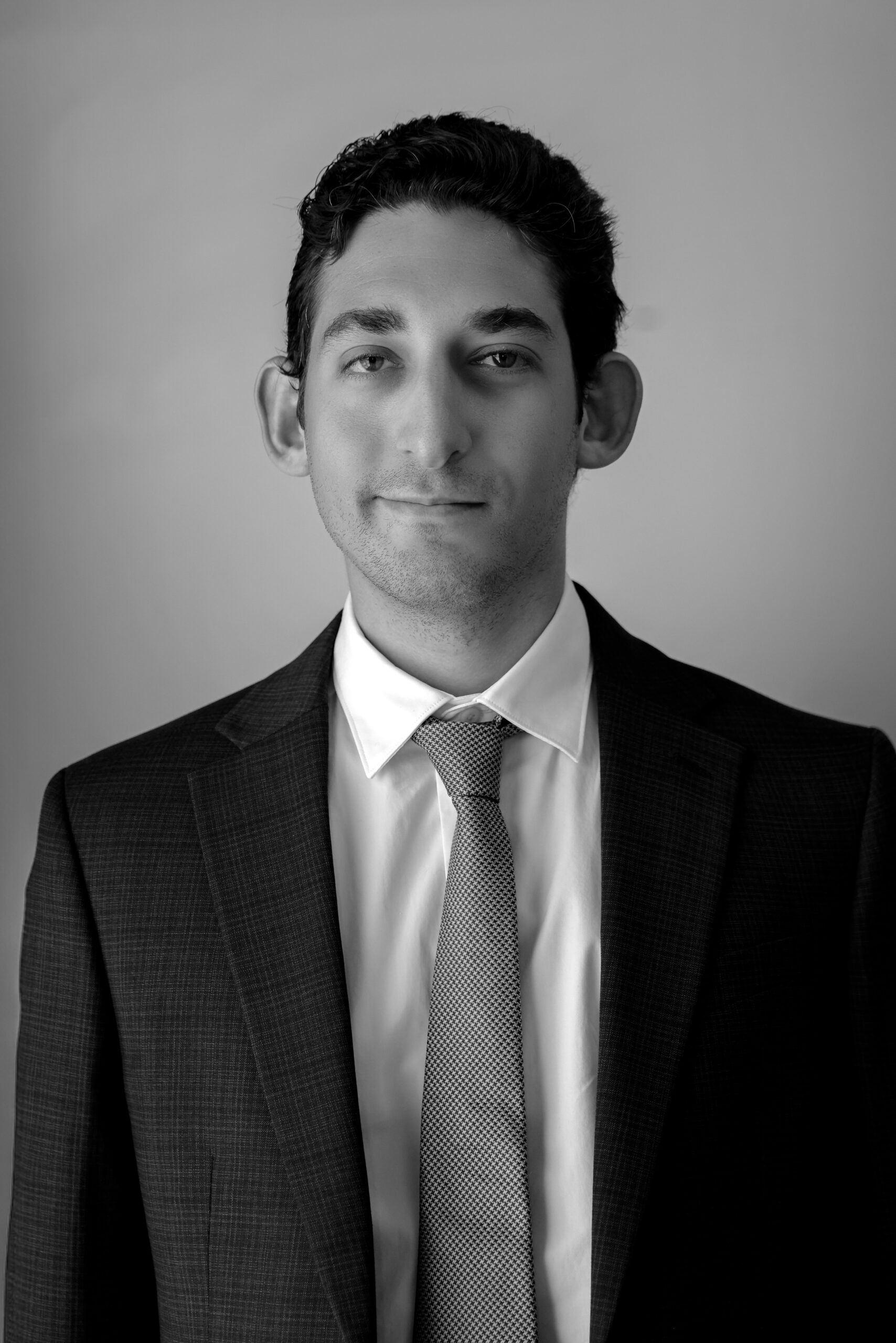
Sherif Amin

Political and Security Studies Researcher

Sherif Amin is an Political and Security Studies Researcher at Al Habtoor Research Centre.


He is currently a PhD Candidate nearing the completion of his doctoral studies at SOAS, University of London. He holds a MRes in International Relations from Queen Mary University of London and a MSc in International Politics from SOAS, University of London. Prior to joining the Centre, he served as a Senior Analyst at the MEA Institute for Strategic Studies’ Middle East Programme. He interned as a Research Assistant at the Middle East Institute in Washington DC as well as the Institute of International Relations Prague.


His research interests include the international relations of the MENA region, Middle East politics, and US foreign policy in the MENA region.
contact information

Latest By Sherif Amin

Life Imitates Art: Idiocracy and America at 250 Years
Programmes

Life Imitates Art: Idiocracy and America at 250 Years

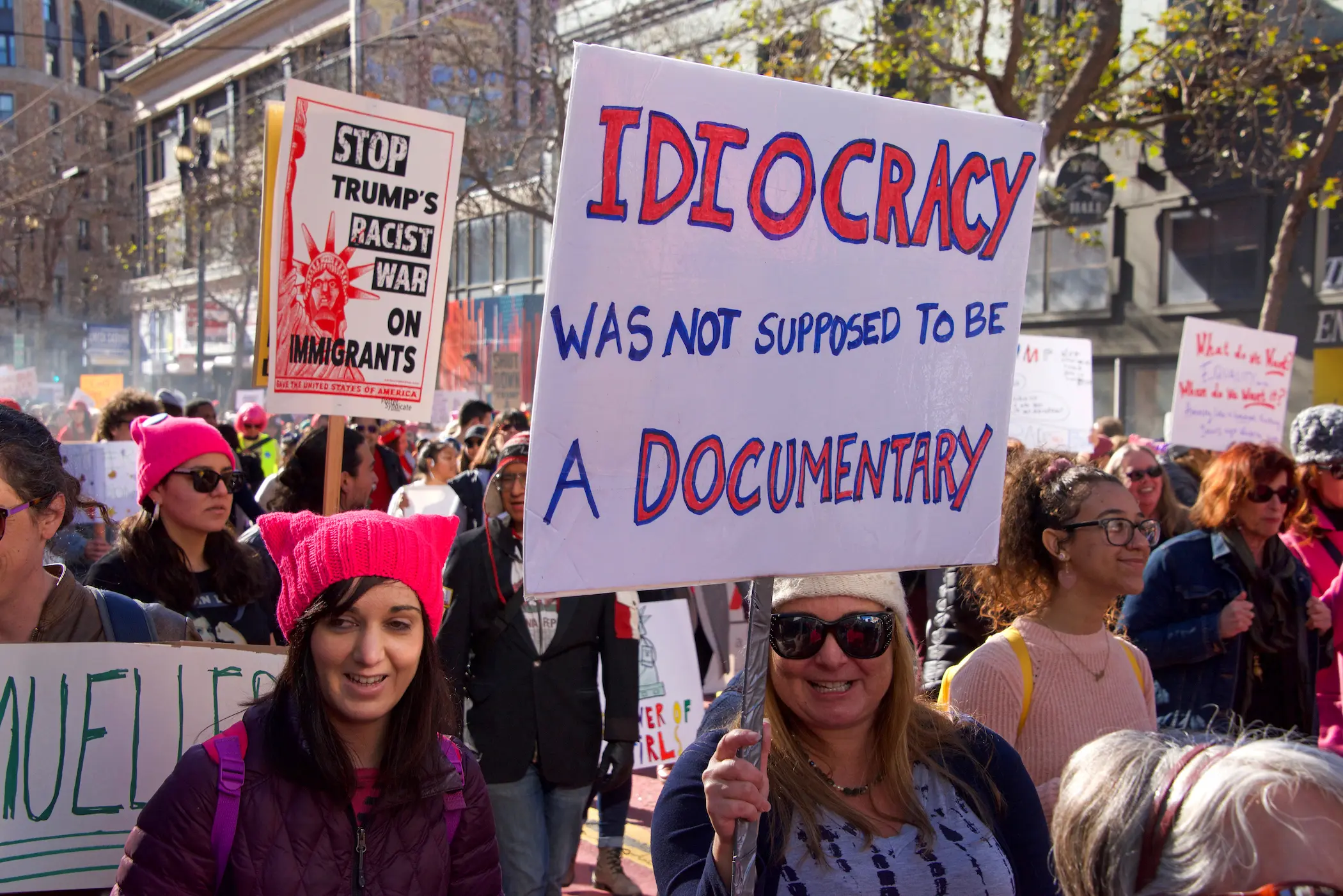
On July 4th, 2026, the United States celebrated its 250th anniversary of independence in true American fashion. With such celebrations taking place, numerous news outlets have been running polls and stories celebrating some of the US’ greatest achievements in its 250-year history, including and not limited to cinema. The New York Times ran a poll with the topic focused on which film best represents the American experience, with some respondents picking American classics such as The Godfather, Citizen Kane, Easy Rider, and American Graffiti as well as social commentary-based films such as Do the Right Thing. Although respondents have selected classic American movies that symbolise the American experience, there is one movie that stood out as the most quintessential movie that captures the American experience, having garnered 3,000 votes from poll respondents: Mike Judge’s 2006 satirical comedy Idiocracy.   Idiocracy was intended to serve as a satirical movie focused on the growing anti-intellectualism in the US during 2006, while also tackling societal and cultural issues such as dysgenics, consumerism, commercialism, and overpopulation. However, 20 years later in 2026, the satire portrayed in the movie seems to have become an absurdist reality. From flamboyant and incompetent governance to the inescapable commercialisation of society to raging anti-intellectualism (and everything in between), it seems that life has begun to imitate the art. Therefore, one can argue Idiocracy does not necessarily serve as a prophecy of the dumbing down of American society, but rather a framework for understanding the transition from competent policy-based governance to prioritising attention-based politics and economy.
A Crisis of Trust: Are International Institutions on the Decline?
Programmes

A Crisis of Trust: Are International Institutions on the Decline?

International institutions have traditionally operated as the primary arbiters of global security and coordinators for transnational crisis management. However, their recent inability to effectively mediate pressing crises has exposed deep structural flaws, sparking what is widely observed as a profound crisis of trust. Yet, framing this dynamic merely as a "decline" misses the broader strategic shift occurring in global governance. This crisis of trust, rooted in outdated power distributions and systemic inequities, is not simply the decay of the post-World War II liberal order—it is a market correction. Driven by a widening representation gap and the selective enforcement of international law, emerging and middle powers are no longer merely seeking institutional reform; they are engaging in active "institutional hedging." This analysis argues that rather than witnessing the end of multilateralism, the global system is transitioning into a competitive marketplace of governance, where states bypass legacy bottlenecks in favor of agile, interest-based minilateral blocs and alternative institutional architectures.
The FIFA World Cup 2026: How the U.S. Weaponized Borders and Mobility
Programmes

The FIFA World Cup 2026: How the U.S. Weaponized Borders and Mobility

The FIFA World Cup is usually seen as a global sporting event, where people from all over the world come together to watch engaging matches and bond with those from different backgrounds and cultures. However, the current World Cup, which is predominantly held in the United States, has been the subject of criticisms ranging from time zone differences to more severe controversies such as high-ticket prices, the US-Israeli war on Iran, and the implementation of strict immigration policies. The immigration policies include mobilizing I.C.E. to monitor stadiums for illegal migrants, visa cancellations and deportations of legal immigrants days before the tournament begins. These controls the US has been using since the tournament began have fans criticizing the US, while also leaving them questioning the ability of the US to be adequate hosts for such an international tournament. Therefore, this edition of the World Cup shows how states weaponize mobility and borders to protect their interests and project power. In this case, the US as a host nation is not a neutral stage for FIFA’s “global game" but an active political actor that uses visas, security checks, and border rules to manage who can move, when, and under what conditions.
A Fractured Kingdom: Political Fragmentation and the Crisis of Trust in Post-Election Britain
Programmes

A Fractured Kingdom: Political Fragmentation and the Crisis of Trust in Post-Election Britain

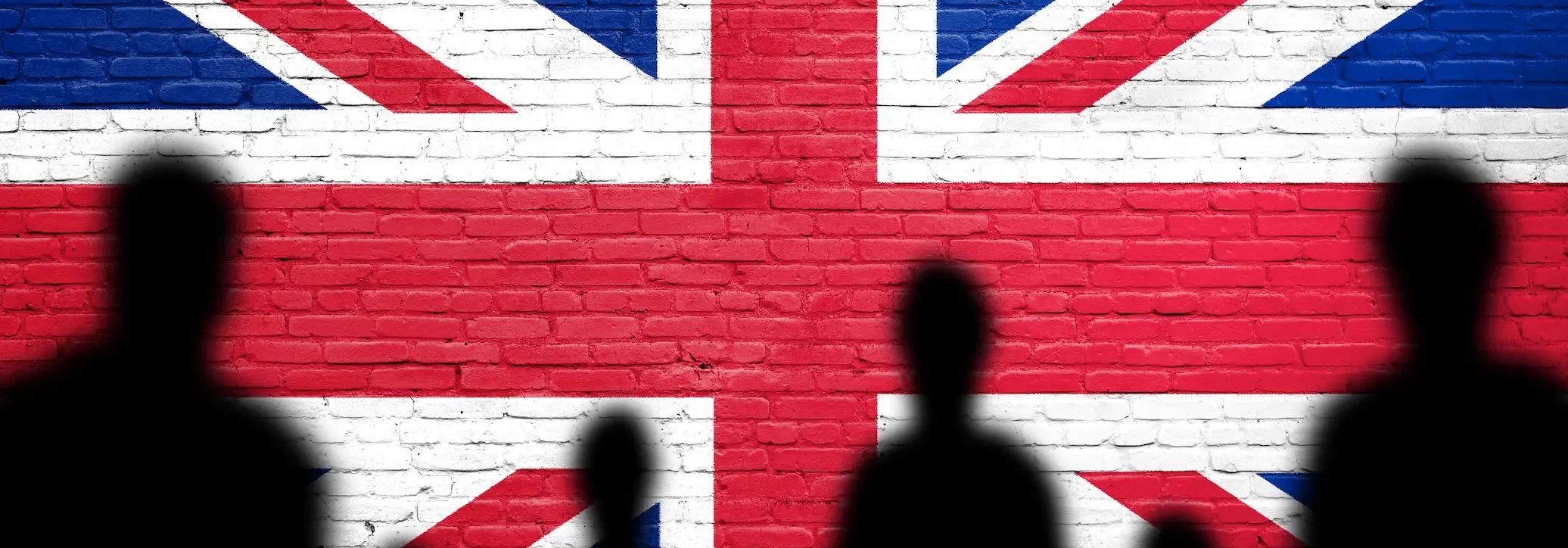
The results of the 2026 UK local elections while shocking to some, are overall not surprising. After all, it was projected the Labour Party was going to incur significant losses, while Reform UK was projected to win big, of which both projections were somewhat accurate. Moreover, despite a poor showing for the Conservative Party, they did manage to regain a few councils back from the Labour Party such as Westminster, while the Liberal Democrats and the Green Party managed to have positive results. The extent of the Labour Party losses extends beyond the England elections, as they managed to lose their majority in the Welsh parliamentary elections as well as lose seats in the Scottish parliamentary elections as well. These results are a sign that the UK political system is no longer just Labour vs. Conservative but now the political structure of the UK has been entirely realigned to reflect a fragmented system.   The election results already have several implications for the country. These implications include the confirmed fragmentation of the British political system and lack of trust and confidence in the current government. Naturally, these implications spell trouble for Prime Minister Sir Keir Starmer and the Labour Party.
US-China Summit: Not Peace, Rivalry Management
Programmes

US-China Summit: Not Peace, Rivalry Management

In the early hours of May 13, US President Donald Trump travelled to China to engage in high stakes talks with his Chinese counterpart Chinese President Xi Jinping. These talks are taking place in the context of heightened global instability stemming from conflicts such as the US-Israel-Iran War and the economics shocks stemming from this conflict. Within this context, both governments are set to engage in conversations aimed at stabilizing the US-China relationship and partaking in strategic dialogue regarding geopolitical and economic uncertainty. This summit can potentially shape the future of the US-China relationship as the outcome of these talks can shape the economic and security relationship between the two nations and their partners in the long run. Therefore, an exploration into this summit is needed and will focus on explaining the reason the summit is happening now, the mindset of the parties entering the summit, the topics on the agenda, and the potential outcomes of the summit.
The UK Local Elections: Final Nail in the Coffin for the Labour Party?

Programmes

The UK Local Elections: Final Nail in the Coffin for the Labour Party?

The 2024 General Election in the United Kingdom saw history being made, as the Labour Party under the direction of Sir Keir Starmer scored a landslide victory over the Conservative Party. Despite this landslide victory and the promise of significant change following years of Conservative Party turmoil, the Premiership of Starmer has not been smooth. Prime Minister Starmer’s term has been littered with major policy U-turns, political scandal, and an increase in support for populist movements. Naturally, this has contributed to a loss in confidence in Starmer’s government and leadership abilities, with many in the House of Commons and the British public questioning the government’s judgment, confidence, and competence.   To add insult to injury, the Labour Party lost the Gorton and Denton byelection (a seat held by the Labour Party for 100 years) and is still suffering from the Mandelson scandal, which further contributed to further loss of trust in the system. As the local elections are fast approaching and Starmer’s approval continues to plummet, the question remains: will a loss in these local elections be the final nail in the coffin for the Labour Party and Starmer?
The Consequences of Social Media and Memes as a Theatre of War
Programmes

The Consequences of Social Media and Memes as a Theatre of War

War is often fought on numerous battlefronts with state of warfare constantly evolving. In the case of the US-Israel-Iran War, drone and economic warfare are primarily tools of battle between the warring sides with the possibility extension to the seas following President Donald Trump’s proclamation of a naval blockade on the Strait of Hormuz. Although the primary theater of war in this conflict has been the skies with an impending theater about to open in the seas of the Gulf, there is another more unconventional theater that has been operating since the beginning of the war, the theater of social media. Since the beginning of the war both the US and Iran have used memes and social media platforms such as X and Instagram as propaganda tools to attack each other’s credibility and shift the war narrative in their favor by engaging wider audiences.   The purpose of this analysis is to explore the idea behind how social media and memes opened a new theater of war between the US and Iran since the start of hostilities in February 2026 and its consequences. This exploration is based on the idea the use of social media and memes transforms the individual from a spectator to active participant in the conflict, while also normalizing violence through humor. Moreover, by transforming social media into a theater of war, the belligerents transform the concept of war into an aesthetic, especially through the US military and White House’s use of social media and memes.    
The Samson Option: Implications for the Nuclear Taboo and Fatalism
Programmes

The Samson Option: Implications for the Nuclear Taboo and Fatalism

Israel’s nuclear arsenal is one of the “worst-kept secrets” in the MENA region due to the strategic ambiguity regarding its existence. Currently, Israel is not a signatory to the Nuclear Proliferation Treaty and is allegedly the only state in the MENA region to possess nuclear warheads. It is estimated that Israel currently in possession of approximately 80 nuclear warheads that can be deployed through ballistic missiles or by aircraft. While this nuclear program is shrouded in ambiguity, there is a genuine fear that Israel can reveal the full extent of its nuclear capabilities in the form of the Samson Option, which can bare consequences for the nuclear taboo as well as adverse psychological effects for the MENA region and the world.
Iran as a Potential Arena for Great Power Competition
Programmes

Iran as a Potential Arena for Great Power Competition

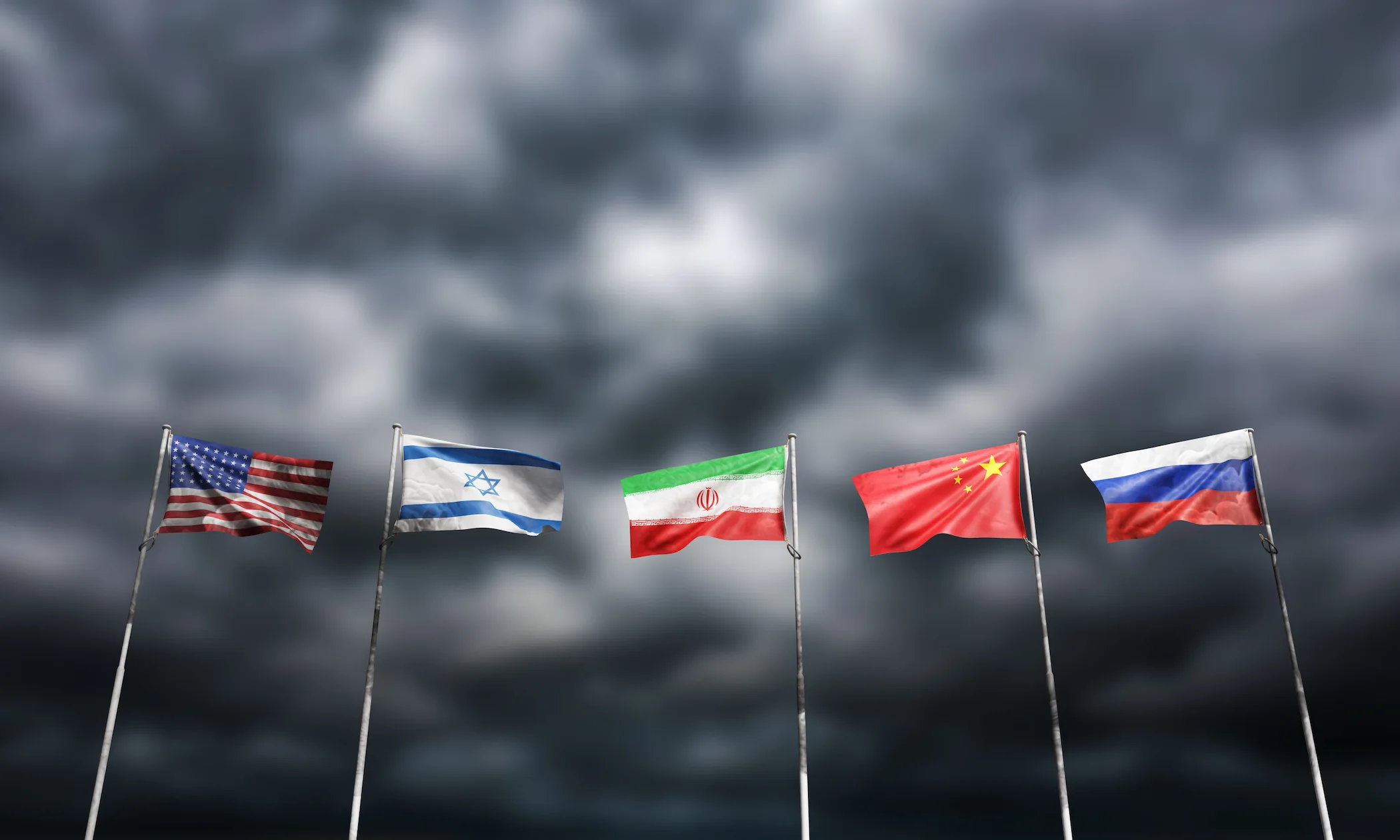
The U.S.-Israel-Iran War is well underway, and the risks of spillover and enlargement is becoming more of a reality as the war goes on. As the conflict continues to expand, several actors are seeking out opportunities to challenge the existing balance of power in the region and aim to exploit the war to expand their influence. In the past decade, Russia has been working to court the United States’ MENA allies into its sphere of influence through the concept of regime stability, while China is taking on a soft power approach through economic and diplomatic cooperation. A prolonged war between the U.S.-Israel and Iran can result in global powers such as Russia and China getting more involved in the region to diminish American influence globally, which can result in a great power competition. The potential of Iran serving as an arena for great power competition will be explored through the American strategic overstretch and the economic shock caused by energy crisis.
Why Did Trump Shift From His America First Policy?

Programmes

Why Did Trump Shift From His America First Policy?

The concept of “America First” is not a new one in the realm of US foreign policy. The term was first made popular during World War 2 when the America First Committee was formed by Yale student Robert Douglas Stuart Jr. and US Veteran General Robert E. Wood which advocated for American neutrality and building up strength through the American people, military, and economy. The idea of reducing the US active engagement in conflict to focus on its own interests caught the attention of Donald Trump, who pursued his own version of “America First” with varying results over the course of his two nonconsecutive terms as US President.   President Trump’s application of “America First” has been inconsistent since resuming office in 2025. This past year saw a series of deviations from the concept of “America First” including assisting Israel in the 12-day war with Iran, the capture of Venezuelan President Nicolas Maduro, and threats towards Iran regarding regime change amid protests. These threats became realized when the US and Israel carried out an unprovoked aerial offensive against Iran, which resulted in the deaths of the Ayatollah Ali Khamenei and several Iranian military officials. With the conflict still ongoing and regime change seeming to be the desired outcome, the conclusion can be made that this conflict signals a shift in President Trump’s “America First” policy. This shift will be explored through redefining “America First”, the Israel factor, and domestic support to get involved in a confrontation with Iran during a consequential election year.
The GCC and the Future of the Rare Earths and Critical Minerals Race
Programmes

The GCC and the Future of the Rare Earths and Critical Minerals Race

China is a dominant player in the rare earths and critical minerals industry. As of 2025, China is in control of “…about 61% of rare earth production and 92% of their processing”, meaning China monopolized the rare earths and critical minerals industry. While China dominates this industry, countries have been aiming to bolster their own rare earth and critical mineral ambitions to reduce their reliance on China as a supplier of raw materials and processed products. For example, GCC countries, in line with their 2030 visions, have increased their investments in the mining and processing of these elements to diversify their economies and become suppliers in an industry dominated by China. This analysis aims to assess the emergence of the GCC as a rare earths and critical minerals supplier, which will be done by analyzing the reasons and feasibility for GCC involvement in this industry as well as understanding the challenges these countries face in their entry into the market.
The Capture of Nicolas Maduro: The Consequences of US Regime Change in South America
Programmes

The Capture of Nicolas Maduro: The Consequences of US Regime Change in South America

Tensions between the United States and Venezuela have exploded into a forceful attack that has resulted in the capture and detention of Venezuelan President Nicolas Maduro. The U.S. President Donald Trump has accused President Maduro of instigating a mass migration of Venezuelan citizens, being involved in the fentanyl drug trade, and stealing oil wealth to fund drug operations. Consequently, President Trump authorized attacks on Venezuelan vessels, which he claimed to be transporting drugs to the U.S. while also increasing the number of troops stationed in the Caribbean Sea. Now that President Maduro has been captured after months of U.S. escalation, there is an uncertainty regarding the future of Venezuela, the region, and the world.   The attack as part of Operation Absolute Resolve can be seen as an attempt by President Trump to force regime change in Venezuela. The capture of President Maduro could have serious ramifications not only for the warring factions but the regions of South America and the Caribbean as well as the world. This may come in the form of collapsing institutions and industrial sectors such as energy, a loss of credibility for the U.S., regional destabilization brought on by a devastating refugee crisis, while also having a negative impact on the global economy.
Class, Declinism, and Emotional Turmoil: The Great British Migration to Dubai

Programmes

Class, Declinism, and Emotional Turmoil: The Great British Migration to Dubai

Since Brexit, the United Kingdom (UK) has been experiencing a governance issue, as the Conservative Party suffered from instability due to numerous leadership changes, while the recently elected Labour Party lacks the ambition and confidence needed to effectively govern. Combined with the shocks stemming from Brexit, COVID-19, and the Russia-Ukraine War, the UK has experienced economic stagnation and the deterioration of public services, which has resulted in British nationals migrating abroad.   One of these locations is the UAE, more specifically, Dubai. There are approximately 240,000 British nationals currently living in Dubai, with more to join as there was a 420% increase in internet searches in the UK centered on moving to Dubai. Those are staggering statistics, and the number is only going to grow as more British nationals across the socio-economic spectrum continue to migrate to Dubai. However, the reasons explaining British migration to Dubai are not as simple as lower taxes, security, and great weather. One can argue the rise of British migration to Dubai can be attributed to a desire to break from a ridged class system, declinism, and emotional turmoil brought on by the cost-of-living crisis.
What If: Global AI Systems Collapsed Overnight?
Programmes

What If: Global AI Systems Collapsed Overnight?

Artificial intelligence systems and data centres have increasingly become an integral part of modern day society. A KPMG survey focused on AI use found that 66% of respondents use AI for work and personal reasons, of which 38% of respondents claim to use AI on a daily or weekly basis and 28% use it semi-regularly. According to these results, a majority of the respondents rely on AI to carry out day to day functions whether it be for work, study, or personal reasons. Moreover, the reliance on AI has been extended to governments, global financial systems, and states, as these entities rely on AI systems to improve efficiency and speed of services provided. This shows how AI has become integrated into the fabric of global society.   Now imagine one day all AI systems and programs cease to function. While the chances of such an event happening are low, it is not impossible and the consequences of being overly reliant on AI systems can be devastating. The consequences of a global AI shutdown will impact the global economy as well as global geopolitics, which could lead to trillions disappearing from the stock market and national security disasters across the globe.