

Programmes
22 Jan 2026
The Implications of China’s Acquisition of a Lithography System
December 2025 marked a structural shift in the global technological balance of power, as a state-backed Chinese industrial consortium, coordinated by Huawei, approved the operation of a functional prototype of an extreme ultraviolet (EUV) lithography system at a facility in Shenzhen. This announcement dismantles a core assumption that has dominated geopolitical thinking in Washington, Brussels, and Tokyo over the past decade, namely that the extreme engineering complexity of EUV technology would permanently confine China behind a technological barrier, preventing it from advancing beyond the 7-nanometre threshold in leading-edge semiconductor manufacturing.
Western containment strategies were grounded in a firm conviction that the Dutch firm ASML’s monopoly over highly complex supply chains would guarantee the exclusion of the world’s second-largest economy from producing the advanced semiconductors required for artificial intelligence applications. The new Chinese prototype, however, has invalidated this assumption, not by replicating Western engineering paradigms, but by pursuing an alternative physical and engineering pathway, shaped by imperatives of national sovereignty and enabled by effectively unconstrained state capital.
This prototype, based on laser-driven plasma (LDP) technology, demonstrates that Chinese engineering teams have mastered the core physical principles of optical control at 13.5 nanometres. In doing so, they have moved beyond a phase long framed as one of "scientific impossibility", shifting the contest decisively into a new stage defined by engineering scale-up and operational viability. This development signals the end of an era of unipolar technological dominance. It inaugurates a new phase of dual ecosystems within the semiconductor industry. This transformation will require a comprehensive reassessment of the economic and security assumptions that have governed the sector for decades.
Programmes
12 Jan 2026
The Collapse of the Western Flank: The Implications of Maduro’s Fall for Iran
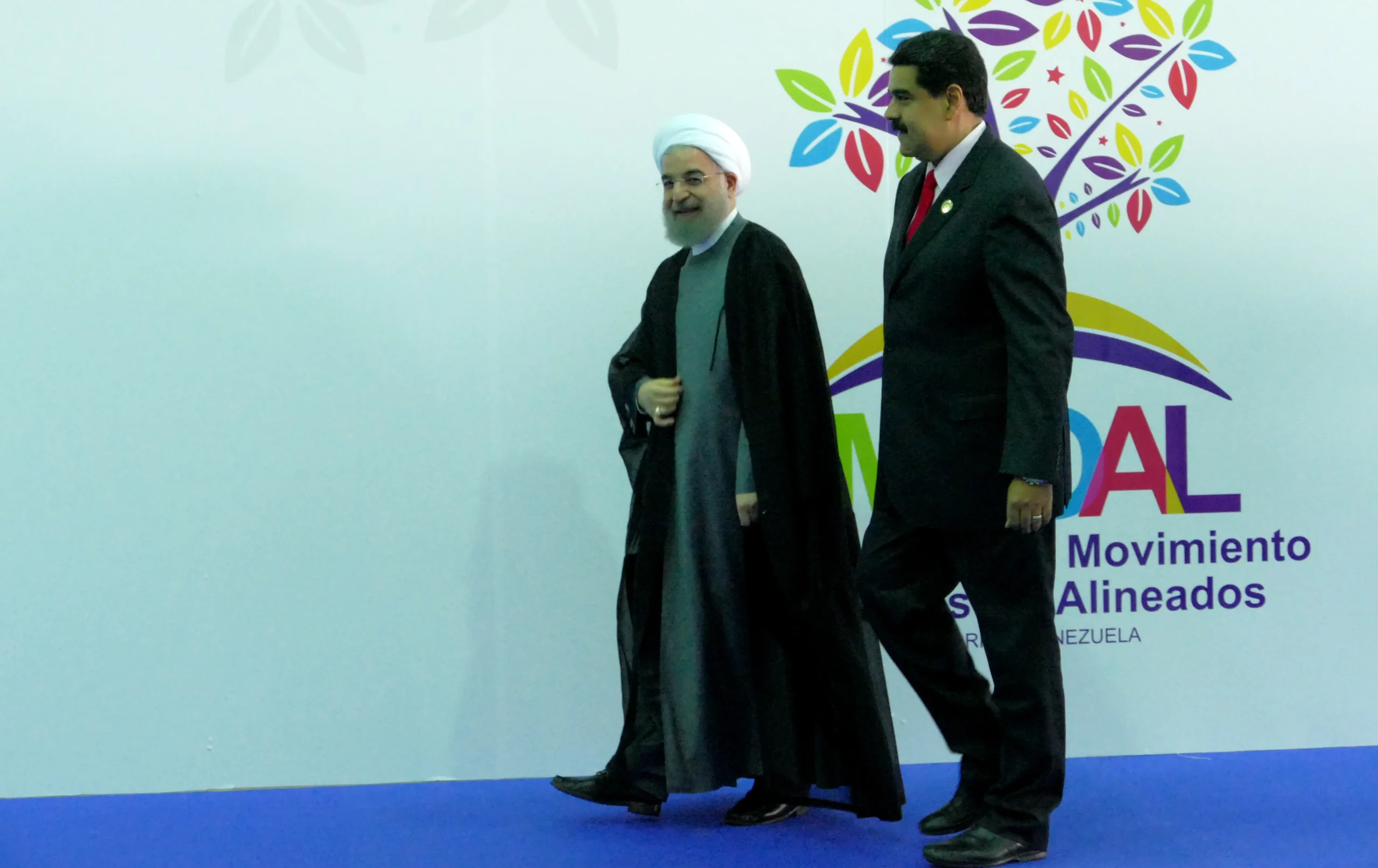
Operation Absolute Resolve, which resulted in the removal of Nicolás Maduro and his spouse Cilia Flores on Jan. 3, 2026, constituted a watershed moment in the history of 21st-century geopolitical warfare. While initial indicators point to a seemingly limited regime change within Venezuela, the strategic repercussions of the operation inflicted severe damage on Iran’s forward-operating capabilities. For nearly two decades, Venezuela was not merely a diplomatic partner of Tehran; it served as an indispensable logistical bridgehead and a secure sanctuary in the Western Hemisphere. Through this platform, the Iranian regime was able to circumvent international sanctions, project asymmetric influence, and sustain a critical financial lifeline through illicit trade.

Programmes
12 Dec 2025
The 2025 NSS: Disengagement or Entrenchment?
The National Security Strategy (NSS) defines the guiding vision of American power and provides a window into how the United States understands the international environment, identifies its priorities, and determines the political, military, and economic tools it will rely on to protect national interests. Accordingly, the NSS shapes defence planning, informs foreign policy doctrine, guides inter-agency action, and signals to allies and adversaries the direction of U.S. engagement in an evolving global landscape.
The 2025 NSS, issued by the Trump administration in November 2025, is a clear articulation of how this administration intends to position itself in a world marked by rising geopolitical fragmentation, sharpening competition, and growing domestic constraints. Its core purpose is to translate the administration’s worldview into a coherent framework that defines what the United States will prioritise, what it will deprioritise, and under what conditions it will expend political capital, economic leverage, or military force.
For the Middle East, understanding the 2025 NSS is essential because it captures the principles shaping America’s evolving posture toward the region. The strategy’s emphasis on burden-sharing, reduced military exposure, and transactional partnerships signals a shift in expectations for regional actors, while its focus on energy security, counterterrorism, and strategic competition with external powers continues to define the contours of U.S. interests. As a formal expression of how the administration interprets threats and opportunities, the NSS provides the clearest available roadmap of Washington’s intentions—and the framework within which its decisions toward the Middle East will be made in the years ahead.

Programmes
11 Dec 2025
AI-Fueled Shadow Conflicts: The New Era of Untraceable Espionage
AI is reshaping international competition in ways that governments are only beginning to understand. The spread of AI-enabled cyber operations has created a new landscape in which intrusions unfold rapidly, cross borders with ease, and often leave behind little that can be reliably attributed to a specific actor. States now find themselves navigating an environment where responsibility is increasingly difficult to establish, and where strategic judgement becomes far more fragile.
While espionage and covert action have always operated in murky territory, the introduction of AI into these practices has accelerated the pace of events and weakened the signals that national security officials have traditionally relied upon. This shift demands sustained attention, not only because the technology is advancing quickly, but also because the risks associated with misinterpretation and unintended escalation are becoming sharper.

Programmes
20 Oct 2025
The Future Role of China in the GCC’s Tech Transition
China has a long-term goal to be a global leader in technology. To achieve such ambition, the country has taken serious steps widening its Belt and Road Initiative (BRI) traditional infrastructure projects to incorporate digital infrastructure projects embodied in the Digital Silk Road (DSR). The DSR was initially launched in 2015 by the government as an idea on paper and during the opening ceremony of the First Belt and Road Forum in May 2017, China’s President Xi Jinping, adopted the DSR term officially and it was incorporated in the government’s BRI strategy as the digital dimension.
The DSR initiative focuses on building digital infrastructure and exporting its technology to the beneficiary countries, it includes telecommunications infrastructure, like 5G networks, overland fibre-optic cables, data centres, cloud computing, artificial intelligence (AI), as well as applications that support e-commerce and mobile payments, along with smart cities and surveillance technology. Additionally, the DSR provides support to Chinese tech companies, like ZTE, Huawei, and Alibaba, to carry on the work with the beneficiaries.
The DSR aims to enhance Beijing's global digital influence as it creates opportunities for a wide range of cooperation and partnerships between Chinses tech companies and other beneficiaries around the world in areas of digitalization and AI. China’s DSR encompass a variety of projects in 5G deployment, e-commerce platforms, and AI applications, such as DeepSeek which is an alternative model to ChatGPT.
China signed DSR cooperation agreements with several countries in Africa, the Middle East, Eastern Europe, Latin America, and Southeast Asia. The cooperation takes place between scientists and engineers from the recipient country and Beijing, like opening a training centre or in research and development (R&D). The areas of cooperation are wide, including smart cities, AI and robotics, clean energy, and surveillance capabilities, like data localization. GCC countries are considered one of the important partners to China’s DSR, where it is closely integrating in the GCC digitalization goals.

Programmes
17 Oct 2025
Robotics, China, and MENA: The Battle for Industrial Sovereignty
China’s robotics drive is no longer just a story of factories becoming more efficient but a story of a new industrial revolution. Each year, hundreds of thousands of new machines are deployed across its production lines, reshaping global supply chains and altering the balance of technological power. For the Middle East and North Africa, this shift raises questions that cannot be postponed. Automation is moving from the margins to the centre of economic strategy, and regions that fail to build capacity risk being locked into systems designed elsewhere.
The future of robotics in MENA is therefore not only about who installs machines the fastest, but about who sets the standards, who controls the data, and who determines the terms of industrial competition. The region’s next chapter will hinge on whether it becomes a maker of the technologies that define the century, or simply a consumer of them.

Programmes
30 Sep 2025
An Unequal Cost: How Space Debris Deepens the Exclusion of Developing Nations from the Economies of the Future
Since the launch of the first satellite in 1957, the Low Earth Orbit (LEO) has undergone a profound transformation from a near-empty frontier into a congested and polluted environment shaped by decades of human activity. Non-functional satellites, spent rocket stages, and fragmentation debris from collisions and explosions have accumulated to a mass exceeding 14,700 tons. Critical events have amplified the scale of the problem, most notably China’s Anti-Satellite Test (ASAT) in 2007 and the 2009 collision between the U.S. Iridium-33 and Russia’s Kosmos-2251, which together generated nearly one-third of all catalogued debris in LEO.
This material is unevenly distributed but highly concentrated between 750 and 1,000 kilometres, an orbital belt central to Earth Observation and communications. Objects in this altitude range can persist for centuries, while in the Geostationary Orbit (GEO) debris may remain indefinitely, underscoring the long-term persistence of the hazard. Consequently, orbital space has shifted from an open frontier to a finite and polluted resource requiring collective governance.
This study examines the economic and political dimensions of space debris. It assesses the direct costs borne by operators, the cascading risks to terrestrial infrastructure such as Global Navigation Satellite Systems (GNSS) and weather forecasting, and the disproportionate challenges facing developing nations. It concludes by analysing potential responses, ranging from mitigation strategies to Active Debris Removal (ADR), within the broader framework of international governance and global equity.

Programmes
26 Sep 2025
The Global Economic Impacts of Starlink Outages: From Operational Fragility to Pathways of Resilience
In recent years, Low Earth Orbit (LEO) satellite constellations have emerged as a transformative layer within the global digital infrastructure, marking a departure from their original role as connectivity solutions for remote regions. These systems are now embedded within the operational cores of critical sectors such as civil aviation, maritime logistics, financial markets, and defence. The clearest manifestation of this structural shift is Starlink, operated by SpaceX, which by mid-2025 had exceeded 7 million users across more than 150 countries, with exponential growth rates in high-value, latency-sensitive industries.
This rapid technological and geographical expansion has positioned Starlink as a globally integrated utility—yet one that operates outside conventional regulatory regimes. It represents a structural concentration of control over global data flows in a single, privately held entity. The dual outages that occurred in July and September 2025 exposed deep systemic vulnerabilities within the Starlink network, including software architecture fragilities and environmental sensitivities to space weather events. These incidents prompted urgent questions about the stability of a critical infrastructure layer that now underpins sectors central to national sovereignty and global economic coordination.
This report interrogates the systemic risks embedded in the global economy’s growing dependence on LEO constellations through two interlinked analytical lenses. The first is a technical-political economy perspective, which examines the underlying architecture of the Starlink network and the typology of its failure modes—both endogenous and exogenous. The second is a forward-looking, scenario-based assessment that models the potential global economic consequences of a 24-hour Starlink outage in 2032. Through this dual approach, the analysis traces the contours of a new strategic dilemma: how to govern an emergent, transnational infrastructure whose failure could trigger multi-sectoral crises at planetary scale, yet whose design and control remain entirely privatized.

Programmes
23 Sep 2025
Structuring Power: Who Will Command the Future Map of Global Aviation
The global aviation industry is undergoing a historic realignment, as the center of gravity shifts decisively from West to East—a transformation that reflects deeper dynamics in the redistribution of economic and geopolitical power within the international system. For decades, Western carriers dominated the skies, leveraging superior infrastructure, extensive fleets, and mature consumer markets. Today, however, airlines based in the Middle East and Asia are emerging as the new engines of growth and connectivity, assuming a central role in redrawing the global map of intercontinental air travel. While the COVID-19 pandemic accelerated this trajectory, it did not initiate it; rather, it exposed the structural vulnerabilities of legacy Western airlines and underscored the strategic foresight of their Eastern counterparts, whose recovery was bolstered by extensive state support and institutionally anchored expansion strategies.
One of the most visible manifestations of this shift is an intense race to modernize fleets with next-generation, long-range, fuel-efficient aircraft—an investment wave that exceeds $200 billion in the Middle East alone. This is not merely a technical upgrade; it constitutes a deliberate, long-term vision to project aerial influence, enhance global market competitiveness, and entrench these airlines as sovereign instruments of statecraft.
Accordingly, this study analyzes the contours of this transformation through an integrated framework that examines operational strength, capital investment in fleets, network architectures, and the adaptability of business models. It further explores the growing convergence between national economic visions—such as Saudi Arabia’s Vision 2030 and China’s Belt and Road Initiative—and the strategic deployment of national carriers as tools of geopolitical influence. Rather than forecasting definitive outcomes, the paper seeks to situate this aviation shift within a broader, more volatile global context—one where profitability and efficiency increasingly intersect with sovereignty and strategic positioning, and where the skies themselves become arenas for shaping the balance of power in the decades ahead.

Programmes
18 Sep 2025
The Semiconductor Cold War: U.S. vs. Russia, China and India
The global competition over semiconductors and related military technologies has become the central axis of great-power rivalry. The United States maintains its leadership in the global semiconductor industry, with American companies securing roughly half of the global semiconductor market. However, this dominance faces a growing challenge from China, which accounted for 20% of global semiconductor sales in 2024. Beijing’s ambition to achieve self-sufficiency in semiconductors is steadily advancing despite ongoing trade tensions and intellectual property restrictions imposed by Washington amidst the broader ‘tech war.’ China aims to reach 50% self-sufficiency in semiconductor production by the end of the year, reinforced by significant investments in R&D and market expansion by Chinese firms.
In contrast, Russia’s position in semiconductor-dependent military industries is increasingly constrained. Although Russia retains expertise in weapons design, its reliance on imported materials and advanced chip-making equipment from Western countries exposes critical vulnerabilities. Western sanctions, introduced in response to Russia’s military actions in Ukraine, have sharply limited Moscow’s access to these essential inputs. In response, Russia has sought alternative suppliers, with China emerging as its largest source of semiconductor materials. These dynamic forms part of the broader Russia-India-China (RIC) trilateral framework, underpinning Moscow’s strategic pivot toward Eastern partnerships.
Meanwhile, India is rapidly evolving as a significant player in the semiconductor sector. The country’s announcement in September of its first indigenous chip, “Vikram 32,” marks a milestone in New Delhi’s pursuit of technological self-reliance and signals India’s potential emergence as a competitor to U.S. semiconductor dominance. India’s increasing engagement with Russia and China reflects a pragmatic alignment based on mutual interests, particularly in the context of escalating policy tensions with Washington. Notably, U.S. tariffs imposed on India’s trade in Russian oil have further incentivized this trilateral collaboration.
Collectively, the China-Russia-India “troika” represents a coalition of shared interests rather than a formal ideological alliance. Should this partnership strengthen, it could significantly bolster their semiconductor manufacturing capabilities and pose a formidable challenge to the American industry. Nevertheless, lingering frictions—such as unresolved border disputes, differing economic priorities, technological gaps, and the impact of sanctions—are likely to impede seamless technological integration. The United States still wields substantial influence over India, with opportunities to attract New Delhi through increased investments, tariff reductions, and advanced technology cooperation. Ultimately, the trajectory of the RIC semiconductor partnership holds profound implications for the global order. A successful integration of this “troika” chip industry with their respective military technologies could catalyse the rise of a multipolar system, revolutionizing surveillance, air defence, drone capabilities, and the broader defence industrial base, thereby reshaping international power dynamics.

Programmes
11 Aug 2025
Middle East in Energy Transition: From Stopgap to Global Architect
On July 28, 2025, during a joint press conference in Scotland with British Prime Minister Keir Starmer, U.S. President Donald Trump issued an unexpected ultimatum to Russia. He declared that the Kremlin had no more than 10 to 12 days (until approximately Aug. 8, 2025) to make tangible progress toward ending the war in Ukraine. Should Moscow fail to comply, Trump warned that President Vladimir Putin would face a sweeping package of economic sanctions and severe trade restrictions. This escalation came on the heels of prolonged diplomatic stagnation and Trump’s increasingly vocal frustration with Russia’s continued military operations.
Subsequently, on July 31, 2025, former Russian President and current Deputy Chairman of the Russian Security Council Dmitry Medvedev responded with a pointed and ominous message via his Telegram channel. In his remarks, he invoked the “Dead Hand”—Russia’s semi-automated nuclear retaliation system designed to launch a retaliatory strike even in the event of a complete decapitation of the nation’s leadership.
In response, President Trump ordered the deployment of two U.S. nuclear submarines to strategic positions, framing the move as a necessary precaution in the face of what he described as “extraordinarily dangerous” nuclear threats. Notably, he refrained from specifying whether the submarines were nuclear-powered only or also nuclear-armed—introducing deliberate strategic ambiguity and reinforcing the doctrine of pre-emptive deterrence through calibrated uncertainty.
What renders this sequence of events particularly significant is that the confrontation did not remain confined to the U.S. and Russia. Its repercussions quickly extended to India, which was thrust into the geopolitical crossfire. On July 31, the Trump administration announced the imposition of a 25% tariff on all Indian exports to the United States, accompanied by threats of further penalties targeting Indian firms that continue to purchase Russian crude oil or engage in defence cooperation with Moscow. The rationale behind this punitive action lies in New Delhi’s deepening energy relationship with Russia.
Although the Indian government has not officially announced any suspension of contracts with Russian suppliers, discreet directives were reportedly issued to state-owned refiners instructing them to explore alternative sources in the global spot market. This pivot has begun to materialize reflecting New Delhi’s attempt to maintain equilibrium between preserving its strategic autonomy and mitigating mounting U.S. pressure.
Yet the broader implications of this crisis extend well beyond geopolitical brinkmanship. What is unfolding is a systemic shock to the global order—one that is reverberating through energy markets, food security systems, arms trade corridors, and supply chains. The consequences will not be distributed evenly: while some Middle Eastern states stand to benefit from surging demand and price shifts, others may face acute vulnerabilities due to trade disruptions, inflationary pressures, or capital flight.

Programmes
17 Jul 2025
BRICS Summit 2025: Between Expansion and Caution
The 17th BRICS Summit convened in Rio de Janeiro on July 6–7, 2025, against the backdrop of accelerating geopolitical realignments. Under Brazil’s presidency, the summit sought to reenergize the bloc’s collective agenda, positioning BRICS as a more prominent actor in global affairs. Key declarations were issued, and the membership base was broadened—yet a cautious diplomatic tone accompanied these developments. The gathering appeared less as a turning point and more as a carefully choreographed exercise in articulating a shared vision for a multipolar world, tempered by the bloc’s internal complexities and external constraints.
Despite its symbolic achievements, the summit was marked by apparent limitations. The absence of certain high-profile leaders, coupled with underlying political divergences and institutional fragmentation, curtailed expectations for transformative decisions or a unified policy front. These constraints highlighted the gap between BRICS’s aspirations and its current capabilities. This analysis provides a focused examination of the outcomes of the 2025 BRICS Summit, assessing their implications for the evolving global order and the extent to which the bloc can credibly position itself as an alternative pillar in global governance.