
Programmes
1 Apr 2026
What If: The United States Launched a Ground Invasion of Iran?
In light of the intensifying United States–Israel-Iran War, the prospect of a direct American ground operation has shifted from a remote contingency to a plausible escalation. As strikes expand beyond air and naval targets to critical infrastructure, the conflict is approaching a threshold that could fundamentally alter its trajectory, with risks extending from prolonged warfare to disruption of global energy flows and regional instability.
While Washington may aim for limited objectives through targeted ground incursions, such as seizing key assets like Kharg Island, such operations are unlikely to remain contained. President Trump has acknowledged that “we have a lot of options,” reflecting both strategic flexibility and uncertainty about the next phase.
Iranian leadership has responded in kind. Parliament Speaker Mohammad Bagher Ghalibaf warned that Iranian forces are “waiting for the arrival of American troops on the ground,” signaling that any incursion would trigger immediate and sustained retaliation. In this context, a ground invasion would not be a controlled escalation, but a turning point with far-reaching military, regional, and global consequences.
Programmes
31 Mar 2026
What If: The Houthis Close Bab el-Mandeb?
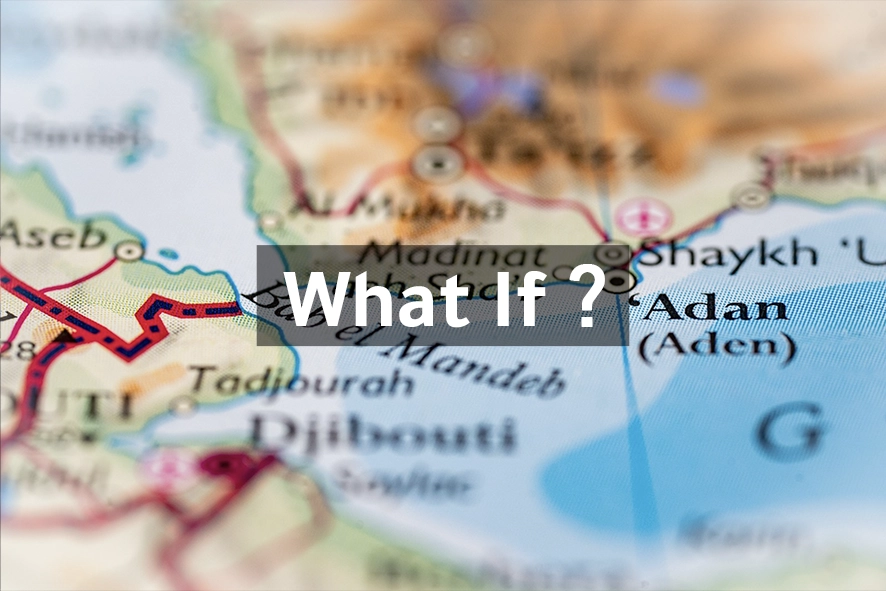
The United States–Israel–Iran war, which began with a set of vaguely defined objectives including regime change in Iran and the dismantling of its missile and nuclear capabilities, now appears to be shifting toward a different set of priorities. Iran has managed to internationalise the conflict in a way that has redirected attention toward containing the scale of global economic disruption. Put simply, the focus is increasingly on securing the flow of oil amid what is being described as one of the most severe energy crises in modern history. Much of the world’s attention has centred on the Strait of Hormuz, and rightly so. This vital shipping lane accounts for roughly 20% of global liquid petroleum consumption, as well as a significant share of global liquefied natural gas trade (LNG). However, with the Iran-backed Yemeni Houthis now entering the conflict, the risks facing regional oil exports and maritime routes have intensified further. As the de facto controllers of the Bab al-Mandeb Strait, the Houthis are in a position to disrupt shipping through the Red Sea and the Gulf of Aden.
This raises several critical questions. Why have the Houthis chosen this moment to enter the war? Under what conditions might they escalate their involvement? And what would be the consequences of a closure of the strait?

Publications
30 Mar 2026
What If: Iran Targeted Submarine Internet Cables in the Arabian Gulf?
The contemporary global economy is anchored in a tightly integrated digital and physical infrastructure, in which the continuity of international markets depends on an extensive network of submarine fibre-optic cables spanning approximately 1.3 million kilometres. This strategic architecture carries between 95 and 99% of intercontinental digital communications and constitutes the foundational layer for the settlement of daily financial transactions valued at roughly 10 trillion dollars. For decades, geopolitical analysis has prioritised the security of surface maritime corridors to safeguard the uninterrupted flow of conventional energy resources. Yet evolving realities indicate a decisive shift. The durability of the global economic system now hinges just as critically on protecting these submerged networks, which have emerged as indispensable arteries of global connectivity and financial stability.
This reality is especially visible in the Middle East, particularly across the Arabian Gulf, the Strait of Hormuz, the Arabian Sea, and the Red Sea, where the geographic corridors that govern trade flows and energy supply chains overlap with the main routes of global data transmission. The Strait of Hormuz, which is only 21 nautical miles wide, sits at the centre of this convergence. Around 21 million barrels of crude oil and one-third of global liquefied natural gas supplies pass through it each day. At the same time, 17 submarine cable systems run across its seabed, carrying nearly 30% of total international internet traffic. This intense concentration of physical and digital infrastructure within a narrow geographic space creates a severe security vulnerability. It exposes the global economy to systemic risks tied directly to regional instability.
These structural risks moved from theoretical assessment to operational reality with the outbreak of direct military confrontation in early 2026 between the United States and Israel on one side and Iran on the other, in what became known as Operation Epic Fury. These developments marked a fundamental shift in Iranian military doctrine. Faced with growing limits on its ability to disrupt surface energy flows through conventional means, Iran increasingly turned toward asymmetric threats. This shift is reflected in a move away from the traditional threat of closing maritime chokepoints to the deliberate targeting of submarine internet cable networks, using their disruption as a tool of deterrence and geopolitical pressure. It represents a calculated effort to exploit the physical vulnerabilities of civilian infrastructure to offset conventional power imbalances. In doing so, it introduces risks that extend well beyond the regional theatre and directly affect the foundations of the digital economy, in an era increasingly shaped by hybrid warfare and the militarisation of the maritime domain.
This emerging pattern of threat also creates what can be classified academically as a dual and simultaneous crisis. In such a scenario, the systematic disruption of submarine cables would paralyse global energy supply chains while simultaneously causing severe degradation across the digital infrastructure of the Middle East, South Asia, and Europe.
The immediate consequences would extend far beyond the loss of communications services for individuals. They would include major disruptions to electronic clearing systems that underpin sovereign wealth fund investments, as well as the paralysis of digital command-and-control centres operated by state-owned energy conglomerates. Such targeting would also disrupt military command-and-control networks and sever the communication channels needed to manage maritime navigation and to reroute vessels during crises. It would further undermine the artificial intelligence and cloud computing infrastructure on which many states in the region rely for their economic diversification strategies.
The plausibility of these threats is reinforced by recent material precedents that have exposed the infrastructure's real vulnerabilities. Most notable was the damage inflicted on Red Sea cable systems following the sinking of the Rubymar in 2024, followed by multiple line disruptions in the same region in September 2025. Together, these incidents underscore the fragility of these networks in the face of both accidental disruptions and deliberate acts of sabotage.
Building on these complex strategic and economic dynamics, this paper examines the implications of a large-scale attack targeting submarine communications infrastructure in the Arabian Gulf. It does so through a detailed assessment of the technical and military capabilities available to Iran to carry out physical sabotage operations beneath the seabed, alongside an analysis of the strategic motives driving this form of asymmetric escalation. By integrating recent historical precedents with updated data on regional and international levels of digital dependence, the paper seeks to assess the scale of the losses likely to result should such a scenario materialise.
Programmes
25 Mar 2026
Iran as a Potential Arena for Great Power Competition
The U.S.-Israel-Iran War is well underway, and the risks of spillover and enlargement is becoming more of a reality as the war goes on. As the conflict continues to expand, several actors are seeking out opportunities to challenge the existing balance of power in the region and aim to exploit the war to expand their influence. In the past decade, Russia has been working to court the United States’ MENA allies into its sphere of influence through the concept of regime stability, while China is taking on a soft power approach through economic and diplomatic cooperation. A prolonged war between the U.S.-Israel and Iran can result in global powers such as Russia and China getting more involved in the region to diminish American influence globally, which can result in a great power competition. The potential of Iran serving as an arena for great power competition will be explored through the American strategic overstretch and the economic shock caused by energy crisis.
Programmes
24 Mar 2026
The Ripple Effect of the US-Israel-Iran War on the Russia–Ukraine War
The long-standing efforts to end the Russia-Ukraine War were disturbed by the sudden outbreak of the U.S.-Israel-Iran War. The strikes carried out by the United States and Israel against Iran, and their broader spill-overs across the Middle East, have hindered the already difficult peace negotiations between Moscow and Kyiv. This escalation raises concerns about the extent to which the U.S.-Israel-Iran War could have on the broader geopolitical dynamics. This war risks diverting global attention away from efforts to resolve the Russia-Ukraine War and, at the same time, raises concerns about the extent to which it could reshape power dynamics and influence the trajectory of this war.
Programmes
20 Mar 2026
Iran’s Fragile Economic Adaptation Under Military Pressure
One of the most structurally fragile economies in the Middle East serves as the backdrop to Iran’s current military confrontation. Extensive international sanctions have, for more than a decade, restricted Iran’s access to global financial markets, constrained its energy exports, and limited foreign investment. Gradually, the Iranian economy came to evolve as a sanctions-adaptation economy, surviving persistent external pressure through informal trade networks, shadow energy exports, and alternative financial channels instead of collapsing outright.
Yet unlike sanctions, which create gradual economic constraints, war introduces a fundamentally different kind of shock by disrupting logistics networks, causing unprecedented damage to national infrastructure and compelling the state to reallocate its resources toward defense spending amid military escalation. Such shocks, for an already fragile economy operating at the limits of macroeconomic stability, can generate disproportionate consequences. The current conflict therefore brings into focus a central economic question: can Iran’s sanctions-adapted economy withstand the pressures of war, or will military escalation reveal structural weaknesses previously concealed by the sanction’s system?
Programmes
18 Mar 2026
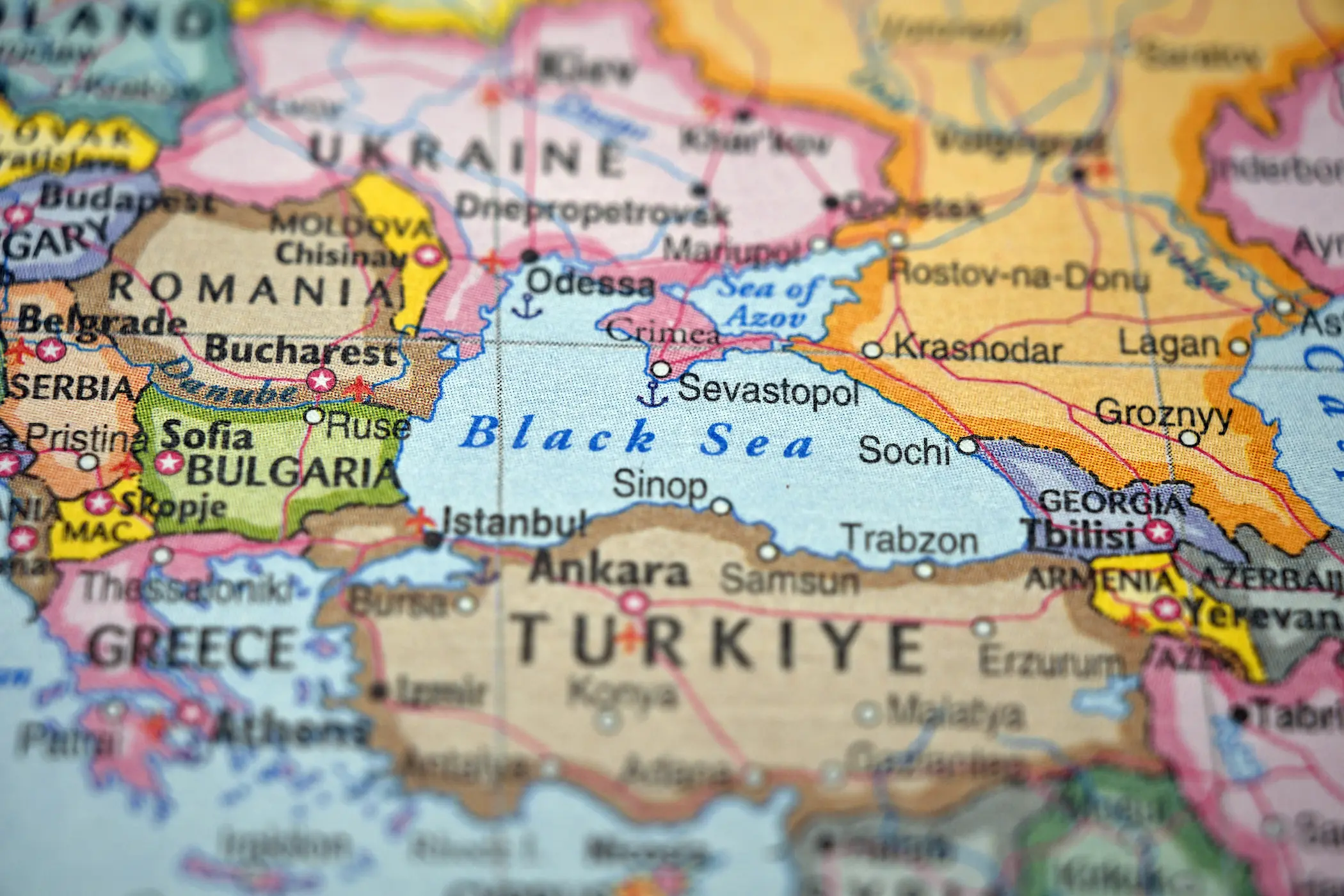
Can the Black Sea Initiative Resolve the Strait of Hormuz Crisis?
The global political and economic landscape is undergoing structural shifts following the outbreak of US and Israeli military operations against Iran in late February 2026. In response to this escalation, the Iranian leadership adopted a strategic decision to close the Strait of Hormuz to commercial shipping and oil tankers, leveraging its asymmetric capabilities, including naval mines, advanced missile systems, and drones, to transform the strait into an active military theatre.
The Strait of Hormuz constitutes a critical artery for global energy supplies, with approximately 20 million barrels of oil transiting through it daily, accounting for around 20% of global consumption, as well as shipments of liquefied natural gas (LNG). The closure has produced immediate economic repercussions, including the suspension of maritime traffic, the withdrawal of insurance coverage by shipping insurers, and a sharp surge in oil prices, which have exceeded $120 per barrel. In an effort to contain the crisis, the European Union’s High Representative for Foreign Affairs and Security Policy, Kaja Kallas, proposed a diplomatic initiative to establish a secure maritime corridor in the Strait of Hormuz under United Nations supervision to ensure the safe flow of energy supplies.
Kallas’s initiative draws on the “Black Sea Initiative” model, which enabled the export of Ukrainian grain under international guarantees. European efforts are driven by concerns that disruptions to gas supplies could undermine global food production, given their direct linkage to fertiliser manufacturing. The initiative, therefore, seeks to insulate energy vessels from military targeting to preserve global economic stability. Against this backdrop, the central question arises: to what extent can this initiative help de-escalate the current crisis, and what alternatives remain should the Black Sea model prove unviable?
Programmes
15 Mar 2026
Strait of Hormuz Closure: How Middle Eastern Crises Are Reshaping the Global Nuclear Energy Landscape
The United States and Israel launched Operation Epic Fury in late February 2026, targeting Iran’s nuclear and missile infrastructure and seeking to remove its political leadership. Although the operation achieved its initial tactical objectives with high precision, it provoked an asymmetric retaliatory response from the remaining Iranian forces. This response took the form of a comprehensive blockade of the Strait of Hormuz, the world’s most critical maritime artery for energy transport, triggering a severe global economic shock. Such disruption could propel the international system towards reducing its reliance on fossil fuels and accelerating the adoption of alternative domestic energy solutions, most notably nuclear power.
At the same time, global electricity demand is rising sharply, driven by the rapid expansion of advanced artificial intelligence infrastructure and high-performance computing facilities. This sudden disruption of fuel supplies places policymakers in major industrial economies under immediate economic and security pressures, while simultaneously exposing the profound consequences of closing the Strait. In this context, the present analysis examines the repercussions of the Strait of Hormuz's closure on global supply chains. It then develops a historical comparison with the oil price shocks of the 1970s, illustrating how those crises redirected states towards nuclear technology. The study concludes by analysing emerging regulatory and financial measures, as well as new geopolitical alignments, that are accelerating the global drive to construct nuclear reactors in 2026.
Programmes
13 Mar 2026
Countdown to Famine: Will the Strait of Hormuz Lead Iran into a Severe Food Crisis?
While global attention remains focused on the situation in the Strait of Hormuz, through which nearly twenty million barrels of crude oil pass each day, less attention is given to the potentially more significant developments occurring within Iran’s borders. As of March 2026, the military strikes carried out by the United States and Israel generated what can be described as a caloric chokepoint effect, which cannot be offset by any level of kinetic military capabilities. According to the Islamic Republic of Iran, the country’s principal vulnerability in the 21st century lies in its deep-water grain elevators, rather that its military power.
While Iran’s food supply system is logistically fragile and assumes that the country’s southern ports will always remain accessible and fully operational, however, the withdrawal of war-risk insurance and the stalling of shipping through Bandar Abbas have invalidated this assumption. Therefore, describing the current situation merely as a trade disruption is inaccurate, as it effectively represents a biological countdown.
As operational feed stocks decline to a fourteen-day supply, the resulting protein shortage poses a significant risk of domestic instability—an effect that conventional military strikes are unlikely to match.
Programmes
11 Mar 2026
The Turkey-Israel Fault Line and the Future of the Middle East
The United States and Israel's joint military campaign against Iran is upending the strategic order of the Middle East in ways that extend far beyond Tehran. The strikes have killed Iran's Supreme Leader Ali Khamenei, targeted Iran's military and nuclear infrastructure, and triggered retaliatory Iranian attacks across the region. As the war enters its second week, a second and potentially more consequential shift is taking shape. With Iran's role as the dominant pole of regional opposition to Israel now in question, a new rivalry is hardening between Israel and Turkey, one that carries different stakes, different risks, and a far more unpredictable trajectory than the confrontation the current war was designed to resolve. Understanding this emerging fault line requires examining both the structural forces pushing the two states apart and the domestic political dynamics that risk turning competitive rhetoric into irreversible confrontation.

Programmes
10 Mar 2026
How the US-Israel-Iran War Could Reshape the 2026 Midterms
The United States entered the second week of its joint military campaign against Iran on March 7, 2026, having launched Operation Epic Fury alongside Israel on February 28. Within days, the conflict had killed Supreme Leader Ali Khamenei, triggered Iranian retaliatory strikes across the Gulf, and drawn in regional powers from Bahrain to Lebanon. For the Republican Party, the war arrived at what was already an exceptionally precarious moment — one in which the historical forces of midterm politics, falling presidential approval, and a restless voter coalition had already conspired against them. The onset of a major, unpopular war has only deepened those vulnerabilities, and the question facing the GOP heading into November is no longer simply whether they will lose seats, but how many.
Programmes
10 Mar 2026
Where Does China Stand in the US-Israel-Iran War?
The U.S.-Israel and Iran War has affected the interests of many countries. In the last few days, China emerged as a significant player in these events. Beijing called for an immediate halt to the attacks by both sides and the protection of vessels passing through the Strait of Hormuz, culminating with the Chinese Foreign Minister Wang Yi pledging to send a special envoy to the Middle East for mediation.
Beijing has interconnected interests in the Middle East that are significantly affected by the war and will most likely reshape its strategic opportunities in the region, particularly in terms of energy security, trade routes, and diplomatic relations with key regional players. Beijing’s pragmatic foreign policy approach toward the region relies on protecting its economic interests and maintaining a strategic balance. So, the war could provide an opportunity for China to navigate new opportunities in the region and, consequently, expand its influence, particularly by strengthening ties with other oil-producing nations and increasing its investments in reconstruction efforts.
Likewise, China’s strategic partnership with Iran mainly revolves around oil supply and large-scale investments. The consequences of the war raise questions about the future of this relationship and the possibility that China may reshape its foreign policy toward Tehran if it faces a potential decline in Iran’s ability to sustain such interests as a result of the strain on its power after the war.