

Programmes
23 Dec 2025
Class, Declinism, and Emotional Turmoil: The Great British Migration to Dubai
Since Brexit, the United Kingdom (UK) has been experiencing a governance issue, as the Conservative Party suffered from instability due to numerous leadership changes, while the recently elected Labour Party lacks the ambition and confidence needed to effectively govern. Combined with the shocks stemming from Brexit, COVID-19, and the Russia-Ukraine War, the UK has experienced economic stagnation and the deterioration of public services, which has resulted in British nationals migrating abroad.
One of these locations is the UAE, more specifically, Dubai. There are approximately 240,000 British nationals currently living in Dubai, with more to join as there was a 420% increase in internet searches in the UK centered on moving to Dubai. Those are staggering statistics, and the number is only going to grow as more British nationals across the socio-economic spectrum continue to migrate to Dubai. However, the reasons explaining British migration to Dubai are not as simple as lower taxes, security, and great weather. One can argue the rise of British migration to Dubai can be attributed to a desire to break from a ridged class system, declinism, and emotional turmoil brought on by the cost-of-living crisis.

Programmes
12 Dec 2025
The 2025 NSS: Disengagement or Entrenchment?
The National Security Strategy (NSS) defines the guiding vision of American power and provides a window into how the United States understands the international environment, identifies its priorities, and determines the political, military, and economic tools it will rely on to protect national interests. Accordingly, the NSS shapes defence planning, informs foreign policy doctrine, guides inter-agency action, and signals to allies and adversaries the direction of U.S. engagement in an evolving global landscape.
The 2025 NSS, issued by the Trump administration in November 2025, is a clear articulation of how this administration intends to position itself in a world marked by rising geopolitical fragmentation, sharpening competition, and growing domestic constraints. Its core purpose is to translate the administration’s worldview into a coherent framework that defines what the United States will prioritise, what it will deprioritise, and under what conditions it will expend political capital, economic leverage, or military force.
For the Middle East, understanding the 2025 NSS is essential because it captures the principles shaping America’s evolving posture toward the region. The strategy’s emphasis on burden-sharing, reduced military exposure, and transactional partnerships signals a shift in expectations for regional actors, while its focus on energy security, counterterrorism, and strategic competition with external powers continues to define the contours of U.S. interests. As a formal expression of how the administration interprets threats and opportunities, the NSS provides the clearest available roadmap of Washington’s intentions—and the framework within which its decisions toward the Middle East will be made in the years ahead.

Programmes
11 Dec 2025
What If: the War Ends on Russia’s Terms
The prolonged Russia-Ukraine War has been met with futile efforts to end it by several peace plans throughout nearly four years of war. Currently, U.S. President Donald Trump appears determined to end the war by pushing a peace plan in the last few months of 2025 and negotiating with both Russian President Vladimir Putin and Ukrainian President Volodymyr Zelenskyy.
Many scenarios unfold for the aftermath of the Russia-Ukraine War. Amid the ongoing peace negotiations, driven mainly by the U.S. and Russia’s push for Trump’s 28‑point plan and Ukraine’s counterproposal through the amended 19‑point plan, a settlement favouring Russia is increasingly possible, raising the question: if such a plan is adopted, how will the Eurasian scene change?

Programmes
9 Dec 2025
NATO’s Strategic Dependence on Batteries
Across NATO, the next generation of forces is being built around a decisive shift toward replacing fuel-based systems with electricity and high-performance batteries. From unmanned systems and smart munitions to mobile command posts and sensor networks, the Alliance’s deterrence posture is becoming electric. The move promises faster deployment, reduced noise signatures, and fewer supply convoys. Yet, beneath this technological progress lies a growing structural risk.
Every step toward electrification deepens NATO’s exposure to fragile supply chains and volatile critical-mineral markets. Batteries are now the linchpin of power projection, but also a potential weak point in it. The Alliance’s ability to fight, deter, and coordinate operations could hinge on materials mined or processed far from NATO’s control. As warfare becomes increasingly digital and electric, NATO faces a strategic challenge of a new kind: not how to innovate faster, but how to secure the energy backbone of its deterrence, and prevent the tools of modernisation from becoming instruments of dependency.

Programmes
7 Dec 2025
Red Alert: Chernobyl Radiation Shield Damaged
On Feb. 14 2025, a drone struck the protective shield covering Reactor No. 4 at the Chernobyl Nuclear Power Plant, Ukraine. The attack caused a fire and damaged the steel cladding. As of Dec. 6 2025, the International Atomic Energy Agency (IAEA) has formally assessed the site and reported that the New Safe Confinement has now “lost its primary safety functions, including the confinement capability,” meaning it can no longer guarantee that radioactive material remains fully contained. Ukraine has blamed Russia for the strike, which Moscow denies, while international monitors warn that the risk to global nuclear safety is rising.

Programmes
10 Nov 2025
What If: The Next Power Race Is for Data, Not Land?
The race for global dominance is no longer fought over land, oil, or military might, it is rapidly unfolding in the realm of data. Across the world, governments are fortifying their digital borders, investing in surveillance technologies, and rewriting laws to claim ownership over the information flowing through their networks.
What emerges is a contest not for territory but for control over the data that defines modern life, who produces it, who stores it, and who decides how it is used. This silent power race is redrawing the global order, creating new hierarchies of influence built on algorithms and infrastructure rather than armies. As states weaponise information, the battle for sovereignty is shifting from physical borders to the digital terrain of human behaviour.

Programmes
14 Oct 2025
Not All Quiet on the Western Front: Europe’s Next War
“Poland is at its closest to open conflict since World War Two,” warned Prime Minister Donald Tusk, after a sudden Russian airspace violation rattled the country. On September 9, a swarm of Russian drones entered Polish skies, prompting NATO aircraft to scramble and intercept several of them. It marked the first direct encounter between NATO and Moscow since Russia’s full-scale invasion of Ukraine on February 24, 2022. While the incident might have been a test by Putin to gauge NATO’s and Europe’s response, it also raises the specter of a potential war between Poland and Russia. Given Poland’s critical role within NATO and the EU, far greater than Ukraine’s, the implications of such a conflict would place the entire continent in Jeopardy. The pressing question now is: how likely is this war to erupt, and would Europeans bear the brunt?

Programmes
9 Oct 2025
US Intelligence Support Signals a New Phase in the Russia-Ukraine War
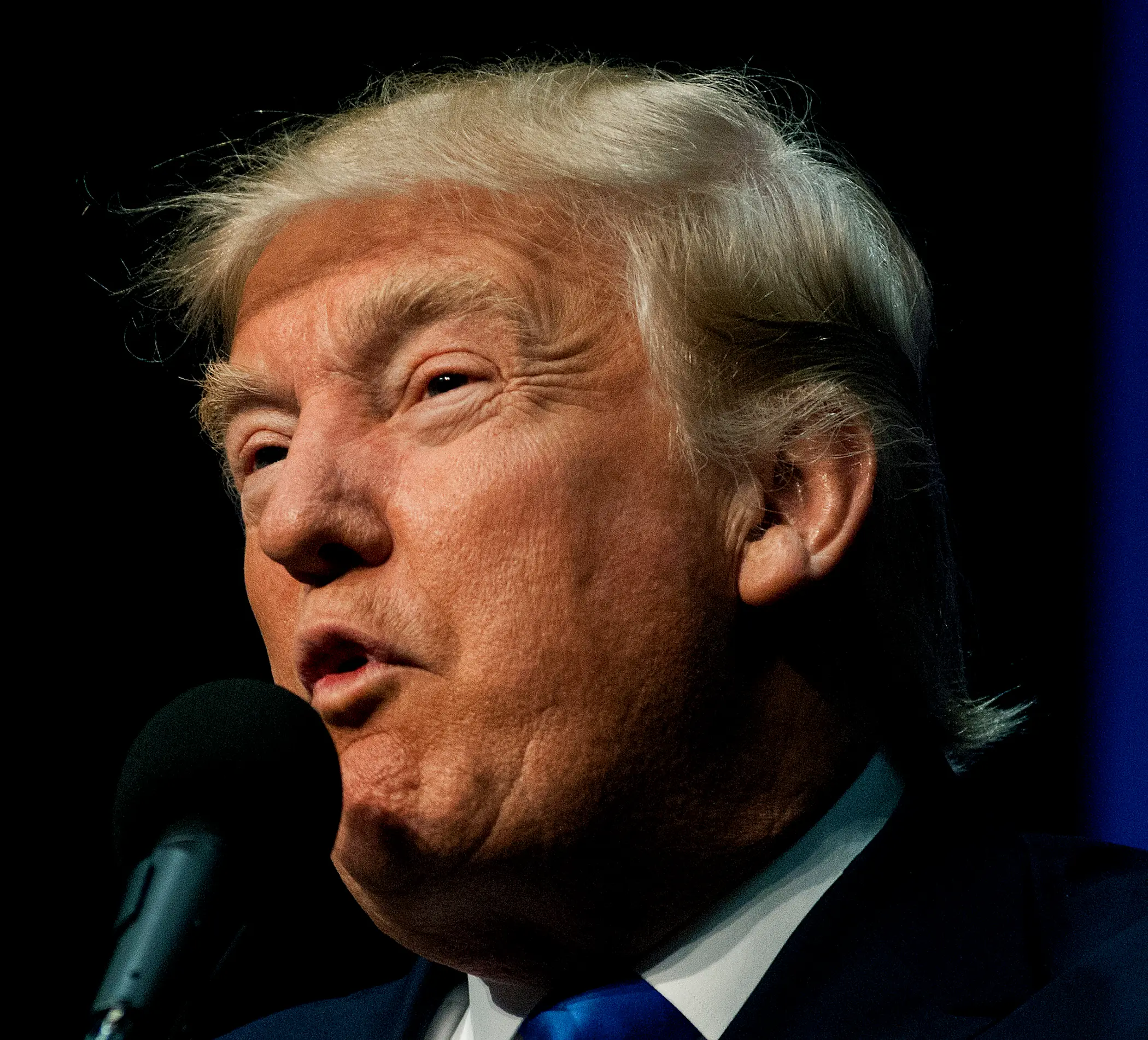
On October 1, U.S. reports stated that President Donald Trump gave the green light to provide Ukraine with intelligence information to strike deep into Russia’s energy infrastructure sites, while studying providing Kyiv with long-range weapons that can be used in such strikes. The reports also indicated that Washington is encouraging the NATO allies to take similar actions.
The U.S. has already been providing intelligence to Ukraine since the beginning of the war; however, Trump's signalling to provide more sensitive information could hold different consequences on the outcomes of the war. Since his second-term inauguration, Trump has vowed to end the Russia-Ukraine war, so does this decision come in parallel to the American President's ambition to broker a peace deal between Moscow and Kyiv, and how this might implicate the Russian and Ukrainian sides.
Publications
1 Oct 2025
Who Stands to Gain from the H-1B Visa Shake-Up?
Since taking office, U.S. President Donald Trump’s unpredictable decisions have become a puzzle to follow, let alone to anticipate. Amid this growing political turbulence, a dose of rational analysis is badly needed. His recent move on the H-1B visa program, for instance, has reverberated across the globe. Though seemingly aimed at harrassing India, the policy has instead cornered the United States itself, fueling economic strain, draining valuable talent, and unsettling the tech industry. The ripple effects are already visible in Silicon Valley and among those aspiring to join it. Yet, this turbulence also opens a window of opportunity. Nations in Europe, Asia, and the Gulf, if swift and strategic, could position themselves to attract the very talent cast aside by Washington. Still, seizing this chance is no straightforward task. It demands structural reforms, long-term vision, and proactive policies. Dislodging Silicon Valley from its pedestal is not impossible, but neither is it simple or automatic. What matters now is understanding the impact on the U.S., its economy, its talent pool, and recognizing what ambitious countries must do if they wish to challenge the world’s current tech giant.
Programmes
30 Sep 2025
An Unequal Cost: How Space Debris Deepens the Exclusion of Developing Nations from the Economies of the Future
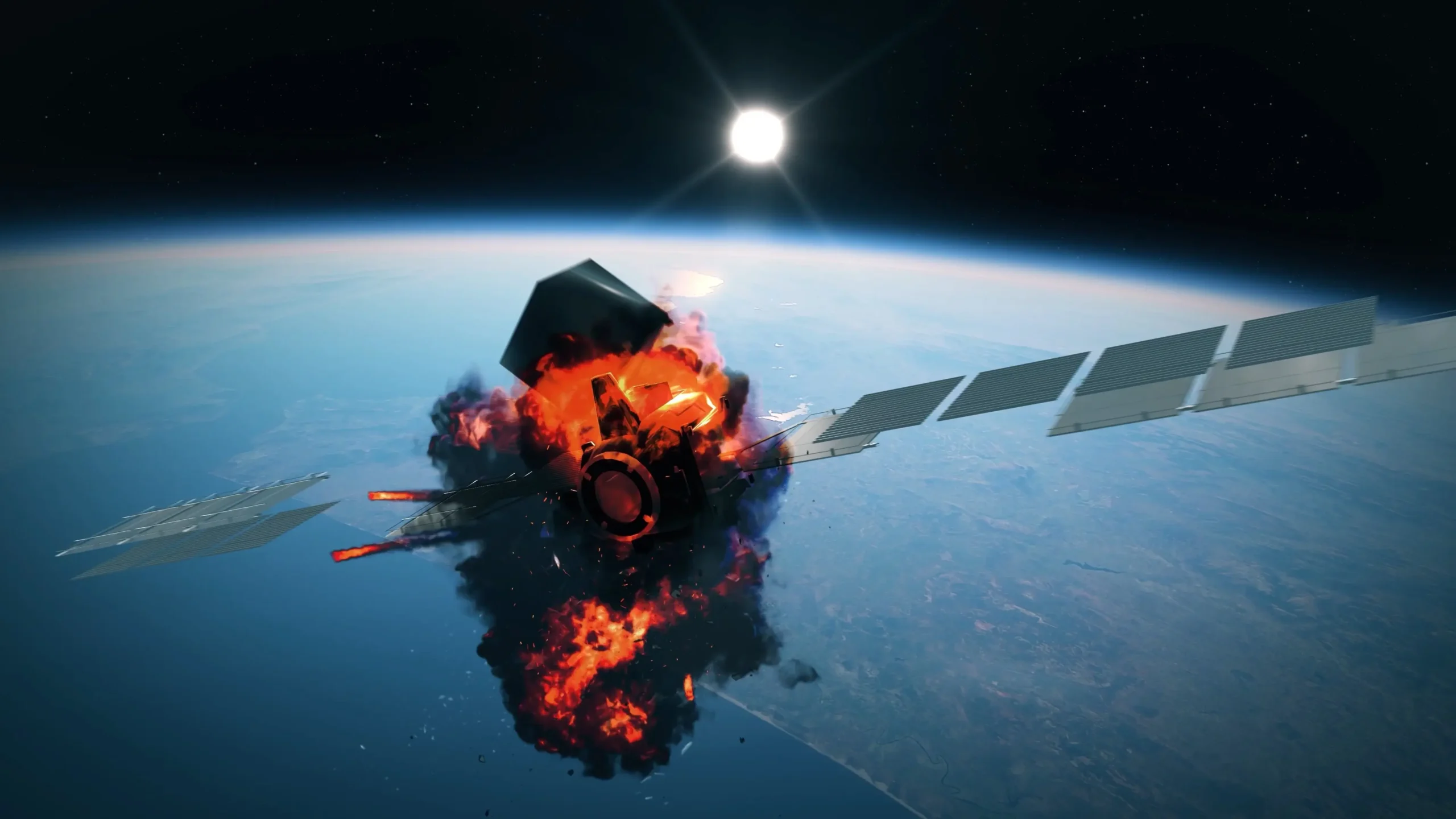
Since the launch of the first satellite in 1957, the Low Earth Orbit (LEO) has undergone a profound transformation from a near-empty frontier into a congested and polluted environment shaped by decades of human activity. Non-functional satellites, spent rocket stages, and fragmentation debris from collisions and explosions have accumulated to a mass exceeding 14,700 tons. Critical events have amplified the scale of the problem, most notably China’s Anti-Satellite Test (ASAT) in 2007 and the 2009 collision between the U.S. Iridium-33 and Russia’s Kosmos-2251, which together generated nearly one-third of all catalogued debris in LEO.
This material is unevenly distributed but highly concentrated between 750 and 1,000 kilometres, an orbital belt central to Earth Observation and communications. Objects in this altitude range can persist for centuries, while in the Geostationary Orbit (GEO) debris may remain indefinitely, underscoring the long-term persistence of the hazard. Consequently, orbital space has shifted from an open frontier to a finite and polluted resource requiring collective governance.
This study examines the economic and political dimensions of space debris. It assesses the direct costs borne by operators, the cascading risks to terrestrial infrastructure such as Global Navigation Satellite Systems (GNSS) and weather forecasting, and the disproportionate challenges facing developing nations. It concludes by analysing potential responses, ranging from mitigation strategies to Active Debris Removal (ADR), within the broader framework of international governance and global equity.

Programmes
26 Sep 2025
The Global Economic Impacts of Starlink Outages: From Operational Fragility to Pathways of Resilience
In recent years, Low Earth Orbit (LEO) satellite constellations have emerged as a transformative layer within the global digital infrastructure, marking a departure from their original role as connectivity solutions for remote regions. These systems are now embedded within the operational cores of critical sectors such as civil aviation, maritime logistics, financial markets, and defence. The clearest manifestation of this structural shift is Starlink, operated by SpaceX, which by mid-2025 had exceeded 7 million users across more than 150 countries, with exponential growth rates in high-value, latency-sensitive industries.
This rapid technological and geographical expansion has positioned Starlink as a globally integrated utility—yet one that operates outside conventional regulatory regimes. It represents a structural concentration of control over global data flows in a single, privately held entity. The dual outages that occurred in July and September 2025 exposed deep systemic vulnerabilities within the Starlink network, including software architecture fragilities and environmental sensitivities to space weather events. These incidents prompted urgent questions about the stability of a critical infrastructure layer that now underpins sectors central to national sovereignty and global economic coordination.
This report interrogates the systemic risks embedded in the global economy’s growing dependence on LEO constellations through two interlinked analytical lenses. The first is a technical-political economy perspective, which examines the underlying architecture of the Starlink network and the typology of its failure modes—both endogenous and exogenous. The second is a forward-looking, scenario-based assessment that models the potential global economic consequences of a 24-hour Starlink outage in 2032. Through this dual approach, the analysis traces the contours of a new strategic dilemma: how to govern an emergent, transnational infrastructure whose failure could trigger multi-sectoral crises at planetary scale, yet whose design and control remain entirely privatized.

Programmes
18 Sep 2025
The Semiconductor Cold War: U.S. vs. Russia, China and India
The global competition over semiconductors and related military technologies has become the central axis of great-power rivalry. The United States maintains its leadership in the global semiconductor industry, with American companies securing roughly half of the global semiconductor market. However, this dominance faces a growing challenge from China, which accounted for 20% of global semiconductor sales in 2024. Beijing’s ambition to achieve self-sufficiency in semiconductors is steadily advancing despite ongoing trade tensions and intellectual property restrictions imposed by Washington amidst the broader ‘tech war.’ China aims to reach 50% self-sufficiency in semiconductor production by the end of the year, reinforced by significant investments in R&D and market expansion by Chinese firms.
In contrast, Russia’s position in semiconductor-dependent military industries is increasingly constrained. Although Russia retains expertise in weapons design, its reliance on imported materials and advanced chip-making equipment from Western countries exposes critical vulnerabilities. Western sanctions, introduced in response to Russia’s military actions in Ukraine, have sharply limited Moscow’s access to these essential inputs. In response, Russia has sought alternative suppliers, with China emerging as its largest source of semiconductor materials. These dynamic forms part of the broader Russia-India-China (RIC) trilateral framework, underpinning Moscow’s strategic pivot toward Eastern partnerships.
Meanwhile, India is rapidly evolving as a significant player in the semiconductor sector. The country’s announcement in September of its first indigenous chip, “Vikram 32,” marks a milestone in New Delhi’s pursuit of technological self-reliance and signals India’s potential emergence as a competitor to U.S. semiconductor dominance. India’s increasing engagement with Russia and China reflects a pragmatic alignment based on mutual interests, particularly in the context of escalating policy tensions with Washington. Notably, U.S. tariffs imposed on India’s trade in Russian oil have further incentivized this trilateral collaboration.
Collectively, the China-Russia-India “troika” represents a coalition of shared interests rather than a formal ideological alliance. Should this partnership strengthen, it could significantly bolster their semiconductor manufacturing capabilities and pose a formidable challenge to the American industry. Nevertheless, lingering frictions—such as unresolved border disputes, differing economic priorities, technological gaps, and the impact of sanctions—are likely to impede seamless technological integration. The United States still wields substantial influence over India, with opportunities to attract New Delhi through increased investments, tariff reductions, and advanced technology cooperation. Ultimately, the trajectory of the RIC semiconductor partnership holds profound implications for the global order. A successful integration of this “troika” chip industry with their respective military technologies could catalyse the rise of a multipolar system, revolutionizing surveillance, air defence, drone capabilities, and the broader defence industrial base, thereby reshaping international power dynamics.