

Publications
8 Oct 2026
Opinion Polls: From a Mirror of Electoral Sentiment to an Instrument for Shaping It
Opinion polls influence the political environment they seek to measure. By shaping perceptions of electability, they affect voters’ choices, media attention, campaign funding and access to electoral competition. The paper examines how these interactions can transform polling from a means of observing electoral sentiment into an instrument for shaping it. Its central finding is that influence does not require fabricated figures: selective publication, concealed sponsorship and the presentation of uncertain forecasts as assured outcomes can turn genuine data into a misleading account of public opinion.
Evidence across several countries illustrates how this influence operates. In the 2018 US General Social Survey, 23.6% of respondents considered spending on ‘welfare’ insufficient, compared with 73.2% when the question referred to ‘assistance to the poor’, demonstrating the significance of wording. During the 2023 Republican presidential debates, the minimum polling threshold rose from 1% to 6%, illustrating how measured support can become a condition for gaining the visibility needed to attract further support. The paper also examines how electoral expectations affect financial markets, drawing on India’s 2024 election and the controversy surrounding privately commissioned polling during the Brexit referendum.
The consequences extend beyond inaccurate predictions. Favourable polling narratives can distort campaign decisions, concentrate resources and narrow the alternatives visible to voters, while disappointed expectations can be exploited to undermine confidence in elections. Artificial intelligence introduces further risks through fabricated responses and synthetic substitutes for human participants. Nevertheless, the paper distinguishes methodological error from deliberate deception and argues that effective safeguards must preserve independent polling. Disclosure of funding, questions, sampling methods and weighting assumptions, alongside responsible reporting and independent scrutiny, can help ensure that polls inform electoral choice without presenting the outcome as predetermined.

Programmes
4 Oct 2026
Food or Fuel: The Implications of Biofuels for Global Food Security
The international system faces complex geostrategic pressures that place global supply chains under unprecedented strain. Escalating military tensions, particularly disruptions to shipping through the Strait of Hormuz, are putting pressure on oil and liquefied natural gas flows. In 2025, this passage carried around a quarter of seaborne oil trade and 19% of global trade in liquefied natural gas. These developments coincide with a shift in the Russia–Ukraine conflict towards attacks on energy infrastructure, alongside tighter restrictions on Black Sea shipping and disruptions to key export routes for strategically important grains. This convergence leaves the world caught between declining oil supplies and restricted access to part of the available food supply, complicating procurement and threatening the foundations of national security.
Faced with these shortages and rising shipping costs, some major powers and emerging economies are expanding biofuel production as an instrument of national policy to ease the energy crisis, alongside pursuing environmental objectives and supporting agricultural production. Agricultural producer countries are consequently choosing to redirect part of their strategic crop output, including maize, sugar cane and palm oil, towards biofuel plants to meet transport needs. This analysis advances the hypothesis that expanding biofuels derived from food crops may heighten the vulnerability of importing countries when demand growth outstrips the capacity of production and stocks to accommodate it, while trade policies restrict exportable supplies. The scale of this effect depends on the feedstocks used, the volume diverted and the responsiveness of production. It does not apply to the same extent to fuels produced from agricultural residues or used oils.
Import-dependent countries, particularly in the Middle East and Africa, may bear the cost of these pressures through diminished food security and domestic stability. An inability to secure food can, in this context, undermine social stability and signal the risk of political crises whose severity varies according to institutional effectiveness and the capacity to protect the most vulnerable groups. This complex situation poses an urgent question: how far can importing countries withstand the convergence of energy and food policies, and what protective mechanisms can safeguard their national security as competition intensifies between the use of crops for food and for fuel?

Publications
15 Sep 2026
The Cost of Transformation: State, Economy, and Society in Trump’s Second Term
The US economy experienced a rapid macroeconomic shift marked by rising prices and slowing growth following the implementation of a 27% weighted average applied tariff rate. This policy shift triggered stagflationary indicators by mid-2026, with real GDP growth decelerating to 1.5% in the second quarter and inflation rising to an annualized 5.1%. Concurrently, monthly job creation plummeted from an average of 125,100 in 2025 to a forecasted 34,600 to 55,200 in 2026. The trade environment also underwent structural changes, most notably in agriculture, where the United States permanently lost 7.94 percentage points of the Chinese agricultural import market, largely replaced by Brazil.
At the sectoral level, agriculture and manufacturing saw divergent outcomes that masked deeper financial vulnerabilities. The agricultural sector transitioned heavily from market-earned income to federal transfers, with government direct payments surging to $44.3 billion in 2026, comprising roughly 25% to 30% of total net farm income. Despite these government bailouts, total farm sector debt reached a record $624.7 billion, accompanied by rising family farm bankruptcies. Meanwhile, the manufacturing sector saw a modest 1.93% increase in its industrial production index between March 2025 and July 2026, yet manufacturing employment actually contracted by 0.43% during the exact same period.
The long-term fiscal trajectory of the United States points toward unprecedented debt levels, driven by simultaneous revenue constraints and expanded deficit spending. Recent tax legislation is projected to add $4.7 trillion to the national deficit over a decade. Consequently, federal debt held by the public is projected to eclipse the historic 1946 World War II peak of 106%, reaching 108% of GDP by 2030 and climbing to 175% by 2056. Over this extended horizon, net interest payments are forecast to become the largest single line item in the federal budget, while the United States' projected share of global output on a purchasing-power basis declines from 20.42% to 13.88%.
This publication was written in August 2026
Publications
14 Sep 2026
Shadow Leverage Issue 4: Iran’s Nuclear Programme
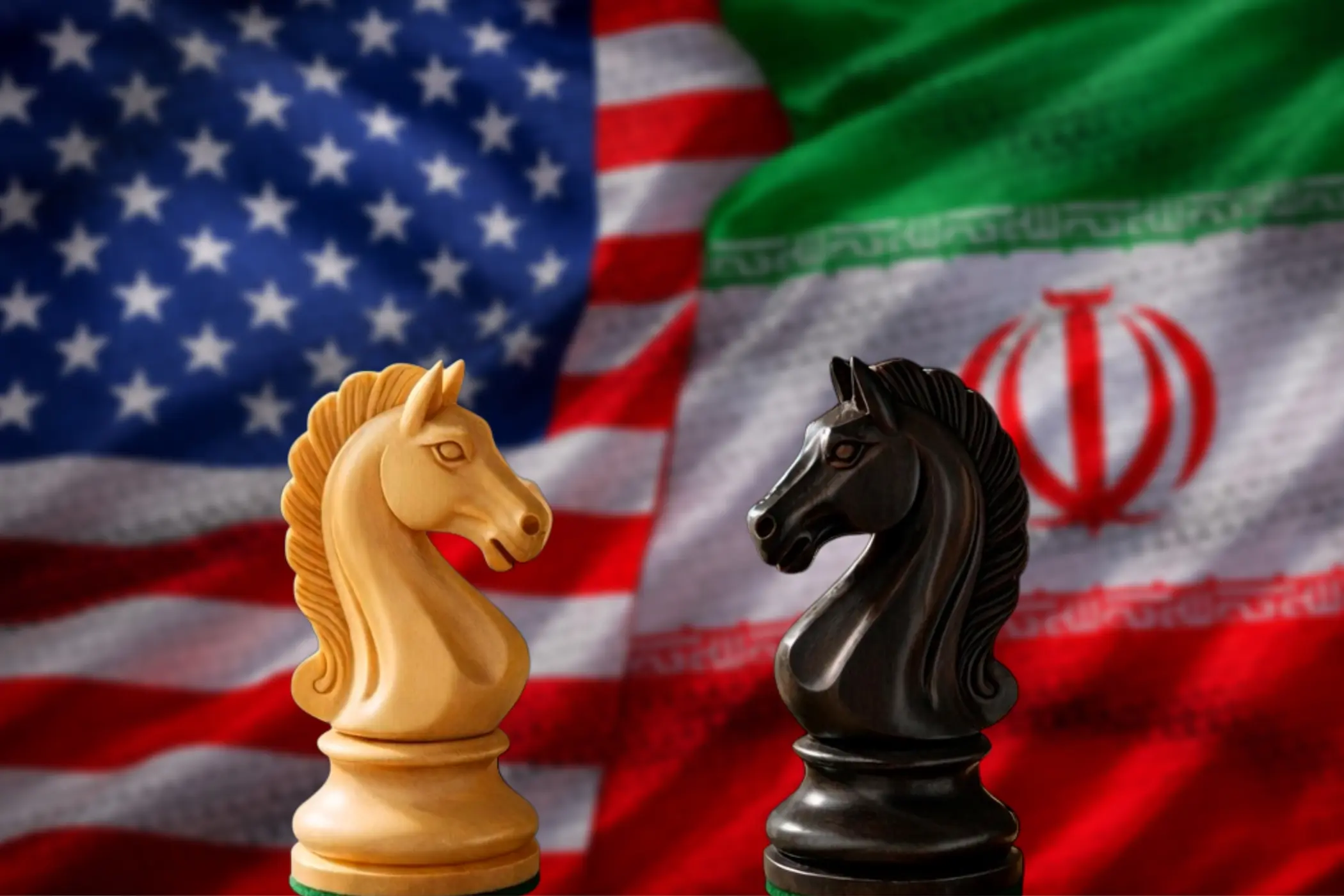
The Memorandum of Understanding did not constitute a comprehensive or definitive settlement of the nuclear issue. Rather, it served as a temporary truce to freeze military strikes and maritime and nuclear threats, buying time to negotiate a comprehensive agreement that would address the enrichment crisis at its roots. These developments come in the wake of the collapse of the 2015 nuclear agreement following the United States' withdrawal in 2018, which gave Tehran considerable room to expand uranium enrichment, restrict international inspections and accumulate large quantities of uranium enriched to levels approaching those required for the production of a nuclear weapon.
Against this backdrop, the nuclear programme stands out as the Iranian leadership's principal bargaining chip. Although Tehran does not currently possess a nuclear weapon, it has accumulated the technical expertise, established the necessary infrastructure and secured the enriched uranium needed to produce one within a relatively short period should the political decision be taken to do so. This reality underscores that Iran's leverage at the negotiating table is no longer merely theoretical. It is tangible leverage, rooted in Tehran's ability to move rapidly towards weaponisation.
On the operational front, despite US and Israeli strikes targeting nuclear facilities inside Iran, assessments have confirmed only limited damage. Tehran is still strongly believed to retain substantial capacity to continue uranium enrichment. However, experts remain divided over the true extent to which the attacks have set back its nuclear programme. These assessments indicate that military action alone has failed to resolve the nuclear issue, naturally increasing the likelihood of an eventual resumption of negotiations and a return to the diplomatic track.
Against this complex backdrop, a fundamental question remains: will the terms governing the nuclear issue be revised in any future memorandum, or will they remain unchanged from those set out in the "Islamabad Memorandum"? If the parties move towards introducing new amendments, how far can each side go in making concessions to negotiate an end to this chapter?

Programmes
7 Sep 2026
Congress Has a New Invisible Lobbyist: The Rise of the Political Chatbot
Congress now has a lobbyist that never registers, never discloses a client, and never leaves a paper trail, and it sits open in a browser tab on nearly every staffer's desk. The House Office of Legislative Counsel, the institution responsible for turning policy ideas into legally binding text, has reportedly been inundated with AI-generated bill proposals so riddled with incorrect statutory references and sloppy drafting that its lawyers now spend more time fixing them than they would spend writing the bills from scratch. Around the same time, it became clear how far this had spread. Members of Congress and their staff are increasingly using systems such as ChatGPT, Claude, Copilot, and Gemini for policy research, legislative drafting, speeches, and constituent replies.
On the surface, this looks like any workplace chasing efficiency. But Congress is not any workplace. The information lawmakers receive, the way problems get framed, and the exact language that ends up in statute can affect millions of people. So the real question is not whether chatbots make congressional offices faster. It is what happens once the systems helping policymakers research, frame, and write legislation become an active participant in the political process itself.

Programmes
5 Sep 2026
What If: AI Erases the Books It Learns From?
The latest AI boom is creating an unusual paradox. The more AI companies need high-quality information, the more aggressively they are buying the physical books that contain it, and in some cases destroying those books once their contents have been absorbed. In recent months, independent booksellers in the United States, Britain, Europe, and elsewhere have reported sudden surges in unexplained bulk purchases, sometimes involving hundreds of unrelated and obscure titles. Some of these books are subsequently being sent to facilities where their bindings are removed, their pages rapidly scanned, and the remains discarded or recycled.
The scale could become far larger than the cases already exposed. ISBNdb, a major book database, now facilitates purchases ranging from 1,000 to one million books per order, while booksellers have described previously unsold titles suddenly becoming highly sought after. At the same time, an Amazon facility in Las Vegas has been identified as a site where employees described cutting book spines, scanning loose pages, and disposing of the resulting paper. The controversy raises a question that extends well beyond publishing. What happens if the race to build better AI systematically removes the physical sources from which that intelligence was created?

Programmes
4 Sep 2026
Water Wars in the Digital Age: Is Technology Coming at the Cost of Our Water Security?
Humanity today confronts one of the most striking and complex paradoxes of the modern age. While the world's leading technology companies race to present artificial intelligence as a silver bullet for saving the planet and addressing the climate crisis, a troubling physical reality is quietly taking shape beneath the surface. The very technology that promises a sustainable future is silently consuming one of the most vital and scarce resources on which human survival depends on freshwater.
This profound contradiction between the dazzling promises of the digital age and harsh environmental realities goes beyond a passing technical problem. It raises a fundamental strategic and geopolitical question: will the boundless ambitions of artificial intelligence ultimately collide with the planet's hard physical limits? This silent struggle between technological advancement and the scarcity of natural resources raises a critical question: which will ultimately give way to the other, the immense power of data servers or the life-sustaining drops of water?

Programmes
26 Aug 2026
Beyond PEPFAR: How America’s Aid Retreat Is Reshaping Global Health Governance
For over two decades, The President's Emergency Plan for AIDS Relief (PEPFAR) stood as the clearest example of what concentrated donor power could do: one country's political will, translated into billions of dollars a year, credited with saving more lives than any single global health program in history. That era is now ending, not through a managed transition but through an abrupt, largely unplanned withdrawal that began within days of the second Trump administration taking office in January 2025. The story that follows is not simply about cuts to HIV/AIDS funding, but it is about what happens when the architecture of global health financing loses its dominant pillar, who scrambles to fill the resulting vacuum, whether the countries left exposed can build the fiscal and institutional capacity to stand on their own, and whether the system that emerges is more fragile or more resilient than the one it replaces. The transition is already producing real costs: closed clinics, disrupted treatment, and rising infections in countries that had spent years bringing their epidemics under control. Besides, it is also accelerating financing reforms, regional cooperation, and domestic manufacturing that donor dependence had, for twenty years, made largely unnecessary. Both of these things are true at once, and this analysis traces both.
Programmes
26 Aug 2026
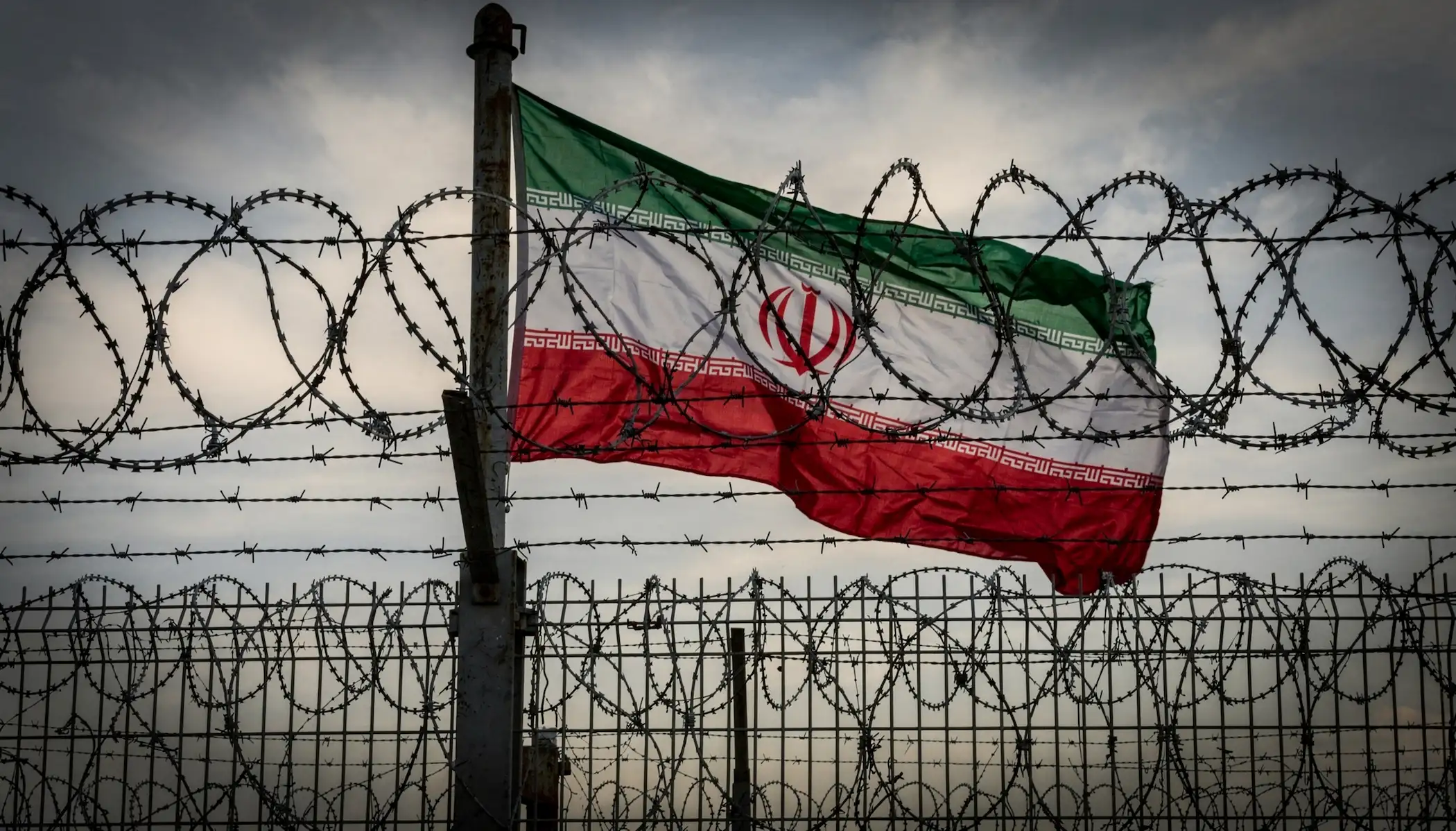
Economic Outcast: The Limits of U.S. Secondary Sanctions Against a China-Insulated Iranian Economy
On 24 August 2026, the US Treasury announced an economic enforcement campaign under the name Operation Economic Outcast, designating close to 60 entities, individuals and vessels and issuing five unprecedented sectoral determinations under Executive Order 13902.1 Treasury Secretary Scott Bessent described the campaign as a comprehensive economic onslaught intended to sever every artery feeding the Iranian economy, while Iran's Minister of Economy, Ali Madanizadeh, dismissed it as an act of economic terrorism, insisting that his country has its own instruments and knows the rules of the game.
The significance of the campaign extends well beyond the number of designations. Washington is shifting its weight away from penalising Iranian entities and towards pursuing intermediaries in third countries: independent Chinese refineries, Gulf trading and exchange houses, and settlement channels operating outside the dollar. Yet the record since 2012 reveals a pattern that is close to invariable: sharp friction imposed from the American side, followed by structural Iranian adaptation, in which Iranian exports survive and the American stock of coercive power erodes.
This analysis therefore sets out to dissect the legal architecture of the campaign and identify what is genuinely new within it, then to test its six enforcement tracks against the structural obstacles Tehran has accumulated across four successive waves of sanctions, and finally to estimate the likely impact on the volume of Iranian exports, on the discount imposed on its crude and on the price path, while measuring the cost of compliance that financial and logistics hubs will have to absorb.

Programmes
25 Aug 2026
Diplomacy without Resolution: What Comes After the 60-Day Deadline?
The expiry of the 60-day timeframe stipulated in the Memorandum of Understanding has left the Middle East facing an exceptionally complex geopolitical vacuum, following the failure to forge a strategic agreement that would either defuse tensions or secure the full reopening of the Strait of Hormuz. This does not necessarily signal a sudden or dramatic collapse in negotiations. Rather, it raises a fundamental strategic question about what comes next. The region appears to be entering a calculated tactical transition from conventional diplomacy to a bitter phase of brinkmanship and mutual attrition between Washington and Tehran. As a result, maritime security in one of the world’s most vital waterways, through which approximately 21 million barrels of oil pass each day, equivalent to 20% of global oil consumption, together with around 20% of global liquefied natural gas trade, is increasingly subject to volatile political calculations.
Understanding US conduct in this crisis requires a careful examination of two seemingly contradictory, yet ultimately complementary, perspectives. President Trump’s insistence that there is no pressing timetable for resolving the crisis can be understood as part of a broader doctrine of tactical manoeuvre. Washington is effectively weaponising time to exert systematic economic pressure, sustained by the continuing naval blockade of Iranian ports and an intensification of sanctions. The strategic objective is to drive the Iranian economy towards breaking point and compel Tehran to make substantive concessions, while sparing the US the costs and risks of an open military confrontation. A parallel and more probing assessment, however, suggests that this tactical calm conceals a classic dilemma that sharply constrains US options. Full-scale military escalation would carry prohibitive security and financial costs, potentially driving maritime insurance premiums and energy futures into double-digit surges and placing global supply chains at risk. Yet acquiescing to Tehran’s terms would effectively subordinate international navigation to Iranian will. The current stalemate therefore amounts to little more than an enforced freeze, reflecting institutional frustration at the absence of effective surgical solutions.
On the other side of the strategic equation, Tehran has been far from a passive recipient of pressure. Instead, it has devised a counter-strategy that seeks to redefine the rules of engagement and weaponise geography as a potent source of negotiating leverage. In a particularly consequential move, Iran has succeeded, at least temporarily, in shifting international attention away from the complexities of its nuclear ambitions and uranium enrichment programme, while exploiting maritime chokepoints as an instrument of immediate coercive pressure. Tehran has transformed control over the flow of global trade through the Strait of Hormuz into a decisive bargaining instrument, demonstrating its ability to disrupt global geoeconomic calculations. Iran’s brinkmanship is clearest in the far-reaching conditions it has set for reopening the strait. Rather than limiting its demands to lifting the blockade, Tehran has raised the stakes by calling for the withdrawal of US forces and payment of financial compensation, while insisting on exclusive security control over the waterway and threatening to impose sovereign transit fees. Such maximalist escalation does not necessarily indicate an expectation that all these gains can be secured immediately and in a single settlement. Instead, it is intended to engineer a new geopolitical reality that affords Iranian negotiators greater room for trade-offs and forces the US administration onto the defensive.

Programmes
19 Aug 2026
Digital Abundance, Experiential Scarcity, and the New Economics of Cinema
The theatrical performance of Christopher Nolan’s The Odyssey in July 2026 is a useful lens on a broader shift in media economics, though the film's box office alone cannot prove a structural thesis. While popular discourse frames the film's financial momentum as an isolated creative triumph, a microeconomic and corporate finance reading suggests a more durable market reallocation is underway: in an entertainment ecosystem saturated by digital abundance and on-demand streaming, consumer and studio spending appear to be reallocating toward physically differentiated experiences that are difficult to replicate digitally. This is best treated as a working hypothesis supported by suggestive evidence, not an established fact, one blockbuster’s run is not, by itself, proof of structural change.
This migration is commercially relevant to IMAX Corporation (NYSE: IMAX), whose model separates a broadly scalable global digital network from an ultra-scarce fifteen-perforation seventy-millimetre analogue footprint. Distinguishing these two tiers helps isolate how digital commoditization pressures studio differentiation strategy, shifts consumer willingness to pay, and concentrates box-office economics within a small number of specialized network operators, while also, exposing IMAX to risks that a purely optimistic reading tends to omit.
Publications
18 Aug 2026
Shadow Leverage Issue 3: The Regional Proxy Dilemma
Negotiations between Washington and Tehran are entering an increasingly complex strategic juncture, with most of the 60-day timeframe established under the "Islamabad Truce" having elapsed without a decisive agreement. This has been accompanied by renewed hostilities and the Strait of Hormuz once again closing to international shipping.
These developments on the ground coincide with intensive international diplomatic efforts to contain the repercussions of an open military conflict that has clearly weighed on regional and global economic growth.
At the heart of this negotiating landscape is the conspicuous absence of the regional proxy issue from both the draft preliminary agreement and the current talks. Rather than signalling that the issue has been sidelined, this absence raises fundamental questions about the future of the complex network that has for decades formed a central pillar of Iran's deterrence doctrine.
Current political dynamics suggest the proxy issue is no longer a secondary matter that can be deferred or ignored. Instead, it has become a structural fault line that cuts across each side's conception of security and stability, as well as the limits of any viable settlement.
Its exclusion from the initial formulations reflects a clear recognition of how difficult it would be to incorporate the issue without directly confronting red lines at the intersection of Iran's deterrence doctrine, the US vision of regional security, and Israel's efforts to translate military pressure into irreversible negotiating gains.
The dilemma takes on even greater significance in light of recent macroeconomic analyses indicating that the costs of proxy involvement have extended well beyond direct military losses, striking at the heart of the global economy. Proxy-related operations along critical maritime corridors, particularly in the Red Sea, have severely disrupted supply chains and inflicted tens of billions of dollars in losses on international trade through unprecedented surges in shipping and insurance costs. They have also created unconventional threats to the security of digital infrastructure, most notably subsea fibre-optic cable networks.
Security experts emphasise that the structural attrition the Axis of Resistance suffered during the intense confrontations of 2024 and 2025 prompted Tehran's leadership to reassess its tactics and instruments, but not to abandon them.
The crisis stems from a fundamental divergence in the actors' perspectives. Iran regards its network of proxies as a forward line of defence and an integral component of its national security, integrating these groups with its missile and drone capabilities. Washington and Tel Aviv, backed by regional powers, by contrast, view dismantling and disarming these groups as a mandatory precondition for any new regional security architecture.
This reality places the proxy issue at a critical intersection between three complex levels: Iran's pursuit of strategic depth for its defence; US efforts to neutralise sources of asymmetric threat; and regional and international concerns that link market stability and freedom of navigation to ending the activities of these groups around maritime chokepoints and in the Eastern Mediterranean. Any settlement that fails to define the place and functions of these proxies would therefore amount to little more than a fragile truce vulnerable to rapid erosion.
This section examines the divergent perspectives of the key actors on the regional proxy crisis. It assesses how these competing positions may clash or converge behind closed doors at the negotiating table. The paper asks a central question: will these discussions translate into strategic trade-offs that underpin a comprehensive and sustainable settlement, or will divergence between the parties' red lines reduce the anticipated agreement to little more than a temporary tactical freeze before an even more violent round of conflict?
This issue was written on August 2, 2026