

The global political and economic landscape is undergoing structural shifts following the outbreak of US and Israeli military operations against Iran in late February 2026. In response to this escalation, the Iranian leadership adopted a strategic decision to close the Strait of Hormuz to commercial shipping and oil tankers, leveraging its asymmetric capabilities, including naval mines, advanced missile systems, and drones, to transform the strait into an active military theatre.
The Strait of Hormuz constitutes a critical artery for global energy supplies, with approximately 20 million barrels of oil transiting through it daily, accounting for around 20% of global consumption, as well as shipments of liquefied natural gas (LNG). The closure has produced immediate economic repercussions, including the suspension of maritime traffic, the withdrawal of insurance coverage by shipping insurers, and a sharp surge in oil prices, which have exceeded $120 per barrel. In an effort to contain the crisis, the European Union’s High Representative for Foreign Affairs and Security Policy, Kaja Kallas, proposed a diplomatic initiative to establish a secure maritime corridor in the Strait of Hormuz under United Nations supervision to ensure the safe flow of energy supplies.
Kallas’s initiative draws on the “Black Sea Initiative” model, which enabled the export of Ukrainian grain under international guarantees. European efforts are driven by concerns that disruptions to gas supplies could undermine global food production, given their direct linkage to fertiliser manufacturing. The initiative, therefore, seeks to insulate energy vessels from military targeting to preserve global economic stability. Against this backdrop, the central question arises: to what extent can this initiative help de-escalate the current crisis, and what alternatives remain should the Black Sea model prove unviable?
The Black Sea Initiative as a Model for Insulating Trade from Conflict
The Black Sea Initiative, signed on July 22, 2022 in Istanbul, constitutes an international agreement aimed at securing the export of Ukrainian grain through the ports of Odesa, Chornomorsk, and Yuzhny, whose operations had been suspended due to the conflict with Russia. The success of this arrangement rested on a preventive imperative: averting a further deterioration in global food supply shortages, which incentivised the conflicting parties to accept a temporary cooperative mechanism designed to safeguard supply chains, independently of ongoing military operations in other theatres.
To ensure the initiative’s sustainability, the agreement was anchored in a structured administrative and monitoring framework by establishing a Joint Coordination Centre in Istanbul, comprising representatives from Russia, Ukraine, Turkey, and the United Nations. The centre was tasked with regulating commercial navigation and overseeing compliance with the agreed demilitarisation of designated maritime corridors. The arrangement also incorporated formal written commitments not to target commercial vessels, alongside the designation of buffer zones to minimise the risk of military friction.
The United Nations acted as the diplomatic guarantor of the agreement, providing the legal and political cover for its implementation without extending direct naval protection, while retaining responsibility for intervening to manage emerging disputes between the parties. In parallel, Turkey assumed the role of mediator and host state, facilitating the operational environment necessary to execute the required logistical arrangements.
At the procedural level, an inspection regime was implemented requiring vessels travelling to and from Ukrainian ports to halt in Turkish territorial waters for examination by joint teams, in order to verify the absence of military equipment and confirm that cargoes were limited to food commodities and fertilisers. Vessels were also mandated to maintain continuous operation of tracking and communication systems, enabling the coordination centre to monitor their routes via radar and ensure adherence to designated safe corridors. This framework effectively separated commercial shipping lanes from ongoing military operations.
The agreement was extended multiple times throughout 2022–2023; however, with each renewal, Moscow signalled the possibility of withdrawal, conditioning its continued participation on the easing of restrictions affecting its exports of food and fertilisers, as well as banking transactions, insurance, and shipping. The arrangement operated intermittently for nearly a year, during which more than 32 million metric tonnes of grain were exported before Russia withdrew in July 2023. Moscow justified its decision by citing the failure to implement a parallel agreement facilitating its own food and fertiliser exports, although the withdrawal also coincided with a Ukrainian drone strike on the Kerch Bridge, which Russia invoked as an additional pretext.
Structural Constraints Facing the European Initiative to Secure the Strait of Hormuz
The European position on the Strait of Hormuz crisis is grounded in the assessment that disruptions to energy supplies constitute a direct threat to global economic stability and food security, given the central role of natural gas in fertiliser production. Accordingly, the European proposal rests on the assumption that the conflicting parties can be persuaded to decouple energy trade from ongoing military operations, with the objective of establishing a demilitarised maritime corridor.
However, assessing this proposal against the experience of the Black Sea Initiative reveals fundamental structural divergences. The grain arrangement was ultimately predicated on a degree of restraint among participating parties, a commitment that Moscow abandoned once it no longer aligned with its strategic interests. The initiative was also shaped by exceptional conditions, including a limited geographical scope, the presence of an inspection mechanism in a neutral third country, and the inherently humanitarian nature of the commodity, which made disruption carry high political costs. By contrast, the Strait of Hormuz lacks these facilitating factors, as energy resources are classified as core economic drivers underpinning strategic capabilities, thereby rendering them legitimate military targets in the context of an open conflict.
At the diplomatic level, the initiative requires binding security guarantees from the United States, Israel, and Iran. This requirement, however, conflicts with Tehran’s use of the Strait’s closure as an instrument of economic leverage. This posture is reflected in the selective enforcement of the blockade, whereby Iranian authorities permit the passage of vessels affiliated with neutral or non-hostile states while targeting those linked to their adversaries. Consequently, consenting to the establishment of a universally accessible safe corridor would deprive Tehran of one of its principal strategic tools, rendering the incentive structure underpinning this crisis fundamentally different from that observed in the Black Sea context.
In parallel, the establishment of a secure corridor would necessitate a suspension of military operations within the designated area, a condition that runs counter to the objectives of ongoing US and Israeli operations targeting Iranian infrastructure along key maritime routes. From a legal perspective, the right of “transit passage” guaranteed under the United Nations Convention on the Law of the Sea remains contested in situations of armed conflict, particularly as Washington and Tel Aviv justify their actions within the framework of self-defence. Accordingly, the implementation of such an initiative would require the development of a novel international legal framework granting commercial immunity within an active theatre of operations, a prospect that remains difficult to realise in the absence of mutual trust.
In addition, the European proposal has considered expanding the geographical scope of Operation Aspides, originally launched to safeguard navigation in the Red Sea, to include the Arabian Gulf. However, this approach has met with broad reservations among European capitals, as German officials have questioned the tactical viability of deploying limited European forces in a theatre already characterised by a substantial U.S. military presence, stressing the need for greater clarity regarding the U.S. strategic posture before engaging in operations that could trigger uncontrollable escalation.
This position was echoed in statements from the Italian side, which underscored that European missions lack both the legal mandate and the military capabilities required to operate in a complex environment such as the Strait of Hormuz. Moreover, the requirement to secure consensus among all 27 EU member states to modify the mission’s mandate constitutes a significant political constraint. These positions align with the British approach, which supports freedom of navigation while avoiding entanglement in a broader regional confrontation. Taken together, these dynamics indicate that the European initiative is constrained by a geopolitical reality that limits its ability to compel the parties to make the concessions necessary for stabilising global energy markets.
Pathways for Circumventing the Crisis
In light of the political and military constraints that preclude a direct replication of the Black Sea model in the Strait of Hormuz, the focus shifts toward formulating alternative approaches that adapt to the region’s geopolitical realities while preserving the core principles of joint management and secure corridors. The first pathway entails establishing a conditional and selective transit mechanism limited to commercial vessels affiliated with neutral states not involved in the conflict and destined for markets that Tehran does not classify as hostile. The viability of this approach depends on the engagement of intermediary states capable of maintaining balanced channels of communication with both Iran and Western actors, thereby facilitating agreement on a workable diplomatic framework.
In this context, Oman and China emerge as potential intermediaries capable of managing such a complex mechanism. Given its strategic location at the entrance to the strait and its established record of mediating between the United States and Iran, Oman could host a coordination and monitoring centre in Muscat under United Nations supervision to ensure transparency. This unit would be tasked with receiving transit requests from neutral vessels and coordinating with Iranian and US authorities to facilitate their passage within designated time windows. The inclusion of China constitutes a critical variable in this equation, given its economic ties and strategic interests: its substantial reliance on Gulf energy supplies, alongside Iran’s dependence on oil export revenues to Beijing, confers on it significant leverage to reinforce these efforts and incentivise Tehran to permit the transit of non-belligerent vessels.
In parallel with diplomatic efforts, the second pathway centres on activating alternative overland routes by maximising the utilisation of existing pipeline networks across the Gulf. This includes the Saudi pipeline transporting crude from the eastern region to Red Sea ports, as well as the UAE’s strategic pipeline linking inland fields to the Port of Fujairah on the Gulf of Oman, thereby bypassing the Strait of Hormuz. Although the combined maximum capacity of these pipelines, even after expansion, ranges between 4 and 5 million barrels per day, compared to roughly 20 million barrels that previously transited the strait, they nonetheless constitute a critical lifeline for sustaining a portion of global energy flows. However, the viability of this pathway depends on deploying advanced defensive systems to protect this infrastructure from potential aerial or missile strikes by Iran, given its status as strategic economic corridors.
The third pathway, which is essential for stabilising markets, lies in rapid economic intervention through the release of strategic petroleum reserves. Early indications of this approach have emerged with the International Energy Agency’s approval to release 400 million barrels, alongside the United States administration’s withdrawal of 172 million barrels from its own reserves. While this measure does not constitute a structural solution, given the finite nature of reserves and the operational constraints associated with their deployment, it plays a critical role in containing price volatility and mitigating immediate economic repercussions for importing states. More importantly, it creates a temporal buffer for regional and international intermediaries to develop a conditional transit mechanism in a controlled and deliberate manner.
The fourth pathway would be the recourse to naval escorts, whereby warships are deployed to protect energy tankers, represents a historically grounded option, most notably embodied in Operation Earnest Will, conducted by the U.S. Navy between 1987 and 1988 during the “Tanker War.” The operation followed Iraqi attacks on Iranian oil facilities and tankers in 1984 and stands as the largest US naval escort mission since the Second World War. At the time, the Reagan administration approved the reflagging of 11 Kuwaiti tankers under the U.S. flag to ensure their protection, driven by efforts to contain Soviet influence and secure freedom of navigation. Despite these measures, the tanker MV Bridgeton struck an Iranian mine during its maiden escorted voyage, illustrating at an early stage Tehran’s reliance on asymmetric tactics, including naval mines, fast attack craft, and Silkworm missiles, to disrupt convoy routes.
Despite the apparent similarities between the two periods, the strategic and legal parameters in 2026 differ fundamentally. In 1987, Washington was not a direct party to the conflict but operated as a protective force under an international legal framework provided by United Nations Security Council Resolution 598. In contrast, Iran avoided direct confrontation with the US Navy in order to prevent large-scale military retaliation, instead relying on harassment tactics targeting unescorted vessels. The effectiveness of deterrence at the time was rooted in Tehran’s assessment that engaging US naval formations would trigger disproportionate retaliatory strikes, a calculation that helped to constrain, though not entirely eliminate, attacks.
In the current landscape, however, the security environment confronting any naval coalition is characterised by a high degree of technological and geopolitical complexity. The Islamic Revolutionary Guard Corps has developed its operational doctrine to incorporate a comprehensive anti-access and area denial (A2/AD) architecture designed to impose substantial costs on conventional naval forces operating in confined waters. This arsenal includes dense networks of coastal cruise and ballistic missiles, swarms of fast-attack craft, and unmanned, explosive-laden vessels. It is further reinforced by the adaptation of commercial ships into platforms for launching drones and underwater robotic systems. This level of preparedness was underscored by Iran’s naval exercise “Smart Control of the Strait of Hormuz” in February 2026, which served as a direct rehearsal for countering hostile maritime manoeuvres.
The intensified threat posed by naval mines constitutes the foremost operational challenge at present. Unlike the limited minelaying capabilities of the 1980s, Tehran now possesses a diversified deployment capacity, utilising conventional submarines and small craft to scale up mine emplacement. In response, US forces have reportedly destroyed 16 Iranian vessels designated for minelaying after detecting their activity in the strait. Conducting commercial convoys through a mined corridor, under simultaneous multi-vector threats from missiles and drones, presents a markedly higher risk environment than the harassment tactics observed in 1987. US officials have indicated that adopting direct escort operations would expose naval assets to risks far exceeding those associated with conducting strikes from stand-off distances, rendering any attempt to replicate the historical model fraught with operational constraints that could undermine its effectiveness.
Conclusion
The principal challenge in applying the Black Sea model to the Strait of Hormuz crisis lies in the fundamental divergence between the nature of the commodities transiting the two corridors. While the Black Sea route was designed to safeguard the flow of humanitarian goods, including agricultural products and fertilisers, in response to global food security imperatives, a factor that incentivised Russia’s temporary compliance, oil and gas supplies lack a comparable immediate humanitarian dimension. Consequently, the transit of energy resources does not command the same level of mobilisation from public opinion or international institutions, thereby limiting the scope of diplomatic pressure that can be exerted on Tehran to accept a similar initiative and, in turn, reducing the political cost associated with maintaining the closure of the strait.
The evolving trajectories of the current crisis, coupled with the limited effectiveness of diplomatic initiatives, underscore a decline in the efficacy of international maritime law frameworks and United Nations conventions in confronting direct geopolitical confrontations between regional and global powers. The stagnation of the European proposal for secure corridors highlights the difficulty of insulating strategic commodities, such as energy, from ongoing military operations through multilateral resolutions, particularly as the conflicting parties increasingly leverage geographical and economic factors as instruments of coercion. This institutional erosion raises substantive questions regarding the capacity of Western security architectures in the Middle East to safeguard vital trade routes without becoming entangled in prolonged military engagements.
The evolving trajectories of the current crisis, coupled with the limited effectiveness of diplomatic initiatives, underscore a decline in the efficacy of international maritime law frameworks and United Nations conventions in confronting direct geopolitical confrontations between regional and global powers. The stagnation of the European proposal for secure corridors highlights the difficulty of insulating strategic commodities, such as energy, from ongoing military operations through multilateral resolutions, particularly as the conflicting parties increasingly leverage geographical and economic factors as instruments of coercion. This institutional erosion raises substantive questions regarding the capacity of Western security architectures in the Middle East to safeguard vital trade routes without becoming entangled in prolonged military engagements.
References
“EU to Discuss Bolstering Mideast Naval Mission amid Iran War Turmoil.” Hindustan Times, accessed 17 March 2026. Available on: https://www.hindustantimes.com/world-news/eu-to-discuss-bolstering-mideast-naval-mission-amid-iran-war-turmoil-101773615048544.html.
“Germany Sceptical about Expanding EU Operation Aspides in Strait of Hormuz.” U.S. News & World Report, 15 March 2026. Available on: https://www.usnews.com/news/world/articles/2026-03-15/germany-sceptical-about-expanding-euoperation-aspides-in-strait-of-hormuz.
Asharq Al-Awsat. “EU’s Kallas Floats Black Sea Model to Unblock Strait of Hormuz.” Asharq Al-Awsat English, 17 March 2026. Available on: https://english.aawsat.com/world/5251801-eus-kallas-floats-black-sea-model-unblock-strait-hormuz
Deyermond, Ruth. “Ukraine–Russia Grain Deal: Success or Failure?” Wilson Center, accessed 17 March 2026. Available on: https://www.wilsoncenter.org/blog-post/ukraine-russia-grain-deal-success-or-failure.
Nardelli, Alberto. “EU Pushes to Shift Naval Mission to Protect Strait of Hormuz.” Bloomberg, 16 March 2026. Available on: https://www.bloomberg.com/news/articles/2026-03-16/eu-pushes-to-shift-naval-mission-to-protect-strait-of-hormuz.
Reuters. “EU’s Kallas Floats ‘Black Sea’ Model to Unblock Strait of Hormuz.” Reuters, 16 March 2026. Available on: https://www.reuters.com/business/energy/eus-kallas-floats-black-sea-model-unblock-strait-hormuz-2026-03-16/.
Shmigel, Yevhen. “Grainless Russia: Pulling Out of the Black Sea Grain Deal to Underline Putin’s Decline.” Modern Diplomacy, 28 July 2023. Available on: https://moderndiplomacy.eu/2023/07/28/grainless-russia-pulling-out-of-the-black-sea-grain-deal-to-underline-putins-decline/.
Trevithick, Joseph, and Howard Altman. “Iran Turns Up the Heat Around the Strait of Hormuz (Updated).” The War Zone (The Drive) accessed 17 March 2026. Available on: https://www.twz.com/news-features/iran-turns-up-the-heat-around-the-strait-of-hormuz.
United Nations. “What Is the Black Sea Initiative? UN Explained.” United Nations, video, accessed 17 March 2026. Available on: https://www.un.org/en/video/what-black-sea-initiative-un-explained.


Related Articles
Europe’s Next Battle: The Coming Food Crisis
Russia’s 2026 Duma: Building the Political Order After Putin
Economic Outcast: The Limits of U.S. Secondary Sanctions Against a China-Insulated Iranian Economy
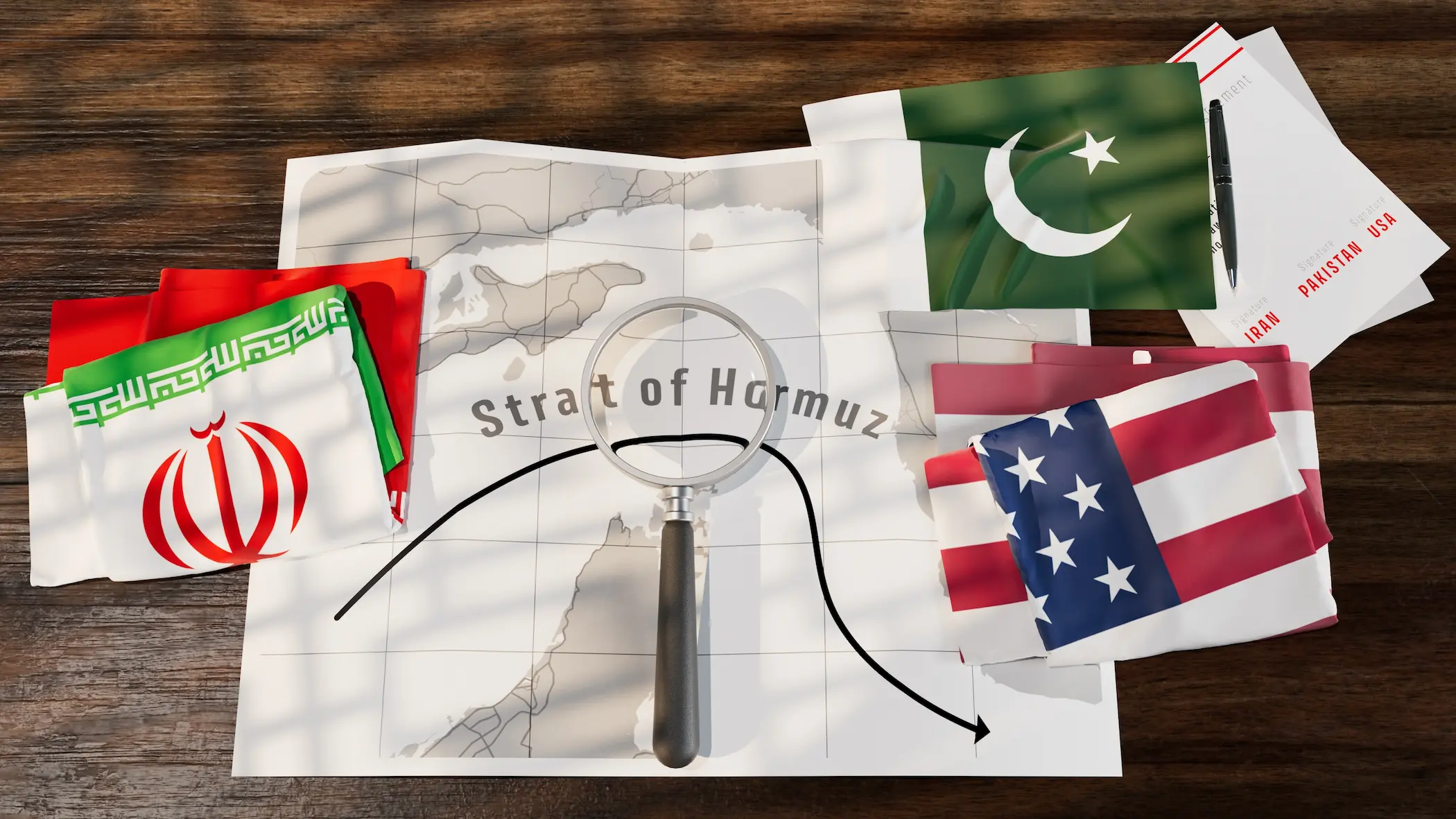
Diplomacy without Resolution: What Comes After the 60-Day Deadline?

Iran’s Water Signal: Measuring What a Non-Event Could Become
Comments