
Programmes
13 Apr 2026
Defence Economies at War: National Budget Stress
A defence economy comprises the fiscal, industrial, and budgetary systems through which a state finances, maintains, and adjusts its military capacity. During peacetime, these systems tend to remain stable; in wartime, they become the main mechanism through which conflict transforms a nation’s economic structure. The escalation of Israeli military operations since October 2023 and the broader confrontation with Iran and its regional proxies have caused a defence-economy shift, leading to significant realignments in how the conflicting sides allocate public resources, incur debt, and prioritise expenditure.
This analysis examines how sustained military escalation has reshaped the defence economies of its three key actors: Israel, Iran and the United States. It assesses both short-term fiscal responses and longer-term budget trajectories, arguing that the conflict has not produced a temporary spending spike but a structural transformation, one that has widened deficits, crowded out civilian services, mobilised domestic defence industries, accelerated sovereign credit deterioration, and embedded elevated military spending into national budgets in ways that will persist well beyond any ceasefire. Across the Middle East, the boundaries between battlefield expenditure and national economic health have become increasingly difficult to separate.
Programmes
13 Apr 2026
Blank Rounds: Can Trump Blockade the Strait of Hormuz?
President Donald Trump announced that the United States will impose a naval blockade on the Strait of Hormuz after weekend talks to end the Iran war collapsed without a settlement. The Islamabad negotiations, which were intended to turn a tenuous ceasefire into a durable peace and reopen Hormuz to safe navigation, broke down over unresolved disputes on nuclear enrichment, sanctions relief, and control of maritime transit. In response, Trump issued an executive order directing the US Navy to interdict any vessel attempting to transit the strait, with particular focus on neutral and commercial ships that have paid Iranian transit tolls, which the White House now characterises as an illegal extortion regime rather than a lawful fee regime.
Trump’s declaration instantly elevates the conflict from a regional shooting war to a global maritime and energy crisis centred on the world’s most critical oil chokepoint, a waterway just twenty‑one nautical miles across at its narrowest. By pledging to enforce a blockade without United Nations Security Council authorisation, the president has pushed the United States into a legally and operationally contested grey zone, framing the move as necessary to dismantle the Islamic Revolutionary Guard Corps’ grip over the strait and sever a key stream of cryptocurrency and foreign-exchange revenue to Tehran. The administration’s strategy now hinges on whether US naval power, layered secondary sanctions, and sustained diplomatic pressure can actually sustain a prolonged blockade in the face of Iranian asymmetric deterrence. The following analysis, therefore, centers on Trump’s blockade order itself: its operational viability, Iran’s capacity to erode or break it through asymmetric tactics, and the resulting shockwaves for global energy markets, commercial shipping patterns, and regional economic stability.
Programmes
8 Apr 2026
The Samson Option: Implications for the Nuclear Taboo and Fatalism
Israel’s nuclear arsenal is one of the “worst-kept secrets” in the MENA region due to the strategic ambiguity regarding its existence. Currently, Israel is not a signatory to the Nuclear Proliferation Treaty and is allegedly the only state in the MENA region to possess nuclear warheads. It is estimated that Israel currently in possession of approximately 80 nuclear warheads that can be deployed through ballistic missiles or by aircraft. While this nuclear program is shrouded in ambiguity, there is a genuine fear that Israel can reveal the full extent of its nuclear capabilities in the form of the Samson Option, which can bare consequences for the nuclear taboo as well as adverse psychological effects for the MENA region and the world.

Programmes
7 Apr 2026
Breaking the Tether: How Iridium Unleashes Shahed Drones
The landscape of modern air warfare has undergone a profound and structural transformation over the past decade. Air superiority is no longer the exclusive domain of those possessing the most expensive and technologically advanced platforms; rather, it has become accessible to actors capable of effectively leveraging scale and repetition against sophistication and complexity. This new equation has been clearly manifested in the widespread deployment of one-way attack drones, particularly the Iranian “Shahed” series, which has significantly altered established strategic calculations. In their early iterations, these drones operated on relatively simple logic: they were pre-programmed with target coordinates and then launched to navigate their trajectories using conventional satellite navigation systems such as the American GPS and its Russian counterpart, GLONASS. However, this reliance on such systems simultaneously made them the most exploitable vulnerability, as defenders rapidly developed electronic warfare capabilities, including jamming and spoofing tools, to disrupt their guidance and neutralise their missions.
However, this reality did not endure for long. As the intensity of conflicts involving these systems escalated, Iranian drones transitioned into a fundamentally different phase with the integration of communication modules operating via the commercial satellite network Iridium. This was not merely a technical upgrade but a calculated and direct response to GPS vulnerabilities, reflecting a strategic exploitation of civilian infrastructure for military purposes. While GPS satellites struggle to withstand ground-based jamming due to the weakness of their signals transmitted from altitudes exceeding 20,000 kilometres, Iridium satellites operate in low Earth orbit at altitudes of no more than 800 kilometres, emitting signals up to a thousand times stronger. These signals are further protected by layers of encryption that make spoofing or manipulation extremely difficult.
Shahed drones have thus evolved from inert projectiles following a fixed, unalterable path into connected platforms linked to their operators in real time, capable of receiving updates, changing course, sharing data with other airborne units, and even conducting precise strikes against moving targets such as ships at sea. This report therefore offers an in-depth technical and strategic examination of this transformation and its battlefield implications, beginning with the structure and operating logic of the Iridium network, moving through an analysis of the Shahed-131 platform and the integration of these communications into it, and culminating in an assessment of the operational impact this has had on some of the world’s most complex and densely layered air defence systems, namely Israel’s multi-layered architecture, which faced its most severe tests between 2024 and 2026.

Programmes
3 Apr 2026
Kharg Island: The Point of No Return
The economic architecture of the Islamic Republic of Iran is defined by a persistent paradox. While decades of international sanctions have systematically reduced its formal integration into global energy markets, the state remains structurally tethered to a remarkably narrow set of export channels. At the absolute centre of this system lies Kharg Island, a strategic node that handles the overwhelming majority of the nation’s crude oil exports. To date, Western policy has focused on regulatory friction, using sanctions to increase transaction costs and discount prices. However, a transition from regulatory friction to kinetic disruption, specifically a scenario where the U.S. or allied strikes disable Kharg Island, would represent a fundamental phase shift.
Such an event would not merely be a temporary supply disruption; it would constitute a systemic rupture in Iran’s primary revenue-generation mechanism. It necessitates the consideration of a critical counterfactual: what occurs when oil ceases to function as the core economic pillar of the state, not through gradual policy shifts, but through an abrupt, physical termination of export capacity? The resulting post-oil environment would trigger a reconfiguration of the Iranian state, moving it from a centralized rentier model to a decentralized, network-based economy of scarcity.
Programmes
1 Apr 2026
Pulse: The United States-Israel-Iran War
This Pulse survey, conducted in March 2026, explores perceptions of the ongoing war and its potential trajectories, focusing on expectations around its duration, outcomes, and broader regional and global implications. The findings reveal a high degree of uncertainty, with no clear consensus on how or when the conflict will end, reflecting the complexity and fluidity of the situation.
Programmes
1 Apr 2026
What If: The United States Launched a Ground Invasion of Iran?
In light of the intensifying United States–Israel-Iran War, the prospect of a direct American ground operation has shifted from a remote contingency to a plausible escalation. As strikes expand beyond air and naval targets to critical infrastructure, the conflict is approaching a threshold that could fundamentally alter its trajectory, with risks extending from prolonged warfare to disruption of global energy flows and regional instability.
While Washington may aim for limited objectives through targeted ground incursions, such as seizing key assets like Kharg Island, such operations are unlikely to remain contained. President Trump has acknowledged that “we have a lot of options,” reflecting both strategic flexibility and uncertainty about the next phase.
Iranian leadership has responded in kind. Parliament Speaker Mohammad Bagher Ghalibaf warned that Iranian forces are “waiting for the arrival of American troops on the ground,” signaling that any incursion would trigger immediate and sustained retaliation. In this context, a ground invasion would not be a controlled escalation, but a turning point with far-reaching military, regional, and global consequences.
Programmes
31 Mar 2026
What If: The Houthis Close Bab el-Mandeb?
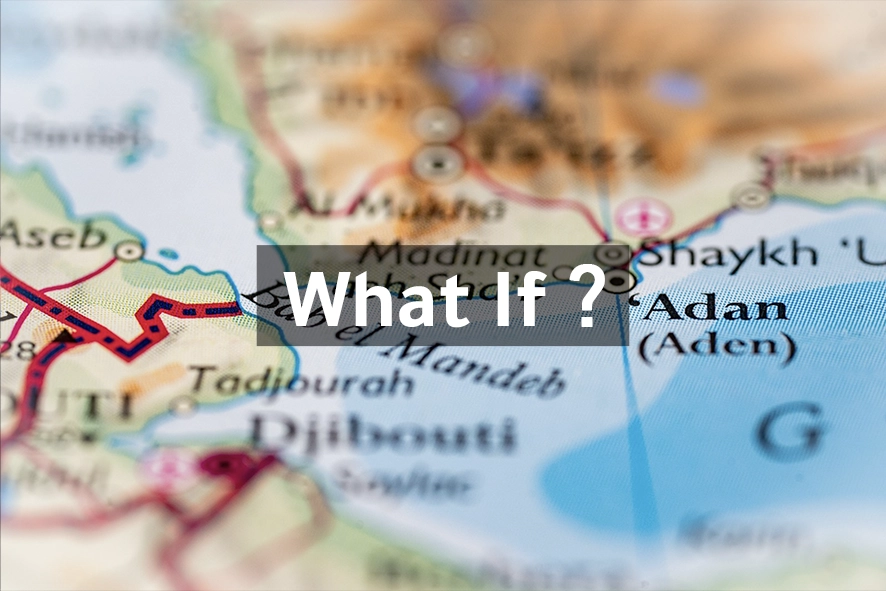
The United States–Israel–Iran war, which began with a set of vaguely defined objectives including regime change in Iran and the dismantling of its missile and nuclear capabilities, now appears to be shifting toward a different set of priorities. Iran has managed to internationalise the conflict in a way that has redirected attention toward containing the scale of global economic disruption. Put simply, the focus is increasingly on securing the flow of oil amid what is being described as one of the most severe energy crises in modern history. Much of the world’s attention has centred on the Strait of Hormuz, and rightly so. This vital shipping lane accounts for roughly 20% of global liquid petroleum consumption, as well as a significant share of global liquefied natural gas trade (LNG). However, with the Iran-backed Yemeni Houthis now entering the conflict, the risks facing regional oil exports and maritime routes have intensified further. As the de facto controllers of the Bab al-Mandeb Strait, the Houthis are in a position to disrupt shipping through the Red Sea and the Gulf of Aden.
This raises several critical questions. Why have the Houthis chosen this moment to enter the war? Under what conditions might they escalate their involvement? And what would be the consequences of a closure of the strait?

Publications
30 Mar 2026
What If: Iran Targeted Submarine Internet Cables in the Arabian Gulf?
The contemporary global economy is anchored in a tightly integrated digital and physical infrastructure, in which the continuity of international markets depends on an extensive network of submarine fibre-optic cables spanning approximately 1.3 million kilometres. This strategic architecture carries between 95 and 99% of intercontinental digital communications and constitutes the foundational layer for the settlement of daily financial transactions valued at roughly 10 trillion dollars. For decades, geopolitical analysis has prioritised the security of surface maritime corridors to safeguard the uninterrupted flow of conventional energy resources. Yet evolving realities indicate a decisive shift. The durability of the global economic system now hinges just as critically on protecting these submerged networks, which have emerged as indispensable arteries of global connectivity and financial stability.
This reality is especially visible in the Middle East, particularly across the Arabian Gulf, the Strait of Hormuz, the Arabian Sea, and the Red Sea, where the geographic corridors that govern trade flows and energy supply chains overlap with the main routes of global data transmission. The Strait of Hormuz, which is only 21 nautical miles wide, sits at the centre of this convergence. Around 21 million barrels of crude oil and one-third of global liquefied natural gas supplies pass through it each day. At the same time, 17 submarine cable systems run across its seabed, carrying nearly 30% of total international internet traffic. This intense concentration of physical and digital infrastructure within a narrow geographic space creates a severe security vulnerability. It exposes the global economy to systemic risks tied directly to regional instability.
These structural risks moved from theoretical assessment to operational reality with the outbreak of direct military confrontation in early 2026 between the United States and Israel on one side and Iran on the other, in what became known as Operation Epic Fury. These developments marked a fundamental shift in Iranian military doctrine. Faced with growing limits on its ability to disrupt surface energy flows through conventional means, Iran increasingly turned toward asymmetric threats. This shift is reflected in a move away from the traditional threat of closing maritime chokepoints to the deliberate targeting of submarine internet cable networks, using their disruption as a tool of deterrence and geopolitical pressure. It represents a calculated effort to exploit the physical vulnerabilities of civilian infrastructure to offset conventional power imbalances. In doing so, it introduces risks that extend well beyond the regional theatre and directly affect the foundations of the digital economy, in an era increasingly shaped by hybrid warfare and the militarisation of the maritime domain.
This emerging pattern of threat also creates what can be classified academically as a dual and simultaneous crisis. In such a scenario, the systematic disruption of submarine cables would paralyse global energy supply chains while simultaneously causing severe degradation across the digital infrastructure of the Middle East, South Asia, and Europe.
The immediate consequences would extend far beyond the loss of communications services for individuals. They would include major disruptions to electronic clearing systems that underpin sovereign wealth fund investments, as well as the paralysis of digital command-and-control centres operated by state-owned energy conglomerates. Such targeting would also disrupt military command-and-control networks and sever the communication channels needed to manage maritime navigation and to reroute vessels during crises. It would further undermine the artificial intelligence and cloud computing infrastructure on which many states in the region rely for their economic diversification strategies.
The plausibility of these threats is reinforced by recent material precedents that have exposed the infrastructure's real vulnerabilities. Most notable was the damage inflicted on Red Sea cable systems following the sinking of the Rubymar in 2024, followed by multiple line disruptions in the same region in September 2025. Together, these incidents underscore the fragility of these networks in the face of both accidental disruptions and deliberate acts of sabotage.
Building on these complex strategic and economic dynamics, this paper examines the implications of a large-scale attack targeting submarine communications infrastructure in the Arabian Gulf. It does so through a detailed assessment of the technical and military capabilities available to Iran to carry out physical sabotage operations beneath the seabed, alongside an analysis of the strategic motives driving this form of asymmetric escalation. By integrating recent historical precedents with updated data on regional and international levels of digital dependence, the paper seeks to assess the scale of the losses likely to result should such a scenario materialise.
Programmes
25 Mar 2026
Iran as a Potential Arena for Great Power Competition
The U.S.-Israel-Iran War is well underway, and the risks of spillover and enlargement is becoming more of a reality as the war goes on. As the conflict continues to expand, several actors are seeking out opportunities to challenge the existing balance of power in the region and aim to exploit the war to expand their influence. In the past decade, Russia has been working to court the United States’ MENA allies into its sphere of influence through the concept of regime stability, while China is taking on a soft power approach through economic and diplomatic cooperation. A prolonged war between the U.S.-Israel and Iran can result in global powers such as Russia and China getting more involved in the region to diminish American influence globally, which can result in a great power competition. The potential of Iran serving as an arena for great power competition will be explored through the American strategic overstretch and the economic shock caused by energy crisis.

Programmes
25 Mar 2026
Manufacturing the Narrative: How Western Media Distorted What Really Happened in Dubai
Since late February 2026, the regional and international geopolitical landscape has entered a phase of accelerating military escalation following the outbreak of direct confrontation between the United States and Israel on one side and Iran on the other. That conflict has triggered successive waves of missile and drone attacks, generating recurrent spillover effects that have directly affected the airspace of Gulf states, particularly the United Arab Emirates.
Although the United Arab Emirates’ defence and institutional infrastructure, particularly in Dubai, demonstrated exceptional resilience and an immediate operational response to these threats through the activation of advanced air defence systems and the careful, precautionary management of brief airspace closures to safeguard air navigation and civilian safety, the real crisis did not lie solely in the direct military dimension. It also extended into a highly complex information war.
These developments coincided with the strict enforcement of domestic cybercrime laws, which restricted the circulation of unauthorised images and video footage in an effort to prevent panic and protect national security. Yet this also created an opening that the Western media machine exploited strategically and systematically to dominate the flow of information and construct a distorted account of events.
Against this backdrop of stark divergence between the coherent reality on the ground and the remote narrative constructed around it, international media outlets, particularly the British tabloid press, turned into vehicles for an extraordinary degree of dramatization. What were, in reality, limited regional spillovers were presented as evidence of an imminent and inevitable collapse of Dubai’s entire economic and social model.
By adopting provocative and polarising headlines that flatly declared Dubai “finished”, and casting the crisis as the tragic collapse of the safe tax haven dream, these outlets embraced a line of analysis wholly detached from realities on the ground. Verified evidence of business continuity and the strength of the UAE’s security architecture was sidelined in favour of a pre-packaged disaster narrative. This shift demands a deeper analytical and historical examination of the mechanisms and the economic and political incentives that can drive media institutions away from their role as objective conveyors of fact and turn them into instruments for shaping global public opinion.
Programmes
24 Mar 2026
The Ripple Effect of the US-Israel-Iran War on the Russia–Ukraine War
The long-standing efforts to end the Russia-Ukraine War were disturbed by the sudden outbreak of the U.S.-Israel-Iran War. The strikes carried out by the United States and Israel against Iran, and their broader spill-overs across the Middle East, have hindered the already difficult peace negotiations between Moscow and Kyiv. This escalation raises concerns about the extent to which the U.S.-Israel-Iran War could have on the broader geopolitical dynamics. This war risks diverting global attention away from efforts to resolve the Russia-Ukraine War and, at the same time, raises concerns about the extent to which it could reshape power dynamics and influence the trajectory of this war.